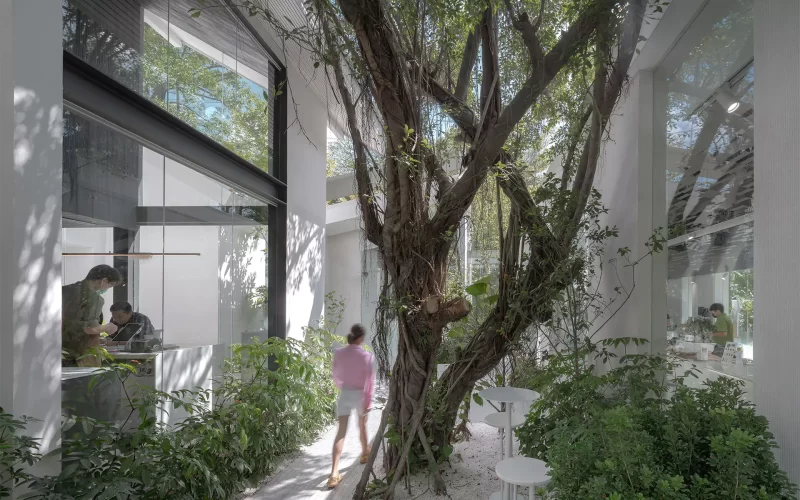
The 24th edition of the Festival International de Jardins 2023, themed “RACINES | ROOTS,” took a bold step towards a future that is ecologically, economically, and culturally responsible, drawing inspiration from the wisdom of previous generations. Under the visionary guidance of Ève De Garie-Lamanque, the event’s Artistic Director, designers have come together to create a unique showcase of sustainable and innovative gardens. The 2023 edition of the International Garden Festival presented a total of 22 in situ contemporary gardens, including five brand-new installations. In addition, two stand-alone installations, Mer du Vent and Absolues Jardin, added to the festival’s allure. A selection of our favorite installations that took place in Grand-Métis, Québec, Canada.
The theme of the 2023 Edition
In an age marked by digital transformation, globalization, and rapid technological advancements, the festival’s theme, “ROOTS,” took a stance against the disconnection from our heritage and the environment, imposed by the industrial revolution. Inspired by the concept of “globality” by poet and philosopher Édouard Glissant, the theme encouraged a return to essentials, emphasizing the use of native plants, local materials, and traditional construction methods while maintaining a contemporary vision. “ROOTS” seeked to create innovative, human-scale environments that bridge generations and disciplines, challenging the forces of homogenization brought about by globalization.
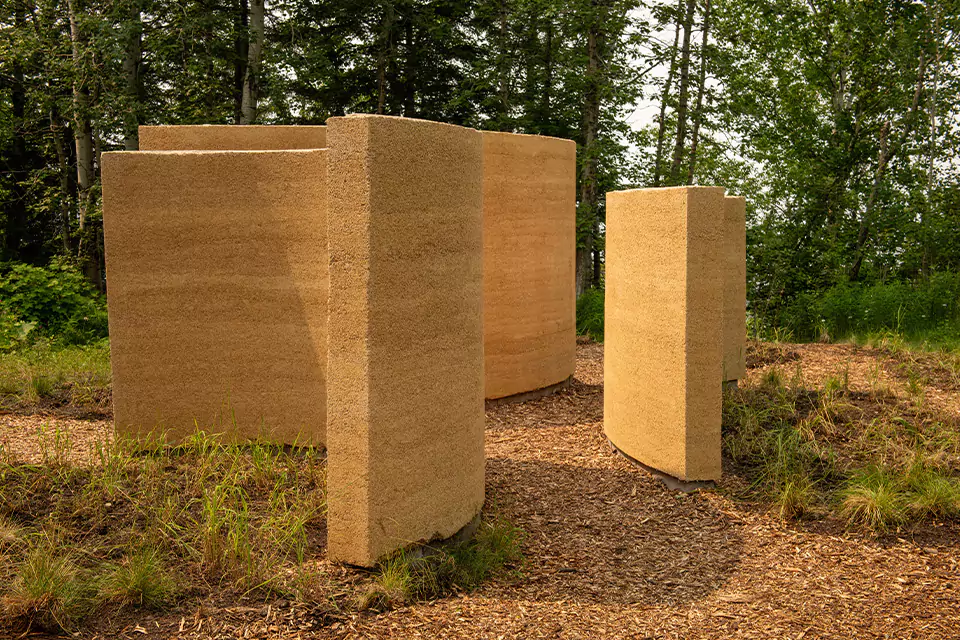
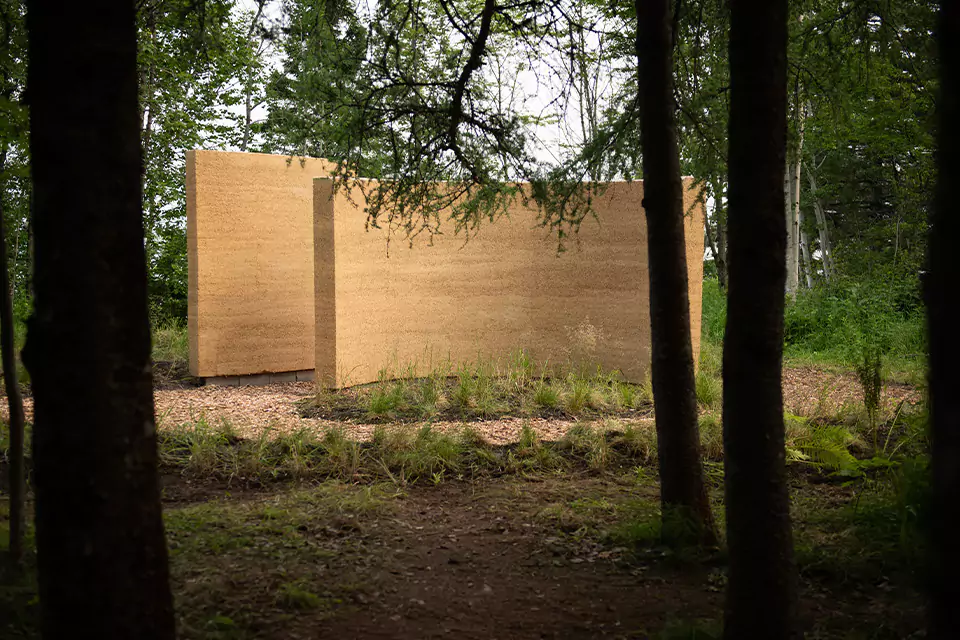
New Gardens Unveiled: Le Jardin des quatre colonnes
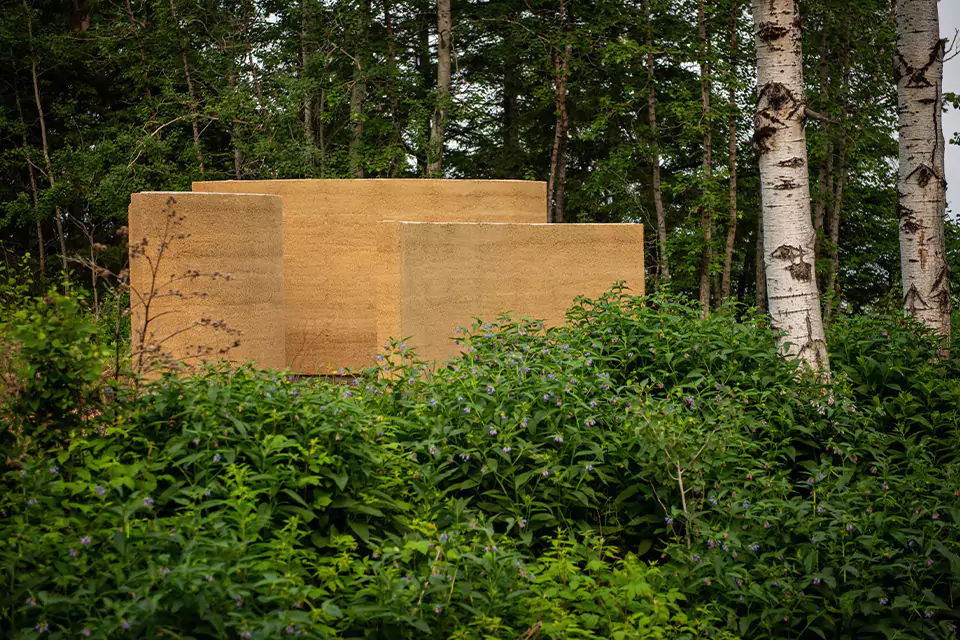
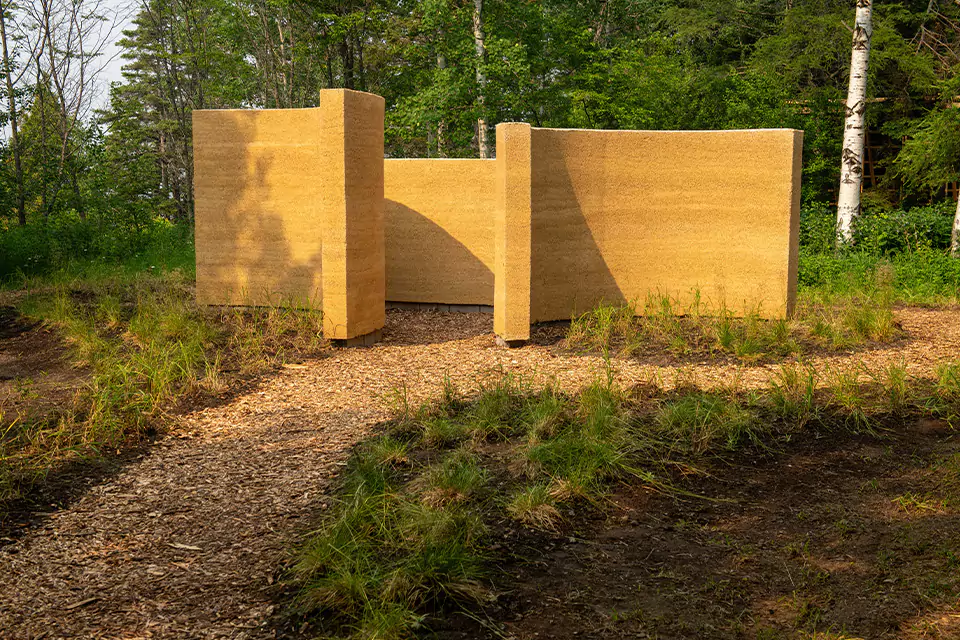
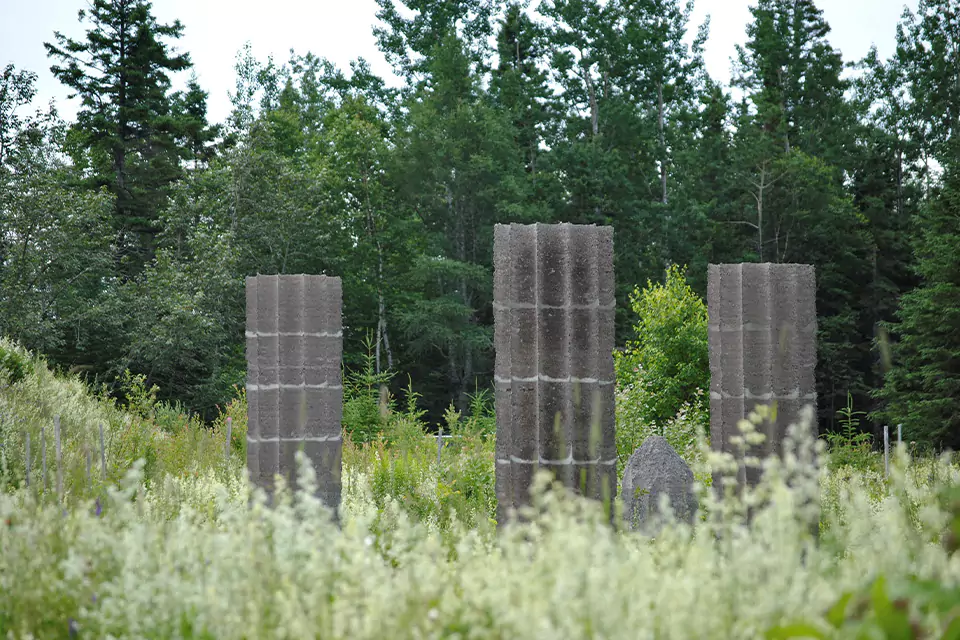
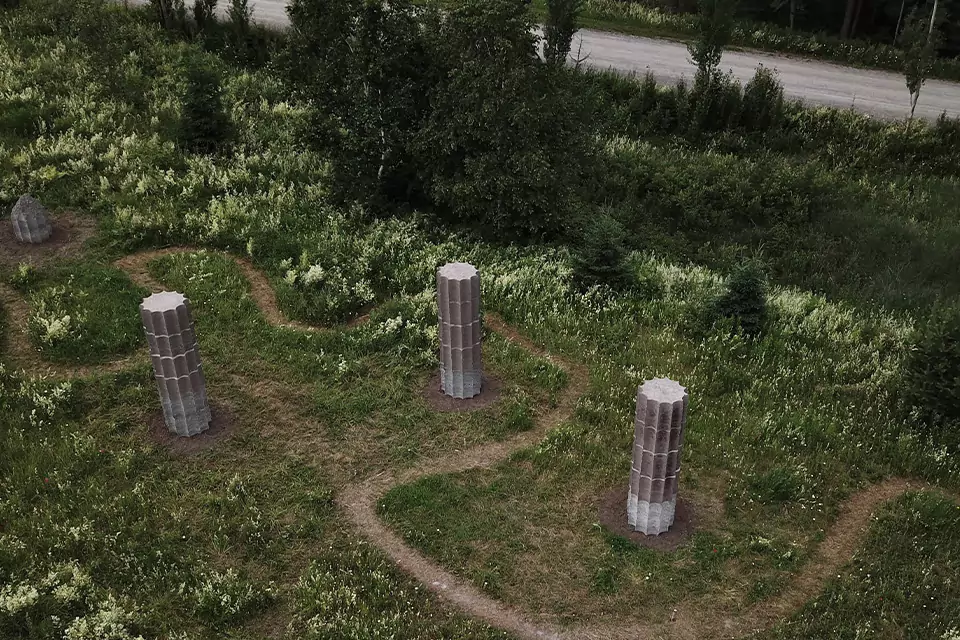
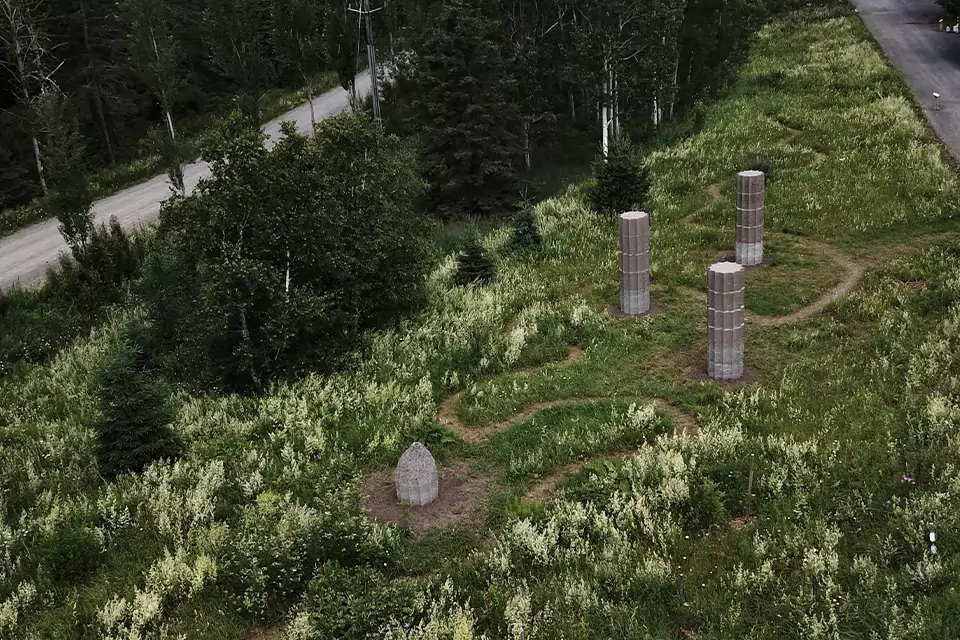
Among the unveiled gardens, Le Jardin des quatre colonnes by Vincent Dumay and Baptiste Wullschleger, from Sweden and France, presented a poetic manifesto that highlighted the finite nature of our resources. The garden showcased adobe construction, a technique that uses compacted soil mixed with moisture, to create unique structures that resembled Doric columns.
Vincent Dumay, an architect operating in Sweden and France, brought his expertise in mud-brick construction, having previously worked as a mud-brick mason in Austria. Baptiste Wullschleger, an architect and landscaper, drew inspiration from his observations of the natural world to craft projects that coexist harmoniously with the environment.
Maillage
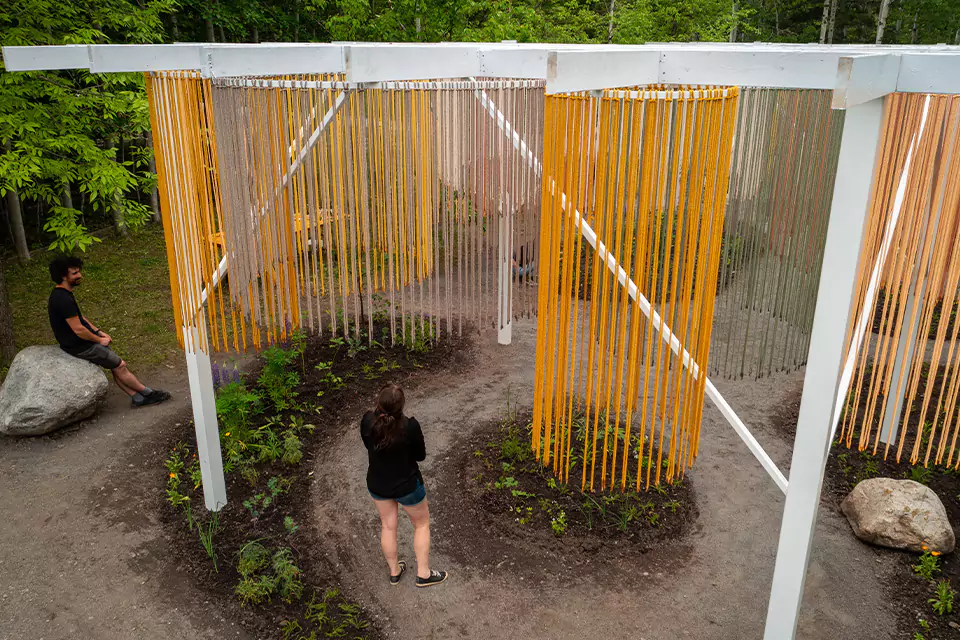
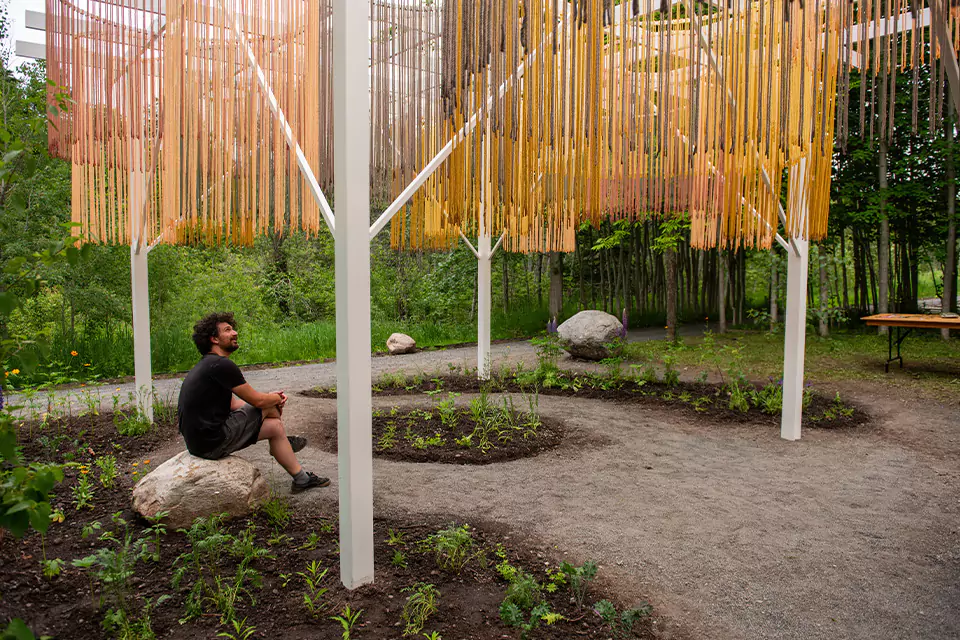
“Maillage” by Friche Atelier, a landscape architecture and horticulture firm from Québec, explores the significance of plants throughout history, focusing on their various applications in nourishment, protection, healing, and clothing. The garden delves into the art of using plants as a coloring agent for textiles, creating a metaphorical connection between the textile and vegetal worlds.
Friche Atelier, founded by Frédérique Allard, Jean-Jacques Yervant, and Aliénor de Montalivet, specializes in projects that seamlessly blend functionality, sustainability, and sensitivity, emphasizing the coexistence of nature and human interactions within landscapes.
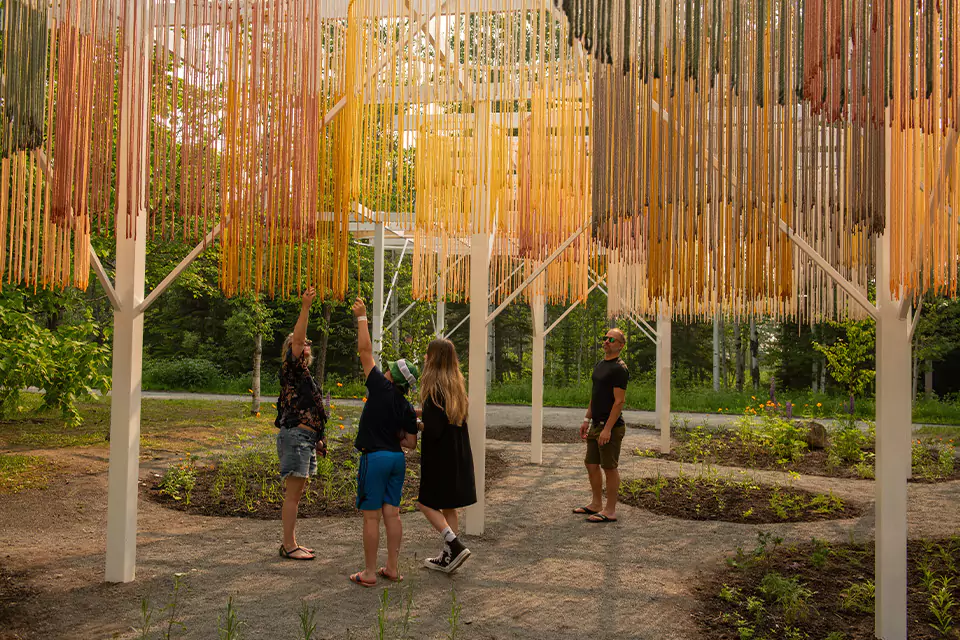
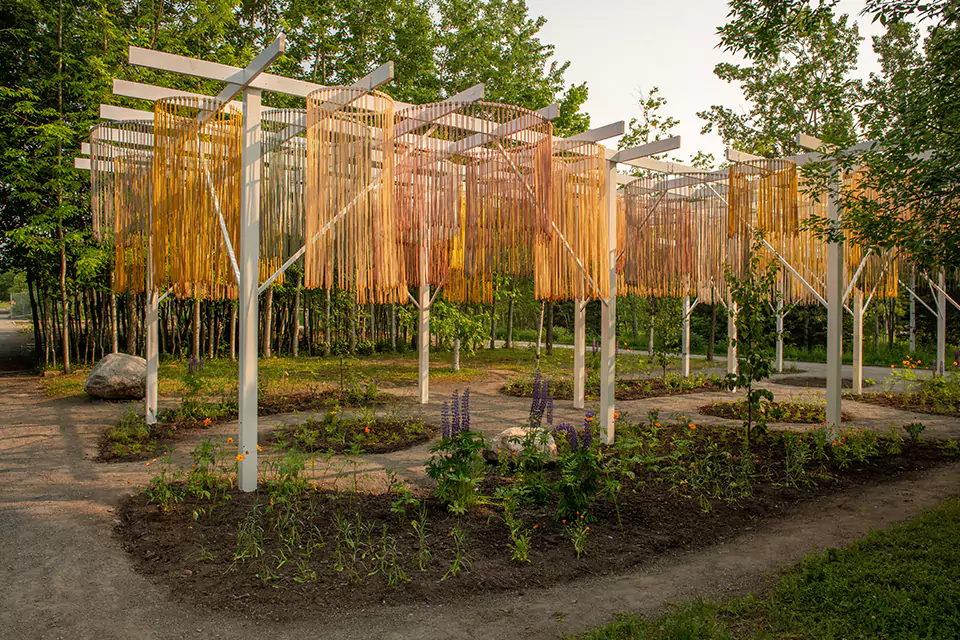
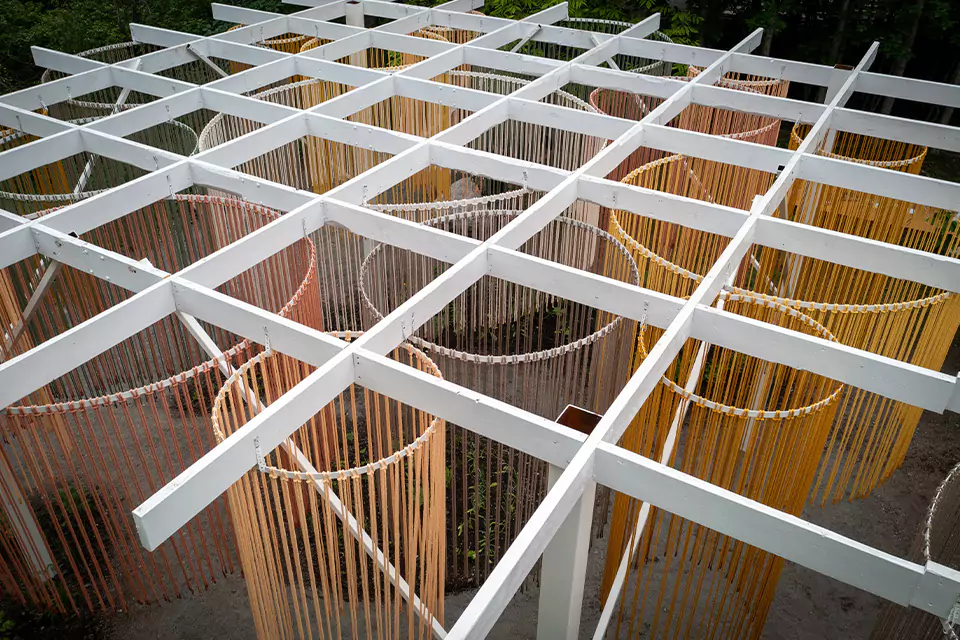

Embracing the Materiality of Matière–Matière
Matière-Matière, crafted by Studio Haricot, Marie-Pier Caron-Desrochers, Tristan Morissette, Rose-Marie Guévin, and Vincent Ouellet, celebrated the intricate interplay of textures and colors. The garden invited visitors to experience a tactile journey through hemp concrete structures that emerged from the landscape, creating a parallel between the transformation of vegetal fibers and the materialization of unique spaces. The consortium, consisting of individuals from diverse backgrounds, emphasizes friendship and complementary skills in their creative process.
Reflecting on Sustainable Construction with Racines de mer
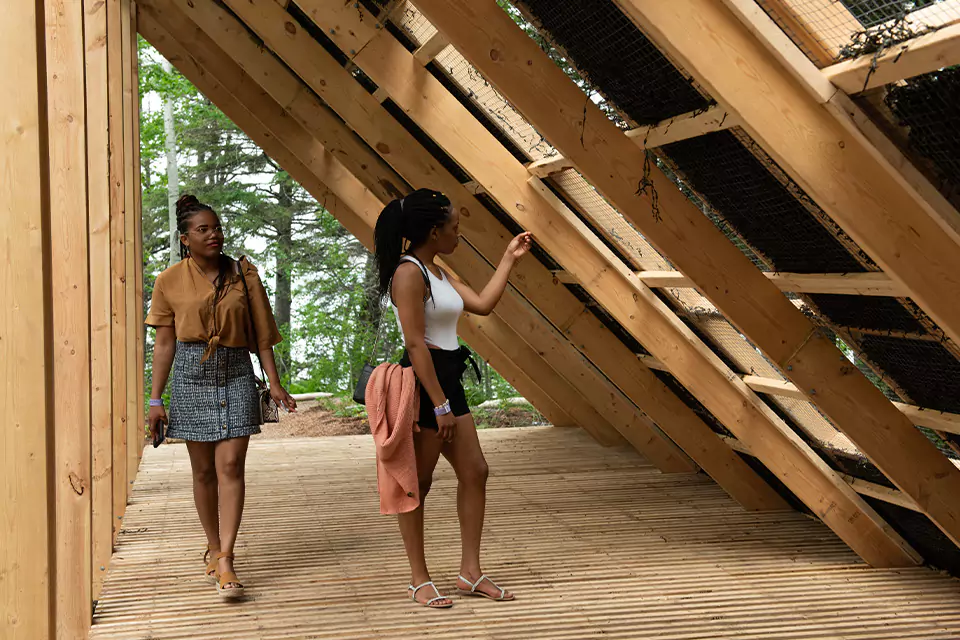
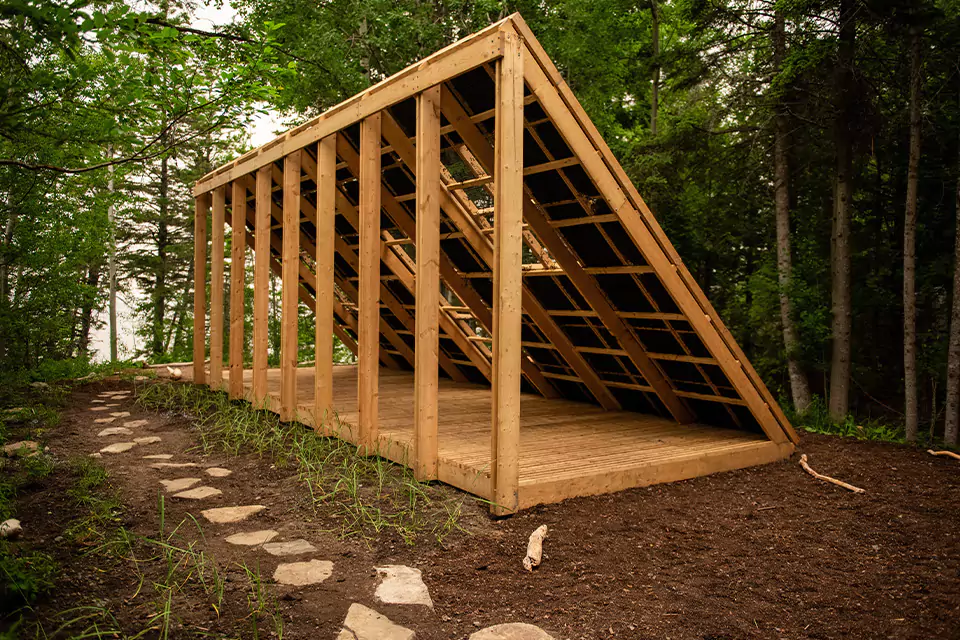
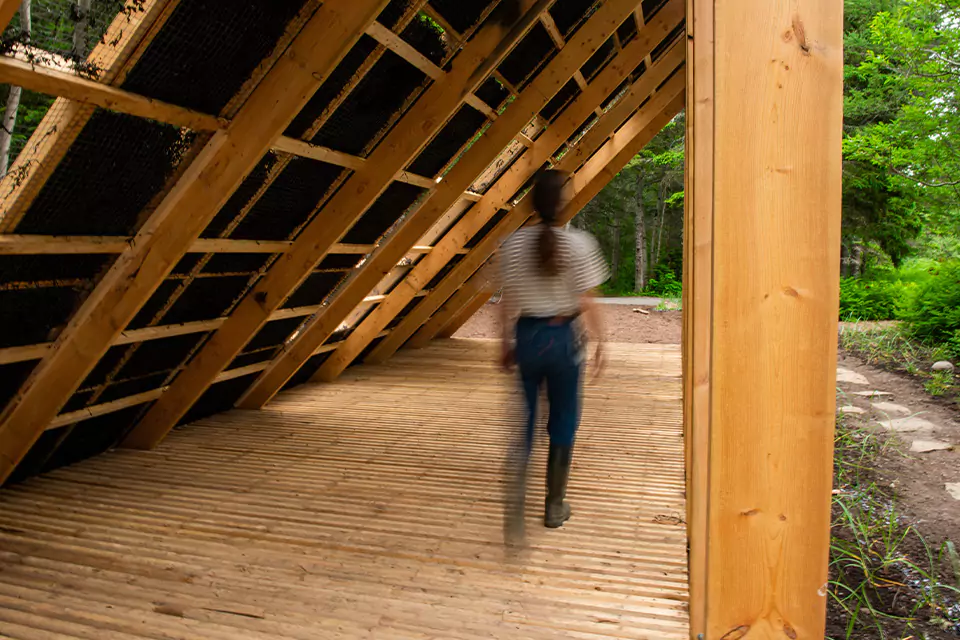
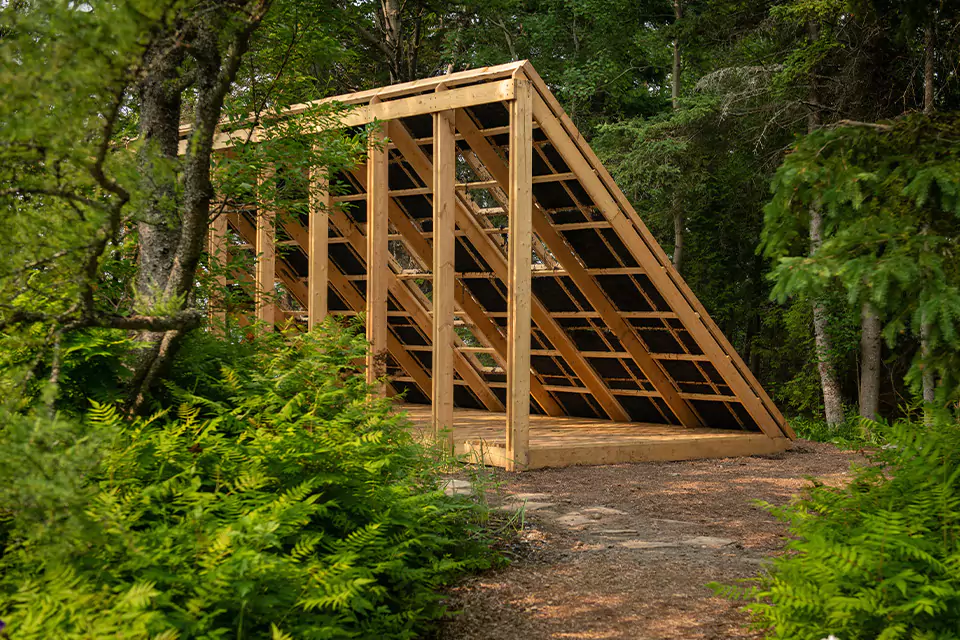
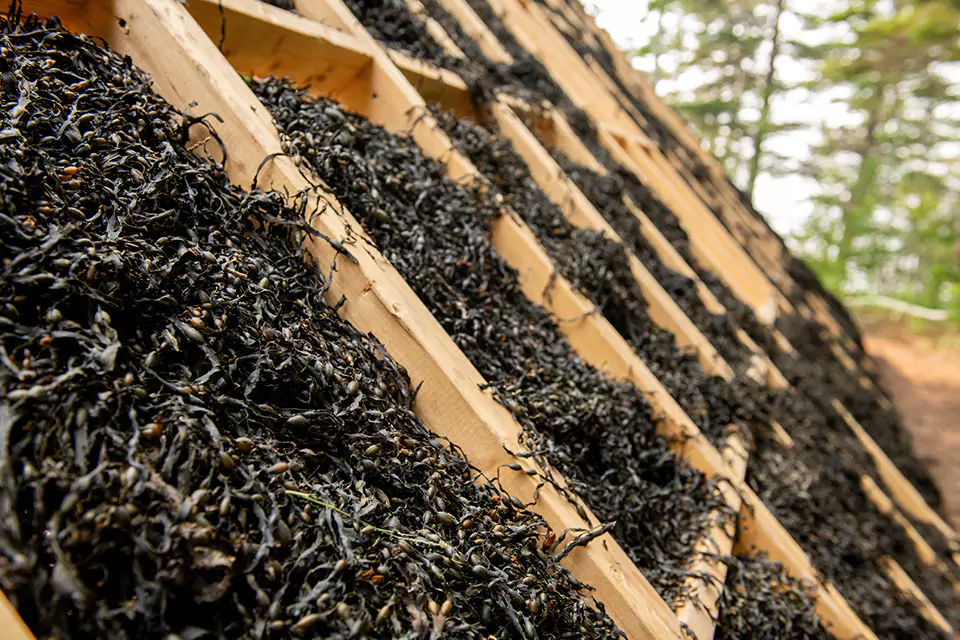
Racines de mer, by Cassandra Ducharme-Martin and Gabriel Demeule from Quebec, Canada, paid homage to the traditional wisdom of building with marine plants. Inspired by the eelgrass roofs on the island of Læsø in Denmark, this garden invited visitors to explore the future of construction. It showcased a wooden frame left uncovered, celebrating the elegance of this method of construction, combined with a roof made of seaweed, highlighting the potential of the St. Lawrence River.
Gabriel Demeule, an architect, seekd to honor the territory through his creations, aiming for a silent architecture that captivates and integrates seamlessly with its surroundings. Cassandra Ducharme-Martin, with a background in biology, is passionate about the serendipity of the St. Lawrence River’s flora.
Unraveling S’Y RETROUVER
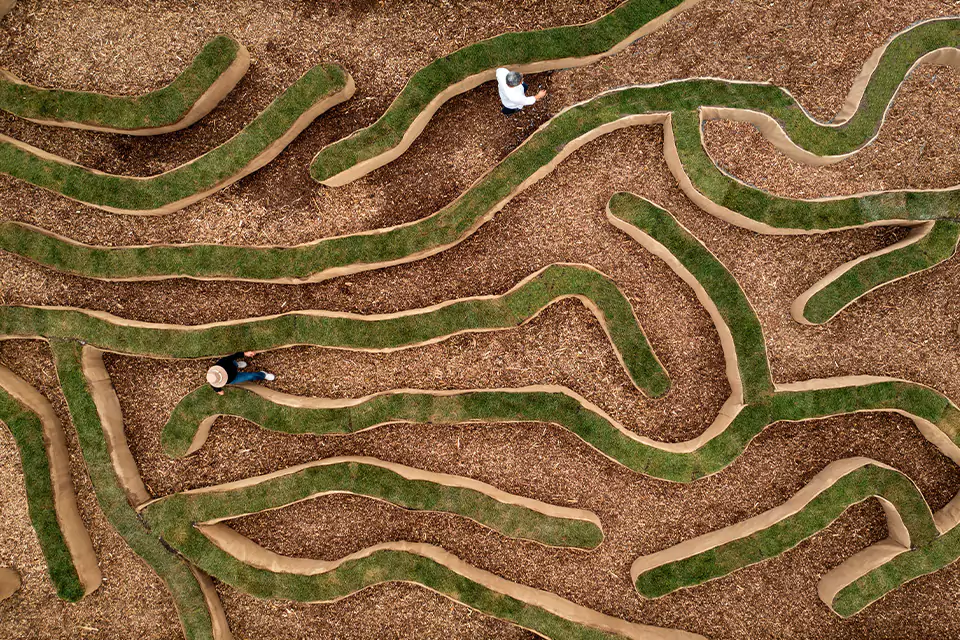
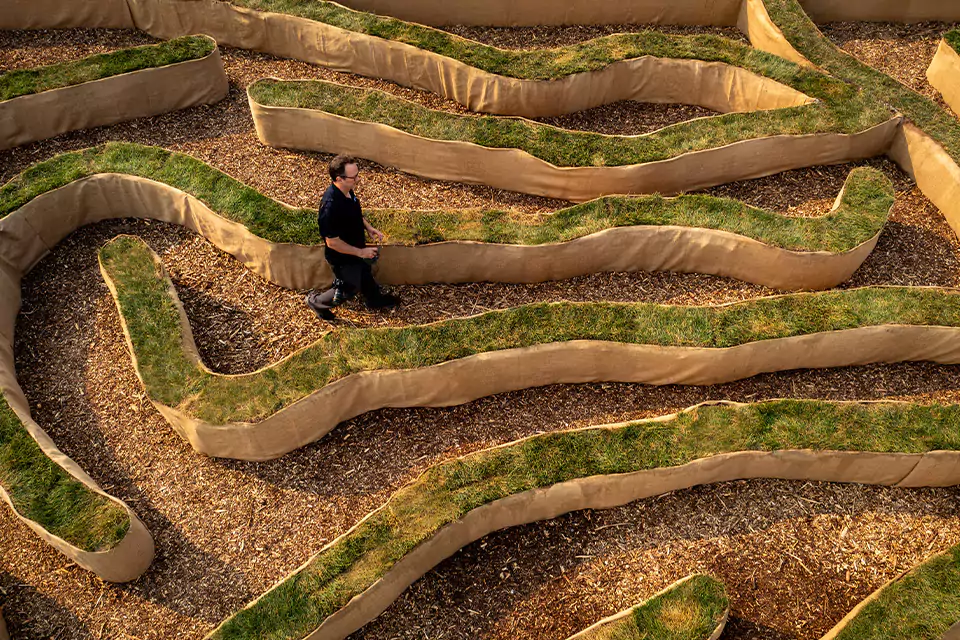
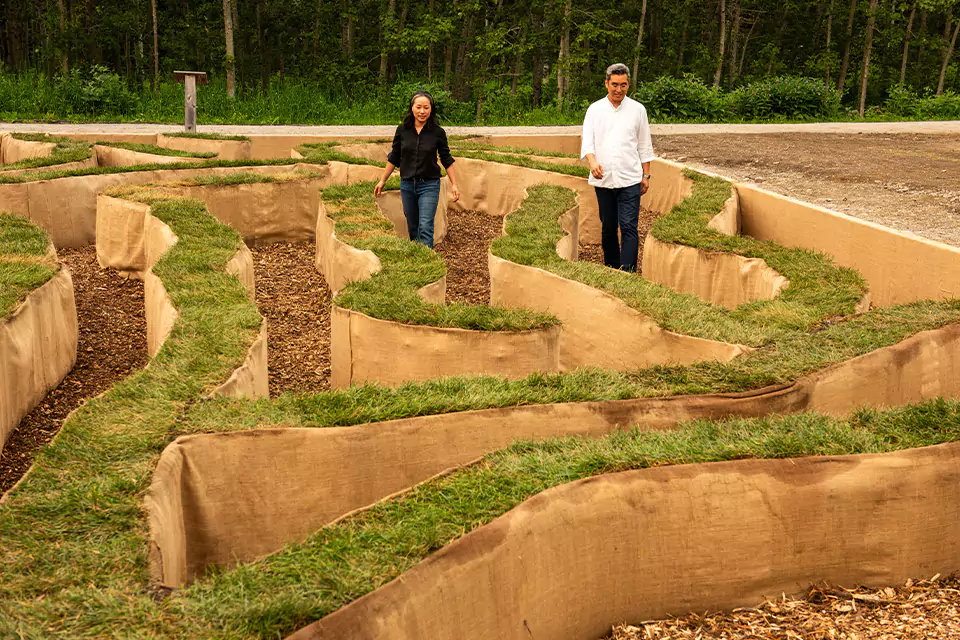
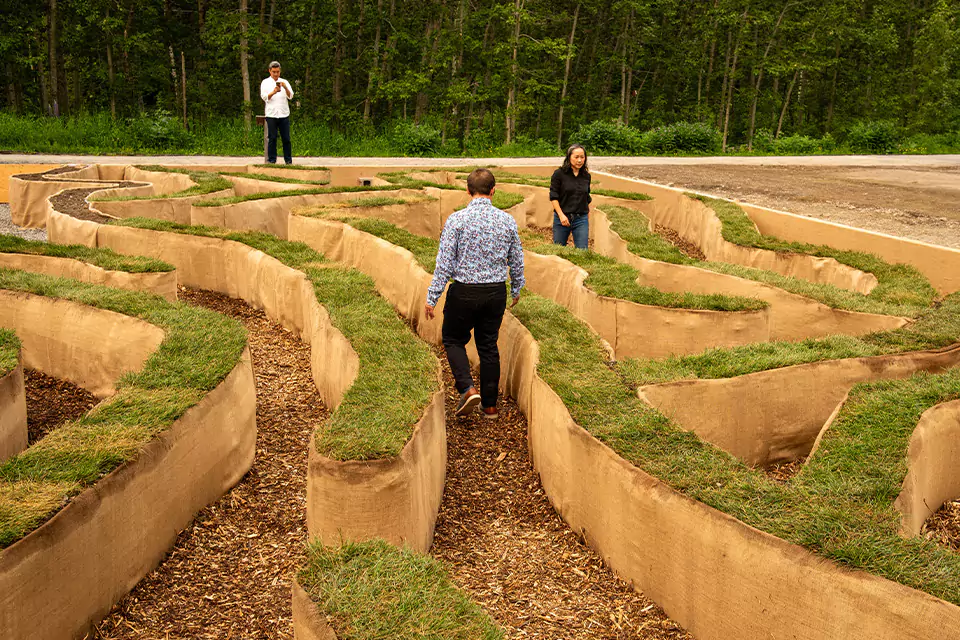
S’Y RETROUVER, a collaborative effort by Jinny Yu, Ki Jun Kim, and Frédéric Pitre, offered visitors a submerged maze, challenging them to decipher a complex pathway. The garden explored the interplay of earth and white clover, representing the root systems of two trees connected by fungal mycelium. This metaphorical garden encouraged reflection on colonialism and the historical influence of European settlers in Canada. The collaborative team, an international, multidisciplinary group, combines different expertise and perspectives to create a meaningful project with decolonial and environmental concerns at its core.