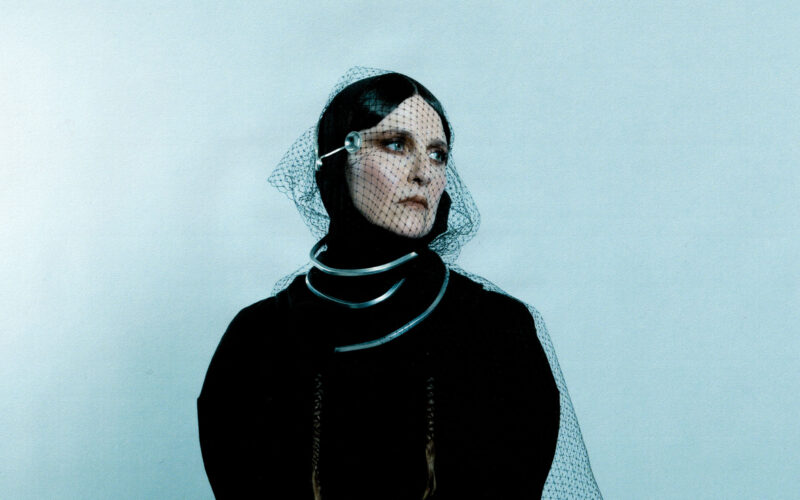
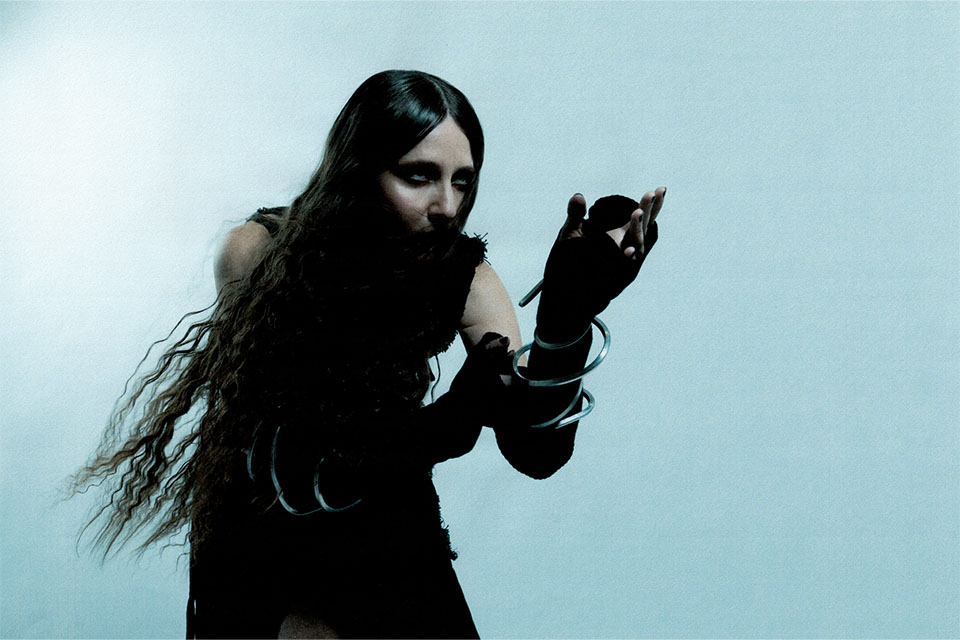
Anticipating its release on April 4th, 2025, ‘A Requiem’ will be the fifth full-length album of Brighton-based Australian vocalist, producer, and multi-instrumentalist Penelope Trappes. The project started as a sanctuary Trappes built for herself as she confronted familial traumas and history. Since it’s inception, ‘A Requiem’ has come to form into a ten-track album of haunting soundscapes that capture dreams, nightmares, anger, and power creating a chilling piece uncovering a vulnerable journey toward release and catharsis.
Trappes has previously demonstrated her versatility in previous experimental, ambient soundscapes utalizing electronics, voicework, and minimalist songwriting. “We’re all part of the creative force of life, why should that stop?” she asks. A proponent for evolving artistry and discovery, ‘A Requiem’ comes as a shock of raw emotion, reflecting a potent new chapter in Trappes’ artistic journey.
‘A Requiem’ is a musical service honoring the dead and a sanctuary from familial
chaos, where you were “looking for an equilibrium between a ‘heaven’ and ‘hell’ ”.
What is this equilibrium like for you? Does it feel like a place, a fleeting thought or
feeling, or a memory?
Penelope Trappes: I feel like it’s all of that. It’s fluctuating constantly – trying to find balance. Everyone experiences the struggles of life in some way, shape, or form. It can come as a memory. It could be trauma or joy for some people. For me, it’s a constant balance effect of trying to find joy in the chaos.
What was the process of reaching that equilibrium like?
Penelope Trappes: It was interesting. I was staying in Glasgow where my daughter lives, and I had a sister from Australia visiting me at the same time so there was a lot of stuff stirring: the new generation versus the older generation. It was quite confrontational at times. There were good times, but then there were times I found were very triggering to the creative process. The place that I was staying in had a studio at the back. An incident happened where I just went out into the studio and it was like, ‘Alright, now I’m channeling’. This is what happens: you sort of have an idea of what you’re going to do but then things start happening around you and you just follow it. It’s best to just let it happen. Sometimes, you don’t even know what you’re doing. In this case, I was focusing more on vocals. So it felt like storytelling in that very traditional way: via voice. That’s how it came about.
You brought up how this felt very confrontational as you sought out the creative
space of your studio. What was the importance of seeking solitude in creating
this album?
Penelope: For me, solitude is integral to being able to turn off all the noise and focus. In this world, I feel like we are all becoming a bit distracted. Solitude is so important to
understand and to turn off all the noise. That’s the only way I feel I can access the
creative energy. I have to close the door, you know? In this case, that pushed me out of my comfort zone, to feel uncomfortable, and to access my sense of self. That helps me on a creative level.
Did you find anything surprising in this solitude?
Penelope Trappes : I suppose so. There’s one track on the album called ‘Sleep’, which was the lead single, and it got quite intense. Normally, I lean in the more meditative, ambient aspects but this one was a bit fierce. I needed to vent. Anger is an emotion that humans always feel they have to keep in check. You don’t want it to eat you up, but it is a real emotion and I think that it is very hard for people to feel like it’s okay to be angry and do it in the right way. That song was venting a lot of that – it started familial but became very broad.
With ‘A Requiem’ being an examination of loss, what was the intention behind selecting ‘Sleep’ as the first single released ahead of the album? How do you want ‘Sleep’ to bring us into this realm?
Penelope Trappes : The arc of the singles will be this fast-forward journey through the chaos. It’s funny because ‘Sleep’ was going out on a bit of a limb compared to what I’ve done before, knowing what I sound like. It was a bit shocking. It felt like taking a risk. It became a metaphorical slap across the face. It has the extremes of what I would say are the lightness, or the sense of peace, to a sense of chaos. I also really liked the song. I can’t wait to do it live. It’s very cathartic and later, I felt that catharsis was appropriate for the album. When people are grieving, there is anger involved. So start with that, as if someone was running from something and they just stop, scream, get through that, and then move to the other stages.
‘Sleep’ was recently released alongside its music video, where you collaborated with Agnes Haus, Kate Dickie, and Maxine Peake. What was working on this part of the project like?
Penelope Trappes : That was such divine intervention, the way it all came about, to have these women come together and channel femme power. The subject is dealing with a very dark thing, but there was a lot of beauty and unity that came out of that day. I think that is the creative spirit. It entered the place we filmed in. Again, it’s that acknowledging of the darkness. Somewhere I read: if you are standing in the light, you create a strong shadow.
Do you feel that you gained new perspectives on the song or the album as you worked on the visual component?
Penelope Trappes: Yeah. I feel like I’m still unraveling aspects. It’s like the Big Bang: it’s still going out. It’s the ‘unfolding’, or whatever you want to call it. It was such a beautiful, creative moment.
It sheds more light on what my creative journey is. Or just life in general. Those women were like instant family. Beacons of “You’re my people”. That kind of vibe. That correlates to the rest of the album on a bigger level. It’s like creative energy coming together. It’s like sparks. You may never see these people again for the rest of your life, but you have these spark moments together. It’s pretty special.
Delving deeper into the song, it was impressive to learn that you had no formal training on the cello. Yet, even from the first listen of ‘Sleep’, the familiarity between you and the instrument is very evident. Was this your first time incorporating the instrument? What influenced you to feature the cello in this album?
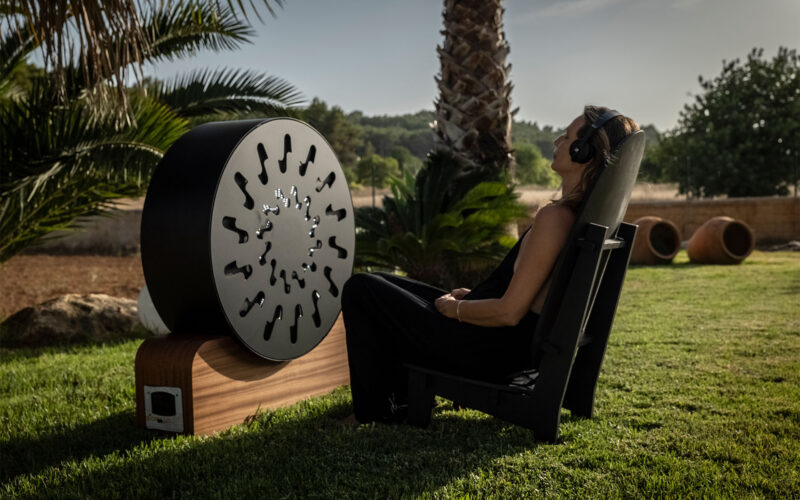
Penelope Trappes: No, I’m not trained at all. But even as a kid, I was always obsessed with the cello. I never touched one until recent years. It wasn’t a great cello in the studio. It wasn’t high-end, which meant I could get quite aggressive. I didn’t have to treat it like it was super precious. Because I was so alone, I could hold the cello and just be with it, which aided me in going into a state of creativity. Also, about a year ago, I went to EMS Studios in Stockholm to play with a halldorophone. It’s built like a cello initially, but then it has four additional resonating strings under it, and inside the body, two speakers, and pickups. It creates a drone loop. The reason I mention that is because it is an instrument that, when focusing right in on the string, if you raise the faders and the volume and the power goes in, you can see the string moving. It’s really quite gritty. That tactile nature, it’s hard to put into words. When it’s played, it’s the stuff of gods.
How do you feel about the upcoming release? You were talking about the ‘Big Bang’ before and how you are still feeling its resonance. How do you feel at this moment, awaiting April?
Penelope Trappes : It’s so funny with albums. You’re so in it and you’re so excited. I’ve often joked that albums are like babies. You get full of hope and excitement because you want that love you put into it to be shared with as many people around the world. But you know, we deal with algorithms and all sorts of stuff so you don’t know how it’s going to be reached and you hope for the best. But at the same time, I consider myself pretty down-to-earth, so I’ll just go where the wind blows. I look forward to however it unfolds.
I want to get it out there on the stage. I’ve got a lot of exciting, creative ideas. I’ve got a couple of amazing women who will join me onstage: cello, organ, some vocals, live visuals, or lighting design. The whole album is theatrical, I would say. I see it visually coming out as a very theatrical live show where I try to redo an entertainment version of what happened in the studio, like a time warp and channel of chaos, light, and shadow.
Is there anything you want listeners to go into ‘A Requiem’ with?
Penelope Trappes : An open mind is always nice. The album moves like a slow-flowing river. Just quiet contemplation, and maybe they can explore–let themselves open to perhaps having had similar feelings. Or just treat it like a movie: drift off, go through. I hope that what I’m doing, in my tiny little universe, is an inspiration for others to get out there and feel like they can move through the difficult times, maybe through some art form, and take care of themselves. We have to unite as a community. I want this album to build bridges between people. It’s a big ask, but it can be little bridges. We’re all quite different, but not really– we’re all the same. So maybe this album can be the inspiration for everyone to keep going, keep doing, and keep feeling the good and the bad. It’s good to take it slow. I think that’s the other thing. I’m a definite advocate for “Don’t rush. Just be present”. We’ll get there. April will come.