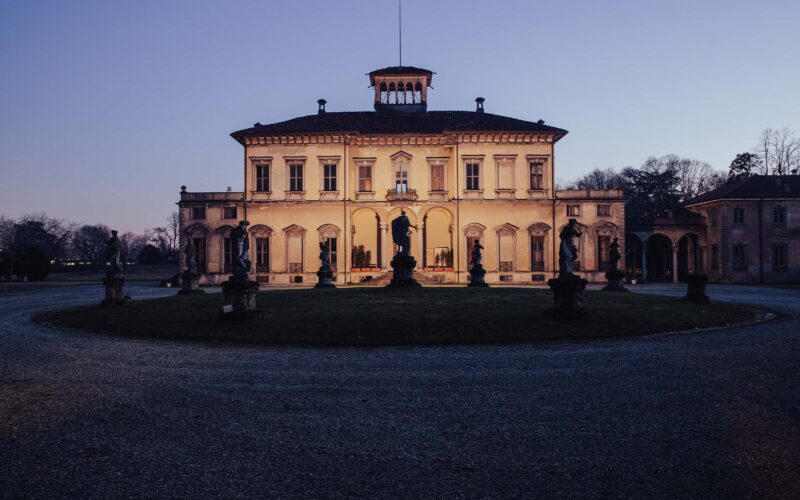
Alcova is an art and design exhibition experience that brings together more than 90,000 design aficionados at the Salone del Mobile in Milano, held from the 7th to 13th of April. Alcova 2025 quickly escalated into one of the most talked about venues within the Salone del Mobile, a prominent artful events in Europe. Curated by Valentina Ciuffi (Studio Vedet) and Joseph Grima (Space Caviar), Alcova expanded over 4 sites for its exhibitions, in the city of Varedo. On it’s ninth ediiton, Alcova 2025 chose Varedo, 20 minutes away from Milan, to set the stage for over 22 different artist’s installations in the heart of what once was the industrial epicenter of the 1970’s industry boom of large-sale production in Northern Italy.
The sites at Alcova 2025
Alcova 2025’s locations speak about and amongst each other. They tell a tale of innovation and reconnection to the wild through decadence. While exposing 60’s and 70’s brutalist architecture in old, left behind company construction spaces, the exhibitions narrate the stories of global communities. The Ex-SNIA factory, Villa Bagatti Valsecchi & Villa Borsani (previously activated in 2024), and the Pasino Glasshouse served as this year’s venues.
Four large-business spaces turned into vacant infrastructure create an ambiance of abundance and continuity. The choice of these spaces is both a political and social one. The venues question the very essence of design and progress. It is through these ghost-like abandoned spaces that nature is re-born. When filtering through the hard cement one can re-invent and re-purpose the structure to host global institutions, allowing designers and creatives to showcase their work. With a multitude of installations, and more than 100 designers contributing to this year’s Alcova, the event has established itself as one of the most important displays of new style and design landscape in the world.
The EX-SNIA industrial complex
A particularly great example of Alcova’s ever evolving presentation style and ground-breaking avant-gardism is the reinvention of the EX-SNIA industries satellite city.
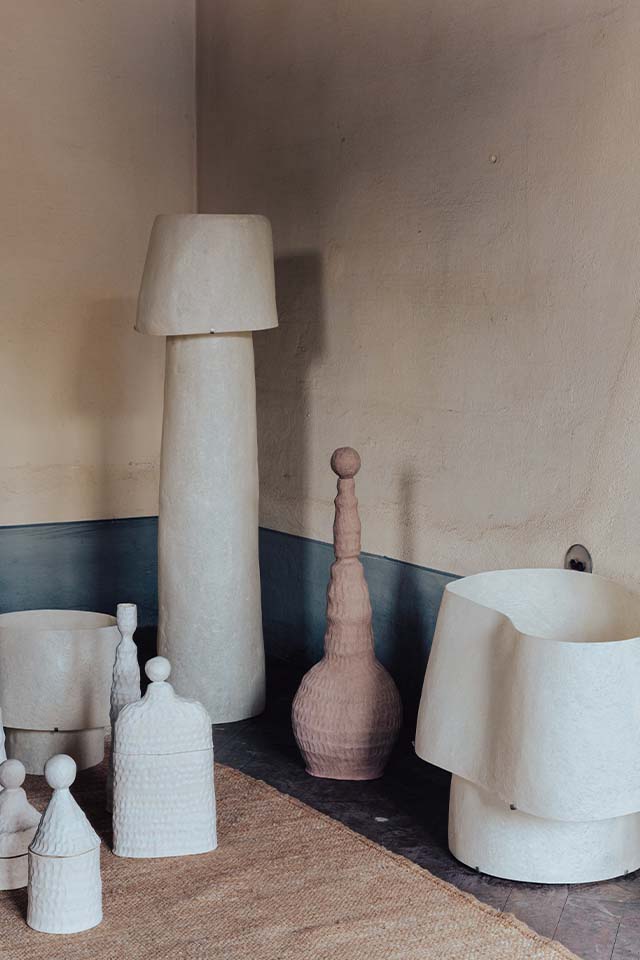
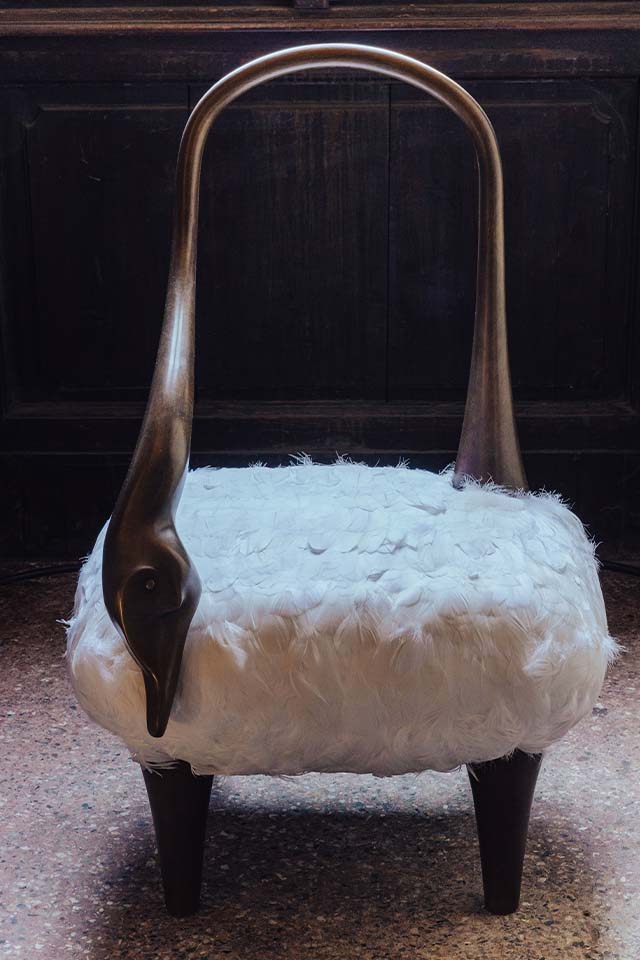
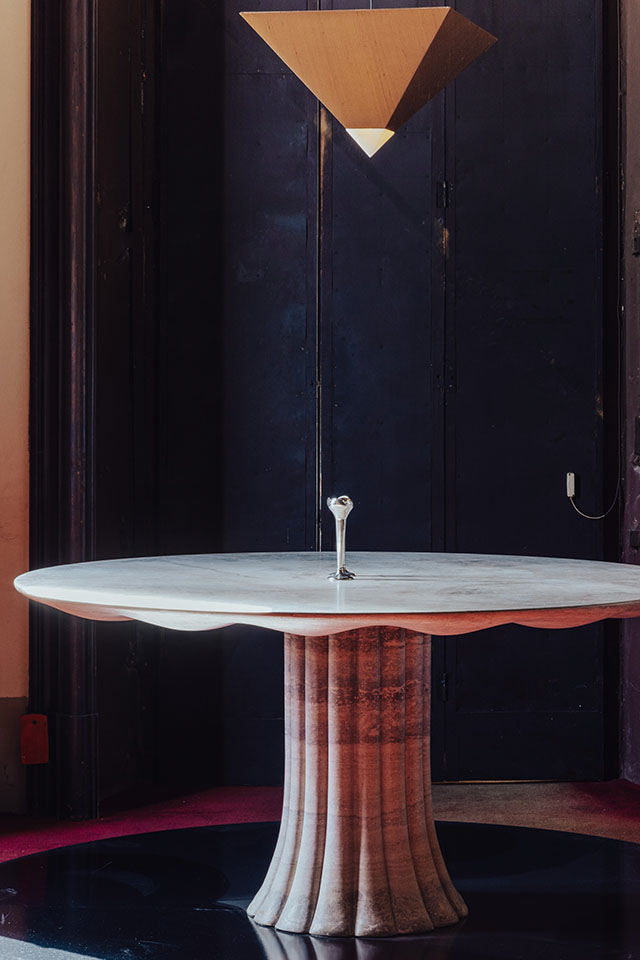
The city-within-city, built in 1922 by textile and chemical manufacturer SNIA, grew to represent 11% of all global commerce of viscose and artificial textiles at the time. Its heritage can be seen in the sheer scale of the structure, one of the largest of that area. Within the ex-SNIA factory, four design-forward exhibitions delineate and question sustainability and ecological progress, a stark contrast with the location’s history.
One of such four exhibitions, “Ricerca sui Materiali del Futuro” by Habitare, explores the potential future of materials, compositions, and styles of design with a look at sustainability and repurposing, in pure Alcova style.
Another fan-favorite installation at Alcova was “Ghost Orchids” by Mark Rusniak studio held at the Pasino Glasshouse. Within the greenhouse, large terrariums upheld grand bioplastic structures that mimic the aesthetic and life of orchids, as they are created using natural, decomposable materials.