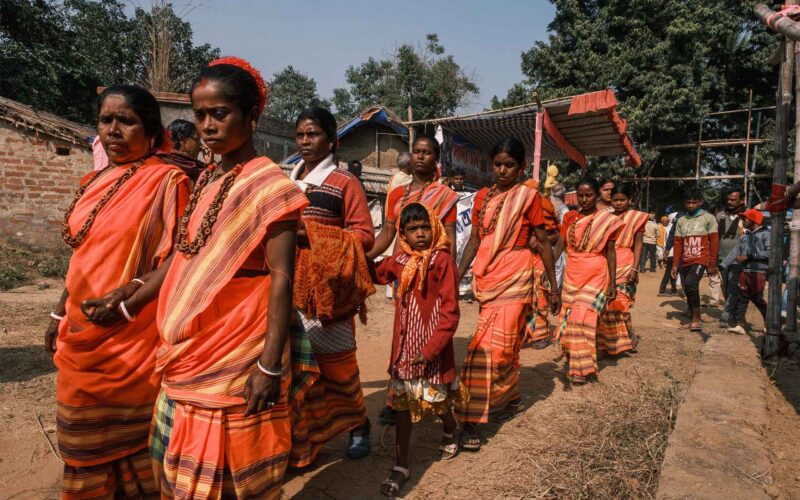
In their short documentary film, Crossing the Divide, photographer Eva Zanettin and visual anthropologist Raghav Pasricha open a window into the Baul and Fakir traditions of Bengal. The spiritual lineages dissolve the boundaries of religion, caste, and gender through song, poetry, and practice. The film is part of their larger Syncretic Traditions of India Project, an evolving archive of image, film, music, and translated poetry that documents communities devoted to universal love, non-violence, and humanist philosophy across the subcontinent. Crossing the Divide conveys the weight of years of study and fieldwork through just sixteen minutes of film. The filmmakers worked closely with Baul practitioners, scholars, translators, and mentors, weaving together voices that reveal both the philosophy and the lived practice of this centuries-old tradition. What emerges is not only an introduction to the Bauls but also an invitation to reimagine spirituality itself—not as something distant or abstract, but as discovered in the body, companionship, nature, and the immediacy of everyday life. In the following conversation, Eva and Raghav reflect on their process, the challenges of representing a living tradition, and the lessons they have carried from the Bauls’ world into their own.
Where did the title Crossing the Divide come from, and what does the “divide” refer to?
To address the first part of the question, we would have to rewind a little bit to four years ago, when we started the Syncretic Traditions of India Project, within which Crossing the Divide is housed. The Syncretic Traditions of India is an archive of image, film, music, and translated poetry that maps communities, practices, and places that espouse ideas of humanism, universal love, gender equality, and nonviolence across the Indian subcontinent. Crossing the Divide is our first distilled-down offering from the project for a global audience that is either unaware of the history of syncretic faith in India and/or is unable to understand the regional languages in which these philosophies are expressed and exist. The divide we are bridging with the archive and the film is philosophical, geographic, and linguistic. The title of the film acknowledges this mission but is also a tribute to the Baul and Fakir tradition that attempts to bridge the divide between communities, between genders, and between mortal and divine while remaining open to any seeker with no barriers to entry.
The film feels expansive for only a quarter of an hour. How did you decide what to
include and what to leave out?
Yet again, the answer lies closer to the birth of this project than to the film that you see. We were introduced to the philosophy of syncreticism, these traditions, and the music that lies at their core by Raghav’s aunt, Shubha Mudgal, who is a Hindustani Classical singer and composer, and his mother Ragini Pasricha, a public health professional and a student of literature. Ragini and Shubha guided us not only to enjoy the music as a beautiful sound but to begin to grapple with the philosophy expressed in the poetry. As you can imagine, despite reading and research our ability
to comprehend the depth and scale of what the Bauls and Fakirs were speaking about was limited. We took our rudimentary understanding and intense passion for the community and its music to the field and to the Bauls themselves. The film can cover enormous ground because we have been mentored in their philosophy by Uttam Das, who has practiced the Baul Sahdna (penance for decades). Prof. Shaktinath Jha distilled his lifetime of scholarship on the subject for us on camera. Shyam Sundar Gosain, Gaur Hari Gosai, and Rina Das Baul opened up their lives to us. This is a slow documentary, researched over two years, filmed over 60 days
in the field, and supported by the vision, genius, and generosity of an entire community. We have received all that was offered with an open heart and mind, and edited only enough to be able to reach the largest possible cross-section of people we could through a short film.
When making a documentary like this, how do you navigate issues like finding translators and experts and verifying their accounts?
The project design we worked on foresaw the need for mentors and for translators. We have learnt rudimentary Bangla and conducted interviews in the language. However, to identify the key philosophical, community and practice areas we were guided by project mentor Uttam Das who has been part of the Baul community for over three decades. We also had oversight and guidance from veteran journalists and subject area experts, Mukul Das and Ritacheta
Goswami.We sought academic mentorship from Prof. Shaktinath Jha, who is one of the leading scholars on the subject of Bauls and Fakirs. It is through their guidance and refining our line of investigation that we identified key ideas, poems, individuals and geographies. The translation from Bengali to English was done by an extraordinary young scholar, Meetra Bhattacharya. Finally we worked with Raghav’s mother Ragini Pasricha, who has four decades of experience in content strategy to further refine the translation to English that was suited to the subtitle format.
Many Bauls seem to weave together elements of different traditions. How do they themselves describe their relationship with Hinduism, Islam, or other influences?
The Bauls often describe themselves not as belonging to one religion, but as seekers who draw from many paths. Their songs weave together imagery from Hindu bhakti traditions, Sufi mysticism, and local folk practices, yet they resist being confined to any single doctrine. For them, the divine is found within the human body and in the immediacy of lived experience, rather than in ritual or institution.
When they speak of their influences, it is usually in terms of openness rather than affiliation. They might borrow language, metaphors, or practices from Hinduism or Islam, but always transform them into something uniquely their own. In this way, the Baul tradition becomes less about blending religions than about transcending boundaries, keeping the focus on love, freedom, and the inner journey.
It is perhaps interesting to know that the path to becoming a Baul, the penance needed to arrive at an enlightened state is not undertaken alone. It is taken on with a partner. The reason we mention this is that to seek the relationship with the divine the Bauls begin by confronting not just their mortal frame but the divinity that exists in companionship, in society and in shared humanity. All orthodox religions including christianity are read and reinterpreted by Bauls as possible philosophical paths that can be used to study the present moment which they inhabit along with all living and non living things.

Why do you think the idea of worshiping humanity in the present is so appealing or notable – in their context and in general?
What is striking about the Bauls’ idea of worshiping humanity in the present is its simplicity and immediacy. In a world where religion often points toward distant heavens or rigid rituals, the Bauls remind us that the sacred can be located here and now—in the body, in song, in love, and in the way we relate to one another.
In their context, this is both radical and profoundly humane. By placing the human being at the center, they dissolve boundaries of caste, creed, and dogma. More broadly, the idea resonates because it speaks to a universal desire: that spirituality does not have to be elsewhere or abstract, but can be lived in the intimate gestures of everyday life.
When we sought out the Bauls and other syncretic traditions of India, we realized that for over 1,200 years there has been a philosophical movement advocating gender equality, love across caste and religion, the rejection of violence, and the recognition of nature not as a resource to be exploited but as part of the shared life force that runs through all living beings.
This may appear utopian, but the Bauls and Fakirs have refined these principles through daily practice: from the ethic with which they mend and wear their clothes, to their rejection of private property, to their commitment to sharing all that they have—whether song, food, or enlightenment.
Few may have the discipline to walk the Baul path fully. Yet their example challenges us to act with greater care and awareness in our own spheres of influence: to cultivate equality, to practice compassion, and to consume with a deeper consciousness.
When Bauls refer to a journey into the domain of ideas leading to ecstasy, to what extent is that journey undertaken alone or guided by a teacher?
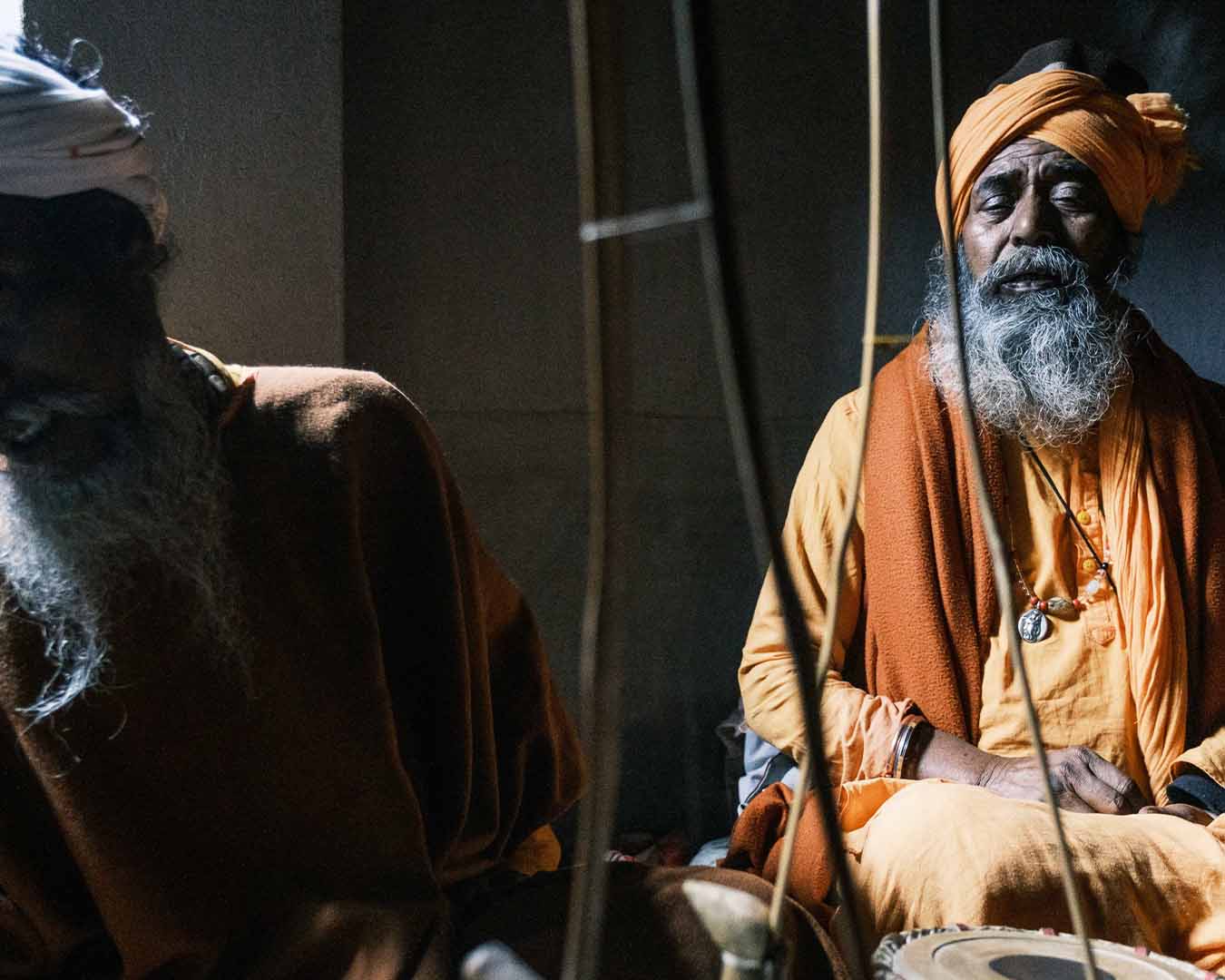
The path to becoming a Baul is not a solitary one even if the destination is often seen as a uniquely personal space of realisation. Baul philosophy is not codified into books and manuals, it is an unbroken tradition stretching back 1200 years. The guidance of a guru and a companion with whom to practice meditation and penance is essential to imbibe, understand, experience and practice this philosophy. The Guru is not a figure of authority but a guide who has walked the path before. Through song, dialogue, and shared practice, the guru helps the disciple navigate the inner landscape and avoid getting lost in jargon, concepts or the external and visible aspects of penance. The journey of interiority is initiated by the guru and carries on as a shared practice between the baul and baulini. There is an ever-present contradiction in the Baul journey where it is guided by the guru, walked on with a companion and yet leads the Baul or Baulini to a very personal and private space of enlightenment. Ecstasy, or the realization they seek, is not a material or external object – it must be discovered within one’s own body and consciousness and then shared as song with the world. In this way, the Baul path is both guided and individual: a balance between transmission through relationship and the intimate solitude of inner exploration.
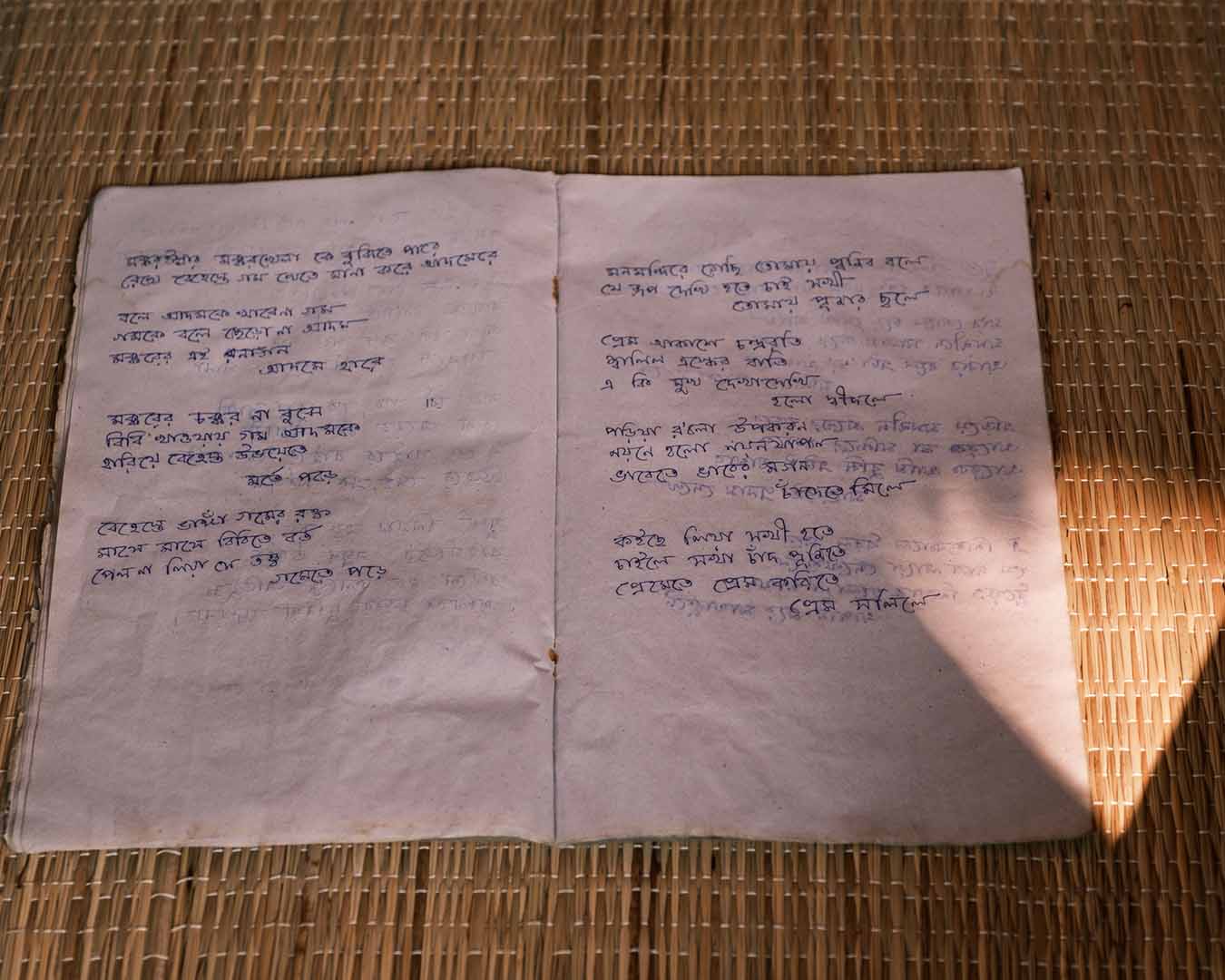
It is important to note that the mark of having achieved enlightenment within the Baul community is the writing of a poem that then one sings. This poem is the fruit, the core of what one has learnt through rigorous penance and the guidance of the Guru. The poem made into song is shared with the world and thus one becomes a Baul, which literally means, touched by the wind.
How do the Bauls interpret or live with the prohibitions against the six vices mentioned, and is there variation in practice?
The Baul tradition identifies six vices — lust, anger, greed, desire, intoxication, and jealousy — as obstacles on the spiritual path. The discipline of setting these aside is seen as essential for entering Baul practice. At the same time, few within the community present themselves as entirely free from these vices. The emphasis is less on the achievement of purity and more on the continuous effort of seeking.
The framework through which this search is carried forward is the poetry of the Mahajans — the masters of earlier generations whose verses, songs, and teachings have been transmitted to disciples by Baul gurus and remain central to the practice today. These poems provide both guidance and a living canon for interpretation.
In Baul communities, it is generally regarded as inappropriate to claim enlightenment. Even the title of Baul Guru is not self-assigned but conferred by peers, based on teaching, mentorship, and the ability to guide seekers. The path does not rest on the perfection of the practitioner but on the ongoing act of inquiry. What defines it is not the absence of the six vices but the sustained search for truth within the immediacy of lived experience.


One person in the film describes Baul as a person who is “mad for love”. What has it felt like, subjectively, to be among people who could be mad for love?
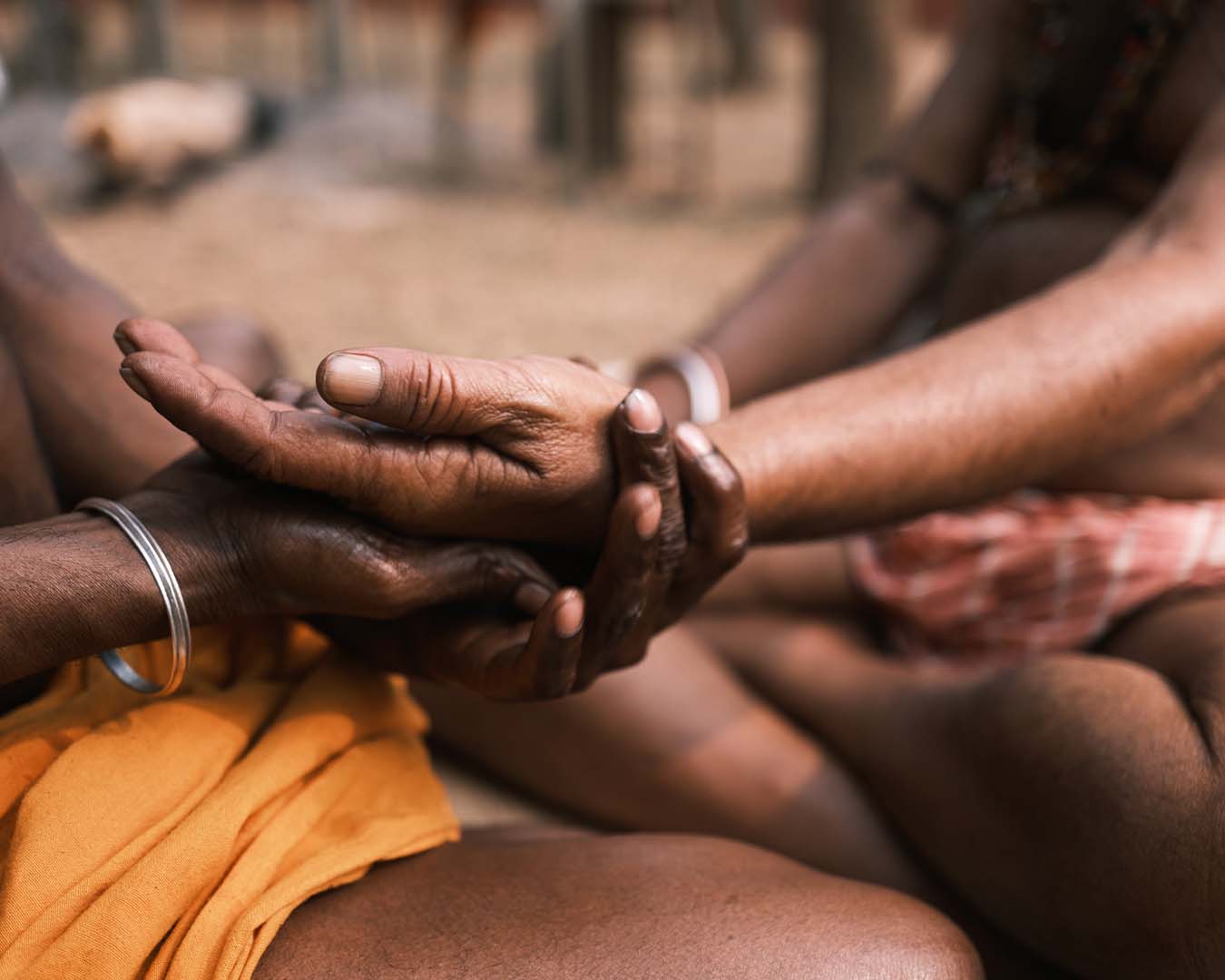
It felt like being home at long last. Within Baul thought, the idea of being “mad for love” is not associated with excess or instability, but with devotion — an ecstatic orientation toward love as a guiding principle of life. This love is not confined to romantic attachment but extends toward humanity, the divine, and the natural world. In practice, this disposition is expressed through song, hospitality, and the sharing of knowledge, food, and care without expectation of return. Communities that identify with this ethos often emphasize generosity and the dissolution of boundaries between self and other. To be among those described as “mad for love” is therefore to witness a way of life shaped by an ethic of giving and openness. It is also to encounter a counterpoint to prevailing global conditions of division, violence, and conflict: a living tradition that insists on love as both practice and philosophy.
What is the historical and spiritual significance of the Baul reputation for wandering?
The word Baul is often understood as “one who is touched by the wind,” a metaphor that conveys both freedom and a sense of inspired detachment. Within Baul and Fakir communities, the term khepa—loosely translated as “mad”—is used as an honorific, indicating respect for those who dedicate themselves to a life beyond conventional attachments. Historically, Bauls have been itinerant singers and practitioners, moving from village to village without property or possessions. Their wandering serves multiple purposes: it sustains an ethic of non-attachment to material goods, provides a means of livelihood through alms, and functions as a form of social and spiritual service by carrying the songs and philosophy of past masters, the Mahajans, across regions. Spiritually, the act of wandering is less about seeking a distant deity and more about deepening an understanding of the self and the present. For the Bauls, the body (deh) is regarded as the true temple, and the journey outward through movement parallels an inward search for meaning and purpose within worldly existence.
How do the Bauls pass down their music and philosophy?
The Baul tradition is an oral one. There are no manuals, manuscripts or texts that are studied by seekers who wish to walk the path. The phases of the Baul journey as summed by some practitioners are – the unawakened, the one who is changed or seeks change, the seeker and the enlightened. This journey begins by being awakened by the words of the Mahajans (Baul masters whose poetry forms the core of the philosophy). The awakened then must find a guru who will lead them to a deeper understanding of Baul poetry and lead them to the path and practice of enlightenment. Coupled with learning of poetry, symbolism, key philosophical concepts, the Baul gurus also guide their students through complex physical acts of penance and discipline. The Baul philosophy holds at its core the idea that the body is the site/home of all divinity and creation and it is only through a mastery of body and mind that one can hope for enlightenment. However, the impetus to walk the baul path must come from the student and his or her first challenge is to find the guru who can help them on this quest. Many Bauls told us that as early as age twelve and ten they felt a calling to live a life that was different from what they saw around them. They spoke of having heard Baul gaan, Baul music, and having been enthralled by the mystic poetry compelled to leave their families and seek refuge with a Guru who would give them diksha, initiation.


In the film, music features as a pathway to transcendence. How does the performance context (wandering, intimate gatherings, festivals) shape that experience?
Baul poetry is rich in metaphor and double meanings. A song about husking grain, for example, may speak to simple daily acts while also hinting at methods of refining the life force within the body. This layered style allows Bauls to convey complex spiritual ideas through ordinary images—the moon, a mirror, the beating of iron—often challenging orthodox notions of purity and ritual. Music is their pathway to transcendence: performers interpret reality through song, igniting in listeners an awareness of love, equality, and non-violence. At festivals like Kenduli Mela, Bauls perform for thousands on makeshift stages, creating a continuous flow of music, dance, and theatrical gestures. Yet in private, their practice is quieter and meditative: each evening, they light a candle and sing for hours, repeating the same poetry sung in public but in a reflective, intimate dialogue. In this way, song is inseparable from life—an act repeated daily, in all conditions, sustaining both body and spirit.
How do the Bauls organize themselves socially, if at all, and how does that shape their community life?
The Bauls do not form a structured organization in the conventional sense. Their community is held together more by shared practice and philosophy than by formal hierarchy. Traditionally, the relationship between guru and disciple is central, providing both spiritual guidance and a sense of belonging. Gatherings at festivals or akhras (meeting places) create spaces where music, song, and dialogue sustain the collective spirit. This loose, fluid way of organizing reflects their values: freedom, equality, and devotion expressed through song. Rather than being bound by rigid institutions, the Bauls shape community life through lived experience, hospitality, and the bonds of a shared search for truth. That having been said we saw Bauls host each other in mud huts, rustic homes, open fields. Their fragile economics did not prevent them from being warm and gracious hosts. On many evenings food and songs were shared between Bauls. As wandering minstrels this practice of hosting, living with, eating with, seeking and offering refuge seems informal and yet deeply entrenched within the community. The Bauls are spread across five districts of West Bengal, India and they have been known to visit neighbouring states where parts of the population speak Bengali. These road journeys can take days and even weeks when public transport and hitched rides are the only mode of commuting and yet we did not find that the Bauls lacked places to find shelter or food. In most villages they have friends, followers and members of the community who welcome them with open arms and doors.
How does the Baul concept of gender express itself in their daily lives, practices, or social roles?
A key figure in the Baul philosophy and mythology is the saint Chaitanya Mahaprabhu. While there are many retellings of his story, the one favoured by the Bauls is that Krishna (an incarnation of the hindu god Vishnu) returned to earth to understand what is true love, or more accurately what is ‘Bhakti’, a complex mixture of devotion and love. In order to understand Bhakti he returned to earth in the body of Radha, who was the love of Krishna’s life. This union of the feminine body of Radha with the divine soul of Krishna is seen as the plinth of which the gender conception of the Bauls is built. For the Bauls it is the union of man and woman that creates the possibility of life and this is the only true miracle of divine energy that can be seen, felt and known. However, the biology of male and female does not as per them determine the presence of masculine and feminine energy within each individual. They see gender as a balance of energies that must be sought through meditation and practice by each and every individual. For the Bauls the unity of mortal and divine is sacred as the unity and equality of gender.



What challenges do Bauls face in keeping their tradition alive in contemporary society?
The Bauls face multiple challenges in sustaining their tradition in contemporary society. Modern economic pressures and changing lifestyles make the wandering, ascetic life increasingly difficult to maintain. Many families hesitate to allow children to take on the path, and surviving on minimal income—often collected through singing and alms—is harsh. At the same time, urbanization and migration have altered the rural communities where the tradition has historically thrived.
Despite these pressures, interest in Baul music and philosophy remains strong. Urban youth and international students are seeking initiation, and performances at akharas and melas continue to attract audiences. However, commercialization of Baul music often benefits others more than the practitioners themselves, highlighting a tension between tradition and exposure. Yet, the Baul way endures, adapting while maintaining the core values of devotion, simplicity, and shared humanity.
Are there any lines from a Baul Gaan that have particularly resonated with you, and if so, would you mind sharing them?
Some of the themes and lines that tend to resonate most with listeners, including us when we’ve read or heard them in translation circle around the idea of the “inner man” (maner manush) verses often describe searching for the beloved hidden inside the self, reminding the listener that what we crave in the outside world is already within; Gender union imagery, the merging of male and female principles, body and soul, is described with metaphors of rivers meeting, or the moon and sun sharing the same sky. And everyday metaphors, songs use images of farmers, boatmen, weavers, or potters to express spiritual truths that we’re all “craftsmen” trying to shape the clay of life into something whole. One of the lines that stays with us is “Why search in temples or mosques? The true temple is the body—learn to know it, and you’ll meet the eternal there.” It resonates because it collapses distance: the divine is not somewhere else, or tied to a religion, but in our lived body and shared humanity.
What tenets of visual anthropology did you find to be particularly relevant in the making of this film?
Raghav Pasricha – My education in visual anthropology and symbolism came alive for me during my time with the Bauls. While making this film I thought often of Judith Butler and her book ‘Frames of War’. Butler’s theory about the difference in how some lives are grievable and worthy of protection while others are not in the modern world is not only echoed but remedied by the Baul philosophy. For Bauls all life is life worth loving and celebrating. Unlike an instagram caption that says ‘love to all’ the Bauls live and practice this love with such rigour and such self discipline that it forces one to recognise the insanity of violence, over consumption and hate in our modern world. Much like Butler, the writing of Jacque Lacan inspired me during the making of this film. The Bauls layer the world in metaphors and symbols and it is through their metaphors that they make reality hyperreal and reveal for one and all its lack of logic and its cruelty. For me the Bauls are worldly philosophers whose poetry expresses much of what I have studied at university with a different pathos and much of what I have studied enabled me to grapple with the Bauls and their philosophy. Through my viewfinder I found a merger of my academic training and my artistic vision and I hope and pray I continue to find it for the rest of my life. It is the ‘impossibility of bearing witness’ Agamben, that we seek to find a remedy through our shared work and life.
What do you believe makes for a good portrait, and how has your approach to portraiture influenced this film?
Eva Zanettin – A good portrait is less about resemblance than about resonance. It’s the moment when something unspoken emerges—a glance, a pause, a presence that feels true. I see portraiture as a way of listening with the camera, of holding space so that a person’s inner world can surface. I tried carrying that sensitivity into Crossing the Divide. The film is, in many ways, a series of living portraits—of the Bauls and Fakirs of Bengal, their music, and their way of being. By working with the same attentiveness I bring to still photography, I aimed to create space for their voices and rhythms to guide the frame. Instead of staging or directing, I sought to build trust and let intimacy grow naturally, so that what comes through feels both honest and deeply personal.