What happens when an Architecture Biennale chooses not to put itself at the center, stops asking us what we can build and instead invites us to ask ourselves how we can live intelligently?
The answer—or rather, the fertile ground for the question—is Intelligens: the title chosen by Carlo Ratti for the 19th International Architecture Exhibition in Venice. Not a manifesto, but an open model. Intelligens, not an Italian nor English word, is rooted in Latin. The title speaks to a hybrid audience and evokes multiple forms of awareness, reflective of the natural, artificial and collective intelligence to which it refers.
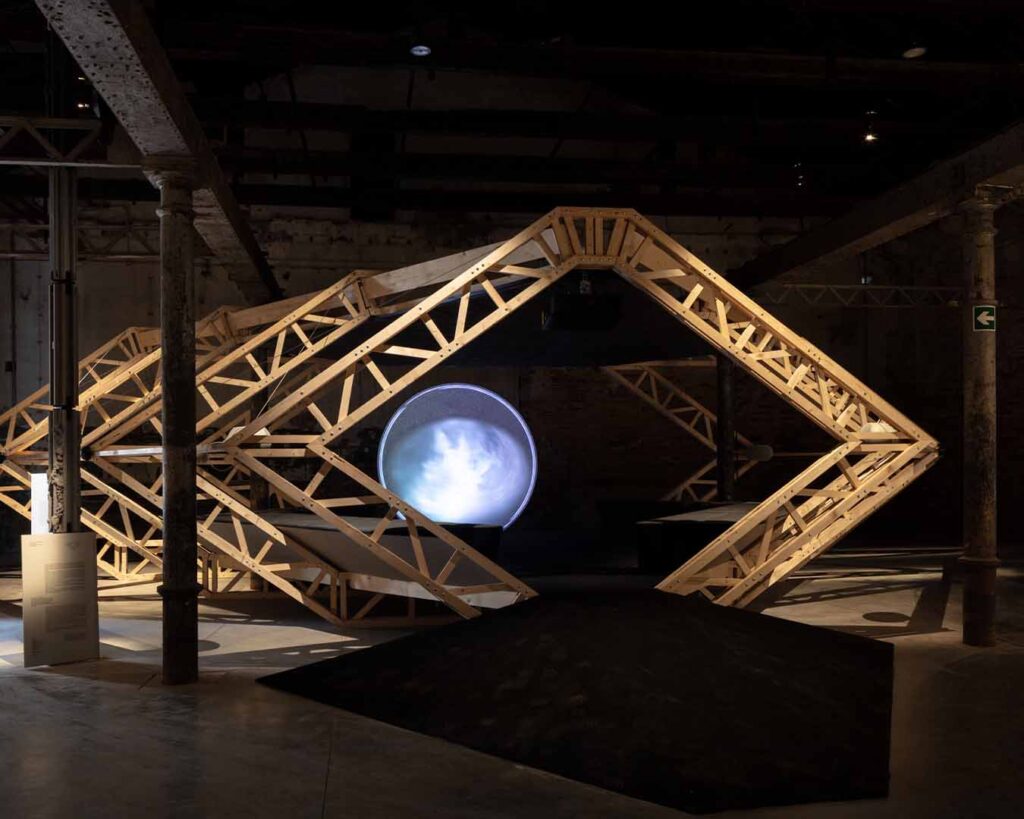
In an era shaped by ecological urgency, digital automation and social disconnection, the question of how we live has become architectural at its core. That’s why the exhibition, which will open to the public this May, does not promise to be spectacular but serves as a call to co-intelligence, to decentralize design, to leave space for natural, artificial and collective forms of knowledge giving space to systems that architecture often overlooks.
It is no coincidence, then, that intelligence is spoken of in the plural: natural, artificial and collective. It emerges only when we truly listen to one another—among architects, citizens, artisans, philosophers, technicians, farmers and artists.
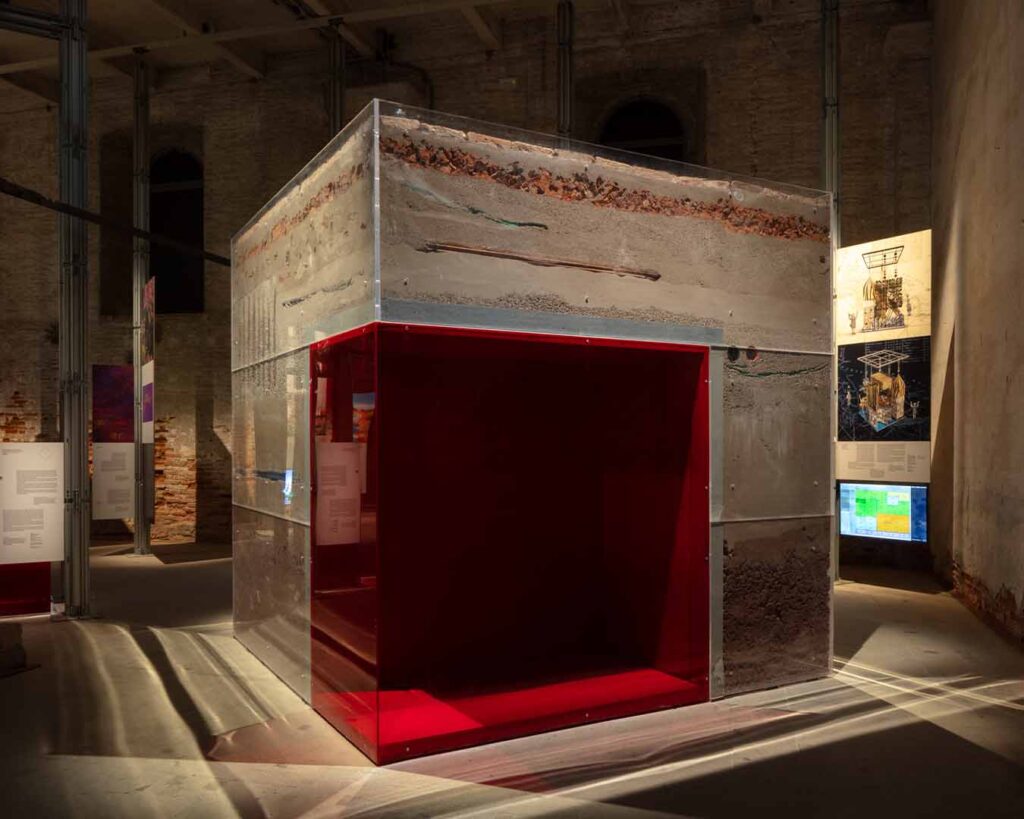
Architecture, perhaps more than ever, has become the place where complexities of the world converge. As Ratti stated, “Today architecture – and architects – are called not so much to mitigate, but to adapt, to rethink themselves in relation to a broader and more heterogeneous system which is simultaneously climatic, urban, ecological, technological and human.”
In a contemporary world saturated with prepackaged solutions, this Biennale takes a different stance: it chooses to step back, to meet the uncertainty of our moment not with declarations but with shared inquiry. The event stands not as a finished exhibition to explore with and audio guide, but as a space of possibility and a living network of questions and participatory thought.
This Biennale’s ambition is already taking shape through several key projects that make ideas physically and experientially tangible.
At Forte Marghera, the installation titled “Margherissima” reimagines space as a living laboratory, where new and adaptive design strategies bring natural and artificial intelligence into dialogue, creating spaces that respond, listen and evolve.
Sixteen projects from emerging global talents—selected through the Biennale College Architettura—will dive into themes such as circular economy, local ecologies, and community-centered practice to provide proposals grounded in local context and planetary urgencies.
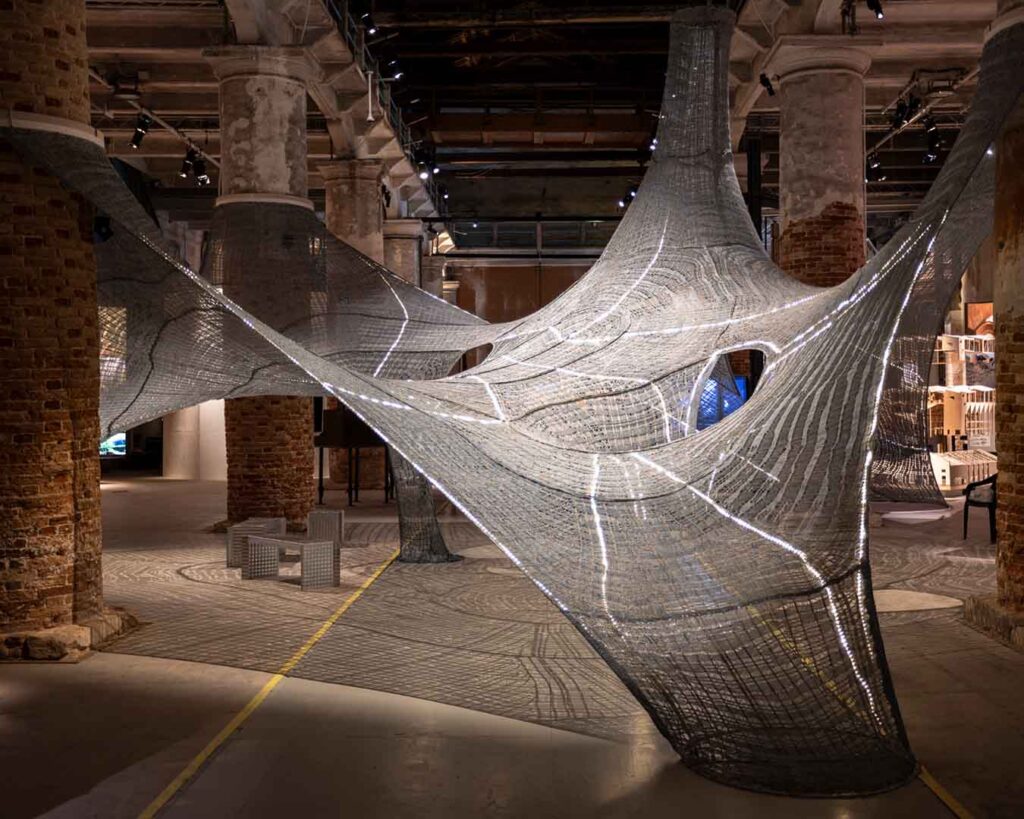
At the same time, GENS Public Programme promises an evolving constellation of performances, talks, and experimental formats stretching across the city, from Ca’ Giustinian to the Teatro Piccolo Arsenale, blurring the lines between curation and participation.
The national pavilions are also shifting focus. The French Pavilion will tackle architecture’s role in climate resilience, while others will explore issues like food sovereignty, housing justice, and the role of ancestral knowledge in future design to provoke, question and connect participants.
In this new perspective, this year Venice will be a porous organism: no longer a showcase city nor a stage, but a widespread laboratory where ideas, doubts and debates can emerge and evolve.
The real revolution of this Biennale lies precisely here: in the beginnings of a mental architecture. A process that requires availability, relationships, time, listening and sharing.
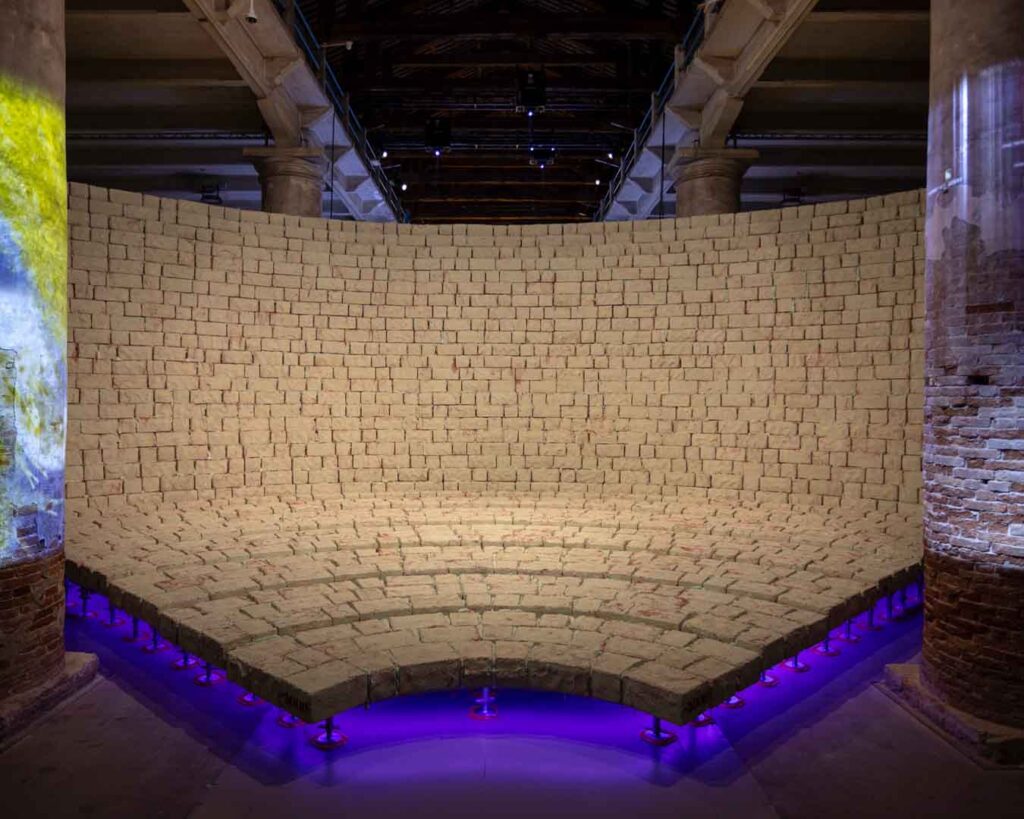
The 2025 Architecture Biennale has just began, but it has already started spreading a promise of transformation that lets us imagine pavilions that don’t want to amaze- but stop, installations that don’t speak- but listen, paths that invite us to stay- rather than to see.
The Biennale presents itself as a critical practice, as an unfinished curatorial effort, as a necessary invitation to build, but not buildings. It suggests a new kind of architecture, made of new shared imaginaries and common languages where the environment, technology and communities don’t compete, but engage in dialogue. The event speaks to our need today of a new way to imagine how we could live, together.