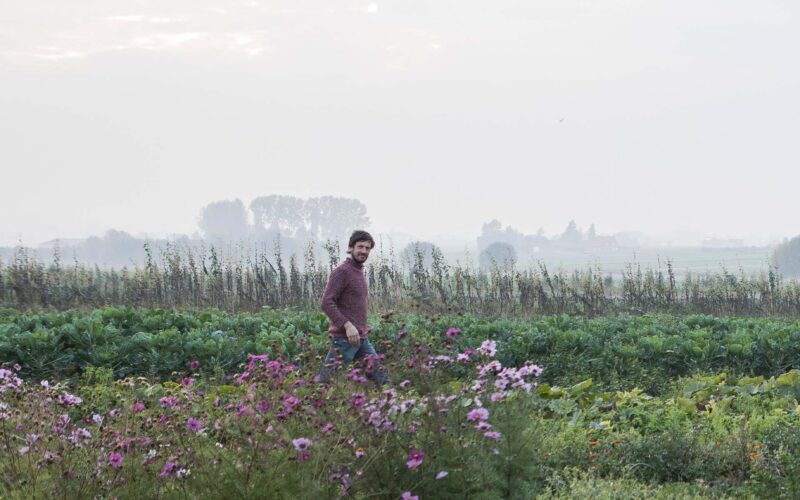
A symphony of leaves, flowers, and scents. The plants grow both wide and tall, in an apparent freedom. They seem comfortable. They seem happy. It’s hard to tell where one crop ends and another begins. Like the sounds in a city, flowers, leaves, and fruits intertwine, coexist, overlap in the green tapestry that stretches across everything. A true world of a thousand colors—Le Monde, des Mille Couleurs—indeed.
That’s the name of Dries Delanote’s farm, located in West Flanders, which in over 20 years of regenerative farming has built a name for itself among the niche of top biomarkets and artisan chefs across Brussels and Paris. This year, it was Top50Farms.org’s list of the Top 50 Farms in Europe. Recognized as a model of regenerative cultivation, the farm promises the future of agriculture. We set out to uncover the vision that drives this farm’s success, and to offer a window into the creative vision it dares to suggest.
So, who is behind this project? Who is this Dries Delanote, whom some Belgian outlets have dubbed “the Che Guevara of agriculture”? Although the idyllic landscape of his farm is a far cry from the images the word evokes, what this Belgian farmer is doing with his piece of land is a genuine Revolution. The project, like all great movements, cannot be understood without first looking into the man behind it.
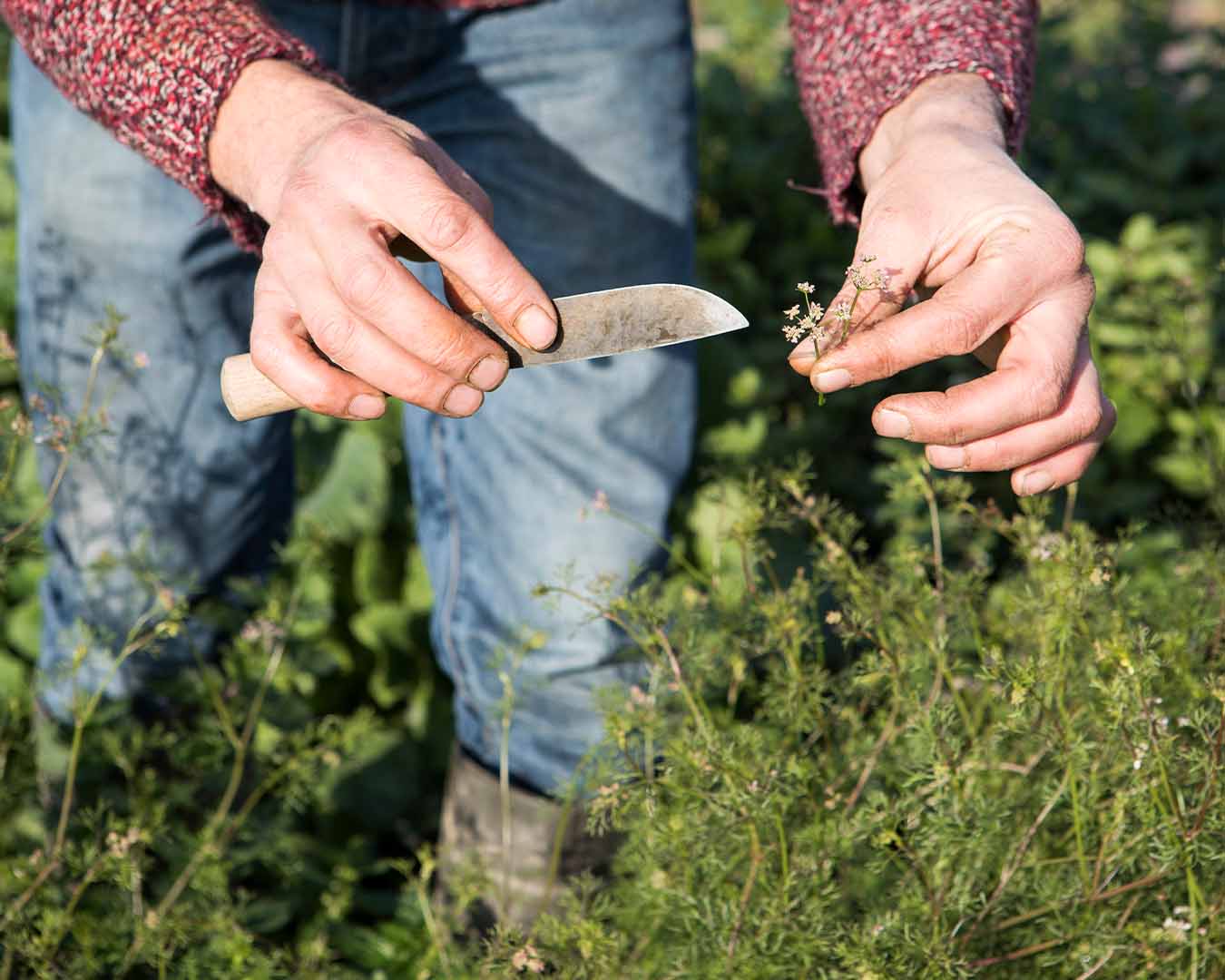
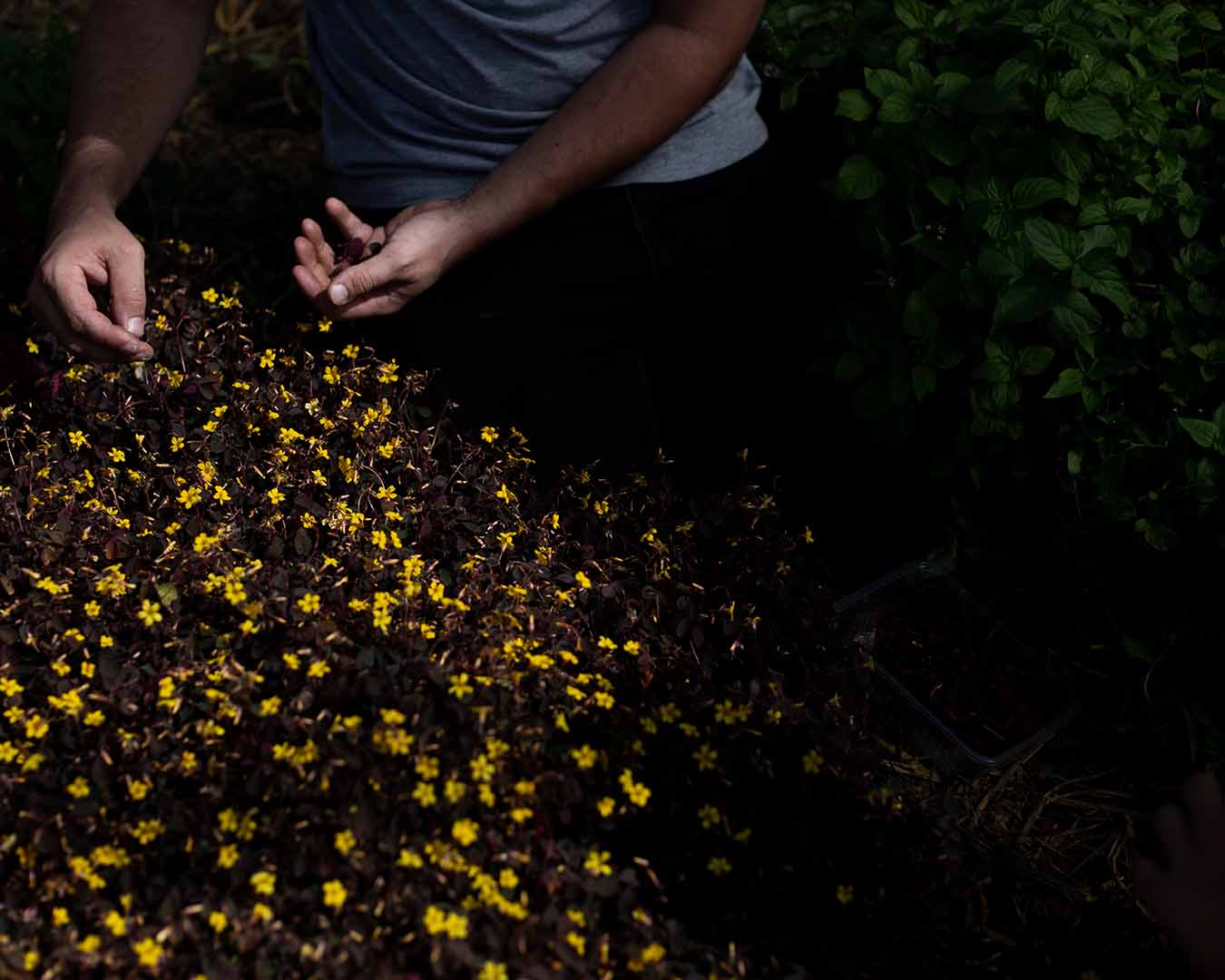
Dries Delanote is the son and grandson of farmers. His family comes from these very lands in Western Flanders. He began working in the family farm, studied for years at an agricultural institute, and traveled across continents. Having never lost interest in farming—or in its possible evolutions. He decided to dive into it, but on his own terms. In contrast to his neighbors, and to his own family (who farmed vegetables for the frozen food industry), Dries has adopted an approach that is new, but (in his words) ought to be the norm. His method puts plants first, treating them fully as living beings. He strongly opposes the use of pesticides, follows wild-farming principles, and the only mechanical tool in use is his tractor.
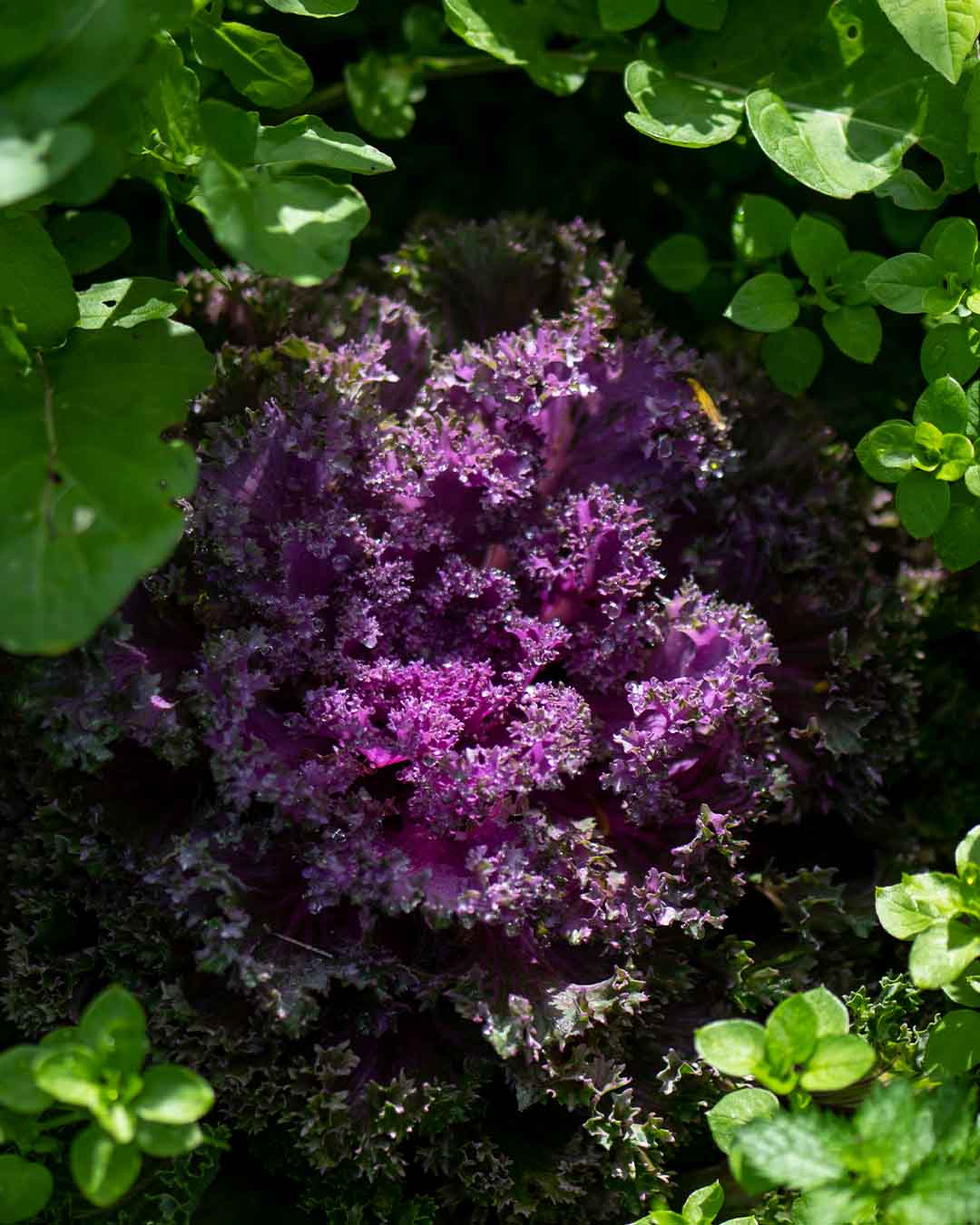
When listening to him speak—or even just reading the (beautiful) descriptions he gives of his project—it’s clear that what moves him is a deep impulse, both ethical and unmistakably political (in the best sense of the word). Taking a further look at his garden — the spectacle of edible flowers, historical herbs, cauliflower variations, radishes, all grown and arranged in a poetic freedom of expression — a distinct aesthetic sensibility becomes apparent.
Le Monde, des Mille Couleurs is built on the principles of permaculture, where the goal is not yield, not productivity above all, but the achievement of a natural balance that allows plants to grow in harmony as they do in the wild (hence the term wildfarming). To achieve this, soil health is paramount.
A healthy soil—one not exhausted for its output, but instead cultivated with respect for its layers and the rhythms of the microseasons—is to Dries the soil of the future. More resilience yields a healthier and tastier harvest, making the use of pesticides unnecessary. This way, the plant lives in complete connection with its surrounding environment, exchanging life and nourishment with the complex architecture of the underground. Fungi, bacteria, worms, and insects are collaborators: part of the overall balance proper to every natural ecosystem. They help decompose organic matter, further enriching the soil and strengthening plants’ resilience, enabling them to defend themselves even against a normal proportion of pests.
The same ethical, balanced approach is applied to seasonal management. Crop growth isn’t rushed to fit a certain timeline of output. Instead, ecological patience – and trust – is observed, and every micromovement of a free-growing plant is taken as a story on its own, as a single unique chapter of the ever-changing system it’s part of.
A well-rooted plant that has survived the winter gives a better taste. By regenerative farming we increase the 9 lives of a plant by ‘slowfarming’ of a perennial system instead of an annual agenda
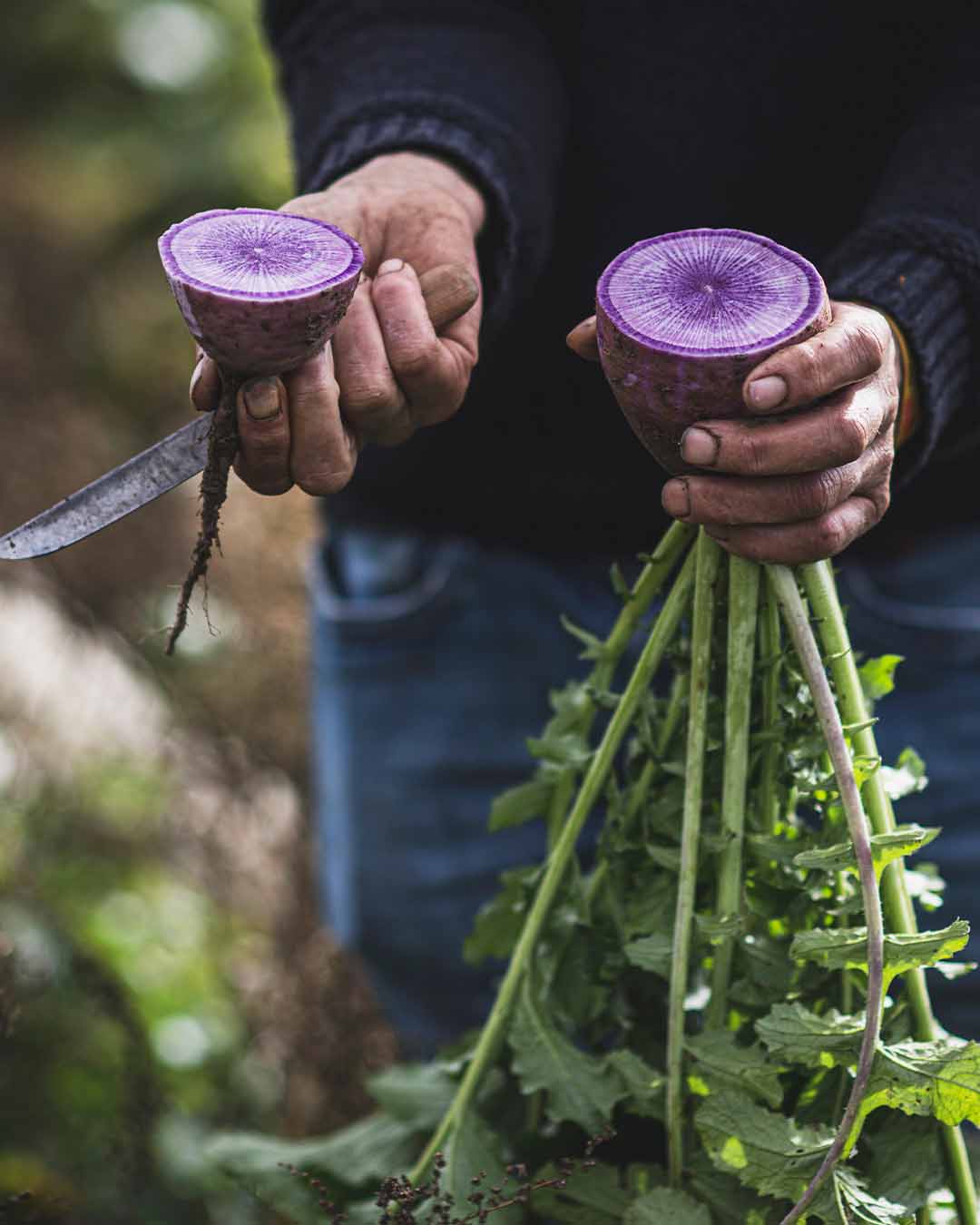
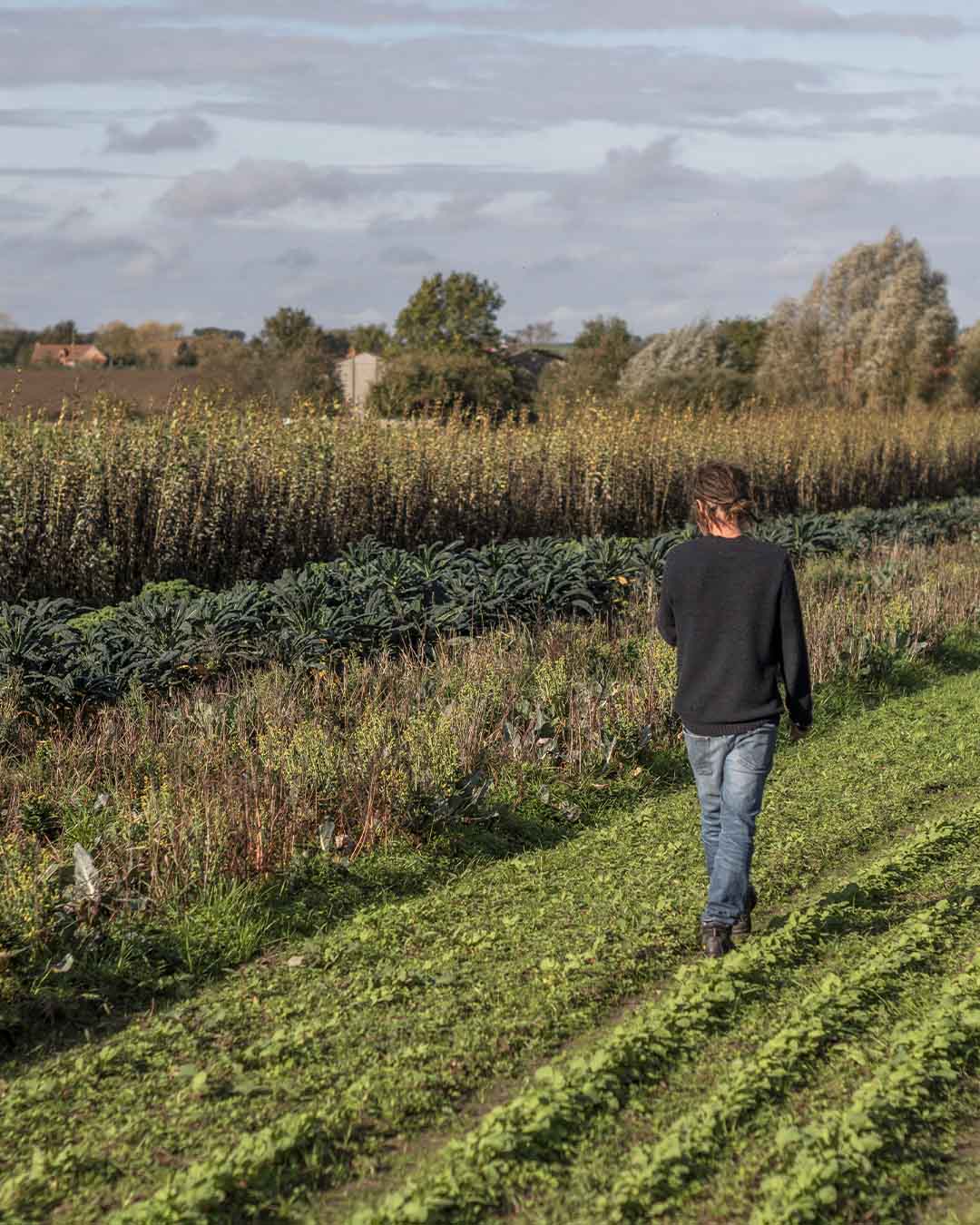
In this aspect lies the true essence of regenerative farming: empowering the earth we make use of, protecting its health and biodiversity while enjoying its fruits. It’s about maintaining a reciprocal, caring relationship between us and the environment- Respecting natural cycles and thinking about the future.
If sustainability means leaving no trace, regeneration means planting new ones.
Additional—and complementary—to this vision is Dries’ devotion to botanical diversity. The farm grows an incredibly rich array of herbs, flowers, and forgotten vegetables. Just about everything from wild cauliflower to rutabaga, warm mushrooms, schorseneer, topinambours, capuchin flower, berries, wild carnations, and all kinds of relative variations can be found.
These variations aren’t chosen for their yield or marketability, but for their story, their resilience, their ability to speak to a different rhythm of agriculture — one that listens instead of dictates. Chefs—those with a feel for nuance, for bitterness, for natural realism—understand this intimately. For these chefs, Dries isn’t a supplier—he’s a co-creator. They value the depth his plants can offer, and happily challenge their kitchen to think differently.
These are the unique characteristics, which stand behind the farm’s present success. Looking ahead, however, Le Monde des Mille Couleurs doesn’t position itself as a finished model, but as a growing conversation. Its cultivated area has steadily expanded since the beginning, and Dries shows no intention of settling his already notable and recognized work. New projects, of divulgation and with a broader sustainability focus, are always ongoing: the farm offers traineeships, workshops, guided tours to share its vision and lead by example. More ambitious ventures – exploring or provoking new solutions in the field of sustainable architecture – are not feared to be undertaken. In this sense, Mille Couleurs is less a brand than a platform: not static, but breathing — a soil-based think tank.
What sprouts here isn’t only edible, it’s a vision for how we relate to the world around us. One where patience becomes productivity, and beauty is treated not as decoration but as a principle. Dries Delanote’s example isn’t confined to food production. In it we find stimulus to rethink our approach to fashion, to transport, to how we build and consume. His garden, with its rebellious beauty, represents an alternative to synthetic, unnatural life. It invites us to imagine a regenerative existence for ourselves, balanced and wild, both resilient and poetic.