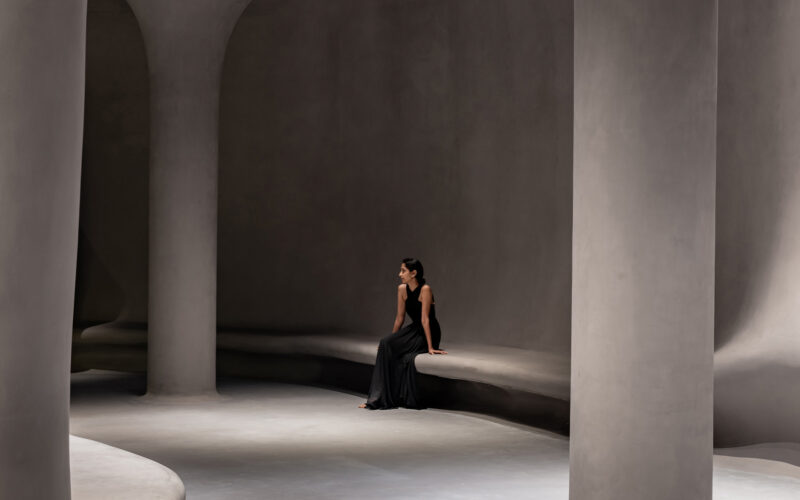
As the principal architect of the Aatma Manthan Museum, Sanjay Puri is notable for being a strong believer in prioritizing not only the design of his creation, but also the process of its creation. Puri values the use of sustainability to showcase his architectural skills, thus integrating sustainability and value into every project he has paved; one of them being the Aatma Manthan Museum.
Located directly underneath the 369-foot tall ‘Statue of Belief’ where Hindu god Shiva remains in a meditative state overlooking the Rajsamand district of India. Seated in such heroism, the sun reflects off of its copper-red figure, producing the glitter of anticipation that surrounds the museum.
The immersive experience opens to a foyer of homogeneously curated structures that extend into a myriad of different rooms compiled using diverse volumetric shapes and foam concrete for its fluid appearance. These tools seamlessly transport visitors into a world of self-discovery.
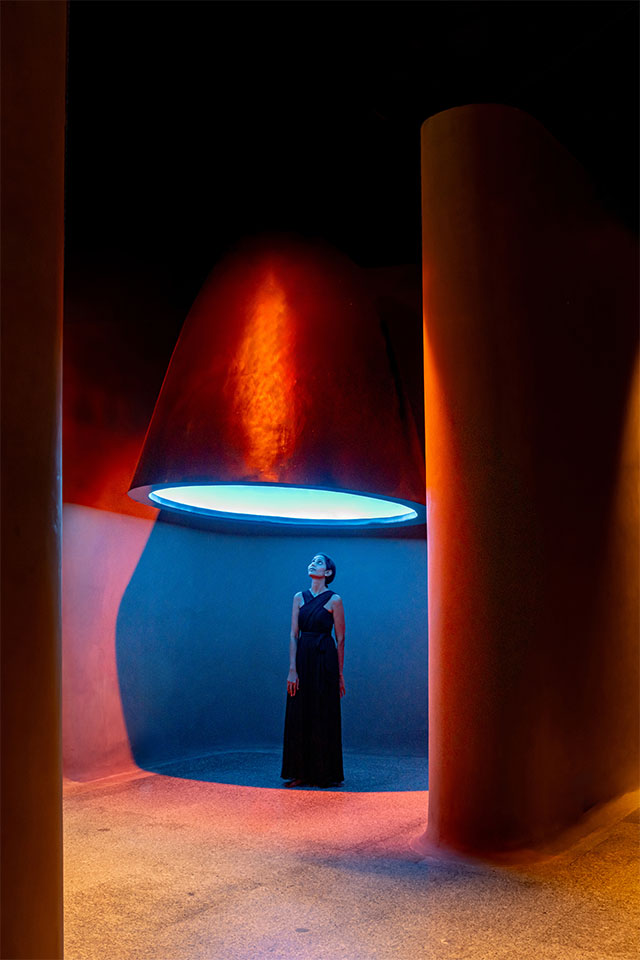
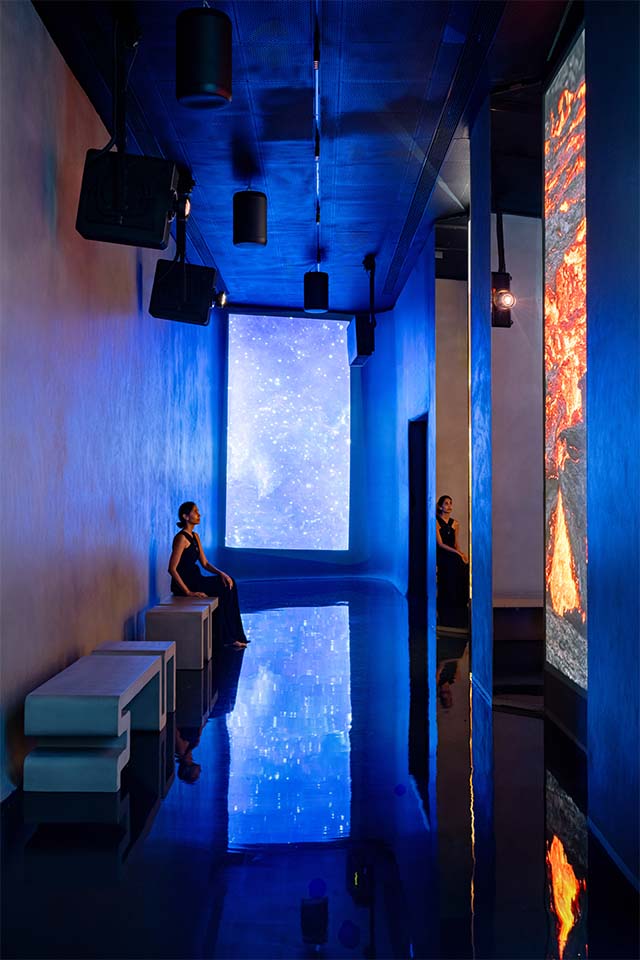
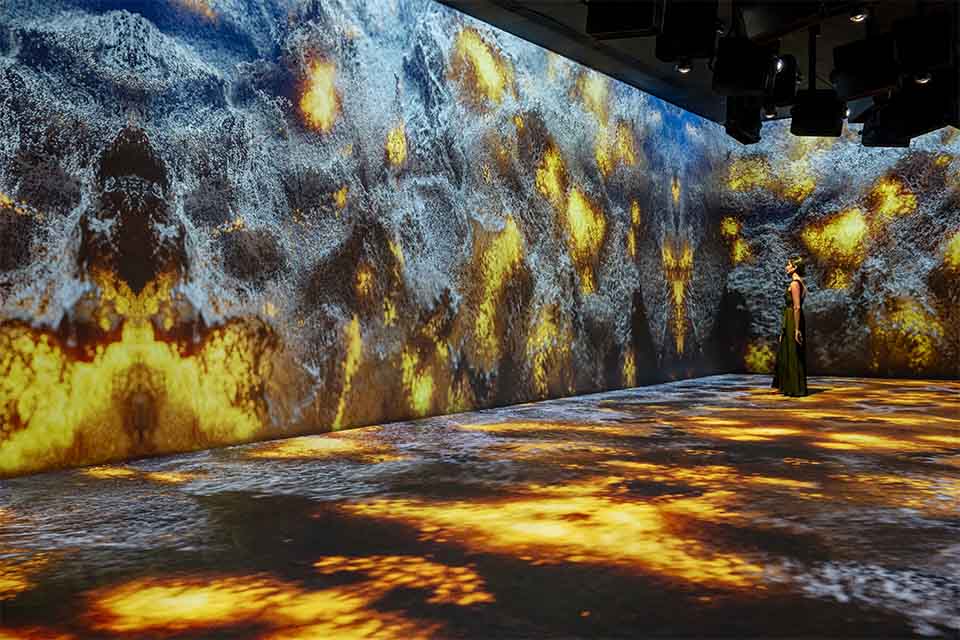
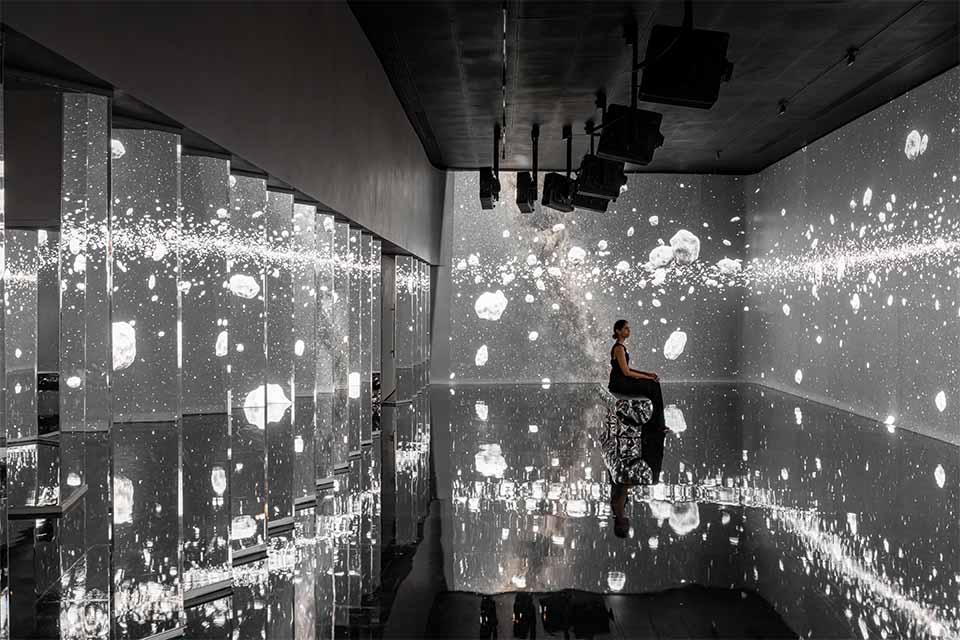
Each room of the museum showcases a visual complexity partaken by the material used in its creation, specifically, foam concrete. As a lightweight construction material, composed of cement, water, and foam, it absorbs sound along the site’s irregular 18,000 square foot plan. This creates a distant ambiance of a subterranean temple.
Nurturing a tranquil state of harmony, the museum boasts its alluring grey interior, interactive screens, and ‘sinuous silhouettes, produced by the fluid structure of reception, seating benches, and pillars. The whole design of Sanjay Puri ultimately refers to the origins of Hinduism.
The proximity to Shiva, meditative designs, and tranquil elements all allow the escape of reality. The components encourage visitors to seek self-discovery within the Aatma Manthan Museum, a successful testament to the power of faith and spirituality.