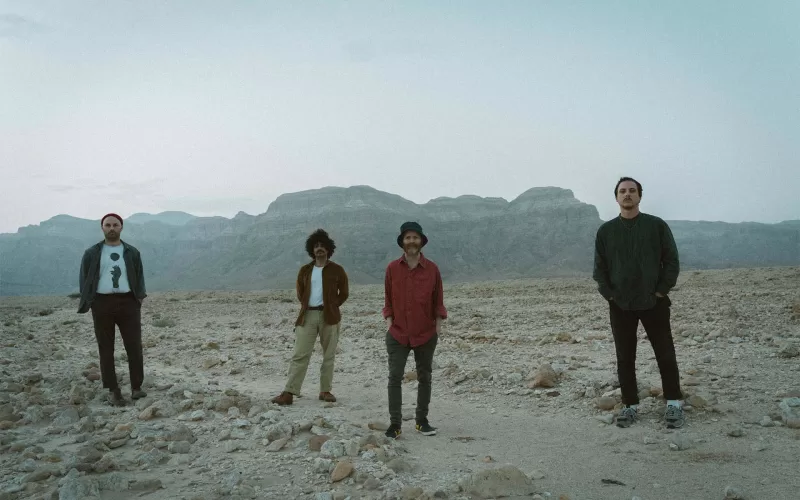
Sababa 5 are known for their organic approach to making music, each album feels like an exploration into new soundscapes, while staying rooted in a deep respect for tradition and culture. As they prepare a new stage of their music journey and as they are becoming more familiar to the European audience, the band reflects on their musical style, collaborations, and vision for the future. Eitan, the band’s keyboard player, kindly let us peek into their creative and collaborative processes.
In the recent years, you’ve started collaborating more with diverse groups of artists. For those who haven’t yet heard of your work, how would you define Sababa 5? What is your musical genre, and how did your musical journey begin?
Eitan: Our sound is a blend of Middle Eastern influences, mixed with psychedelia, rock, funk, and more. The project started around 2016. While I joined the band during the pandemic, we were all already connected through our music scene in Tel Aviv. Our latest member joined recently so we still evolve as a band. Most of our songs have been shaped by the collaboration of all the members, creating a unique mix of styles. But yes, predominantly the sound is rock, funk built on Middle Eastern traditional sound.
Speaking of collaboration, how crucial is live performance for you? Your music is inspired by traditional Middle Eastern and Arabic bands, reminiscent of street music (lehakot ketzev). How does that translate into your current live performances?
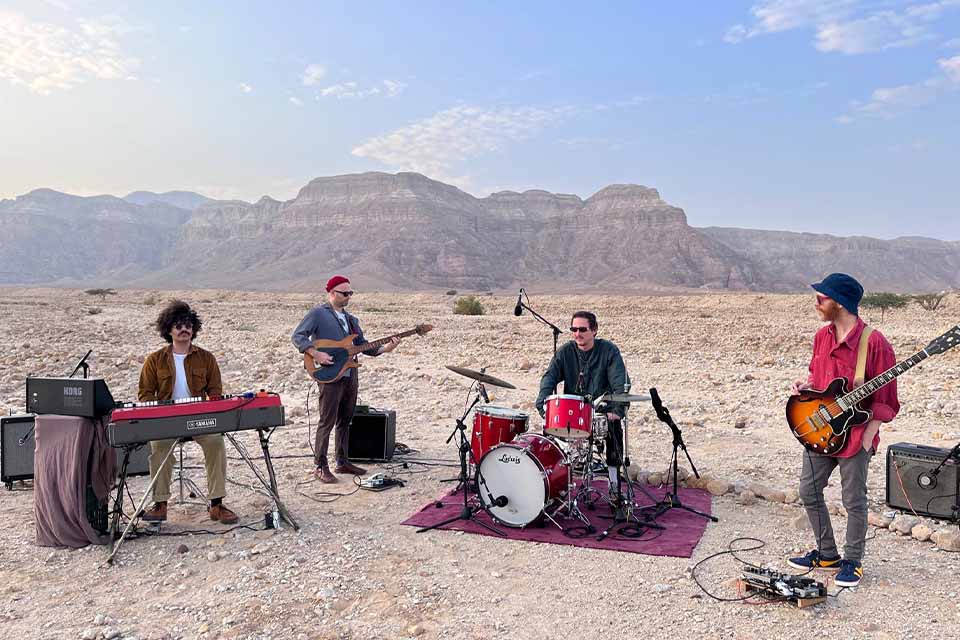
Eitan: Live performance is central to our music. We often record live, capturing the organic essence of our rhythm. The audience plays a significant role, influencing the energy of the performance. If the crowd is energetic, we might adjust the song structures or arrangements in real-time, especially towards the end of the show when we feel more improvisational, play a longer outro or let the audience lead the way.
What standout moments did you experience, and how did you feel connected to European audiences?
Eitan: Meeting the audience after shows is something we cherish and we were surprised by the amount of people who came to listen from other countries. For example, during our show in Bologna, we had fans who traveled from London to see us since we didn’t do a London show, which was incredibly touching. And while performing, the energy they bring can really change the dynamics of our performance. Audience adds another dimension to our music. If the audience brings high energy to a concert, we will play a little differently to adapt to the vibe. We created together as one – another memorable moment was when the entire audience sang along when we played Nasnusa (featuring Yurika, Japanese artist, and vocals and lyricist in this song done in Japanese)—it created such a powerful connection.
Your lyrics, particularly in Sapari Tama (and the whole Rali album for that matter), struck me as poetic and rich in imagery, reminiscent of traditional Arabic poetry. How do you approach crafting your lyrics? Is it a group effort, or is there one main lyricist?
Eitan: While “Sapari Tama” draws inspiration from old traditional Yemeni songs, most of our music is original. Sababa 5 is very much an instrumental band; we often focus on the music first. The lyrics come later, and we encourage our collaborators to write them. For instance, on the Rali album, the singer, Shiran Tzfira, wrote lyrics. Yurika wrote the lyrics for her songs, as well and soon we plan a collaboration with an Indian artist (whose name I will not reveal yet, you will have to wait and see) that we will also encourage to write his own lyrics in his language. We bring instrumental music and arrangements to our collaborations and let artists bring their culture, poetry and flair and be inspired by music, this is the best way we connect.
Yurika Hanashima is a Japanese singer and belly dancer and your collaborative album “Kokoro” is a culturally blended journey of psych rock, Japanese pop and transcendental love. I am curious, how did you guys meet in the first place? How do you typically approach collaborations? Do artists reach out to you, or do you seek them out?
Eitan: First of all, we’re always open to collaborations, I think that is the key. And we don’t plan collaborations systematically. Sometimes artists approach us, like when Canay reached out to us for a project. We enjoy creating music together, we try out one song and if it clicks, we often expand our collaborations. It’s a very organic process—like when we met Yurika, it was a spontaneous decision that blossomed into something beautiful. She was in Tel Aviv studying dance and we saw her in a restaurant where she was having a meal. We approached her, had a small chat and asked her spontaneously if she would like to be on a song with us. She said yes and our first song together was Nasnusa, it was so successful that we decided to make Tokyo midnight and our collaboration was so fluid that we developed a whole album. This is how the Kokoro album came to life.
It sounds like you prioritize authenticity in your collaborations. There’s a certain analog feel to your music, which contributes to its nostalgic vibes. How do you achieve that sound?
Eitan: Thank you! Our influences stem from music of the 60s and 70s, which we aim to replicate using live and analog equipment. We record with analog instruments, amplifiers, and synthesizers, creating a warm sound that reflects our artistic vision. Choosing the right instruments and studio is crucial for capturing that unique quality. That live, acoustic and analog feeling of our music is something we pay close attention to.
As a band on the rise that is still getting exposed to new audiences, and for people reading this interview: who would you say is your ideal listener? For whom is your music crafted?
Eitan: What’s really interesting about our music is how it draws in such a diverse audience. We genuinely welcome everyone as listeners, and it’s sometimes surprising to see the variety of people who show up at our shows. We’ll have hardcore fans bringing their vinyls for us to sign, full of enthusiasm, but then, sometimes, it’s a dad with his young child who’s really into our latest album. It’s a reminder of how accessible our music can be to different generations, which is something we really enjoy, especially in an age where pop culture and digital sounds dominate. Despite the prevalence of modern, electronic music, it’s exciting to see young listeners connecting with our blend of old and new styles—a mix of classic 60s and 70s psychedelia with a modern twist. When we’re on tour, we find that each country and audience brings out something different in our sound. It’s fascinating how music communicates, reaching people beyond language. But if there’s one message we’d want to convey outside of the music itself, it’s this: We create with the hope that anyone, no matter where they’re from, can feel connected through this shared experience. Our music blends a wide range of genres and global influences, from American grooves to Middle Eastern scales and Japanese tonalities. It’s a celebration of how music can unite us, no matter our background or culture.
Could you share your vision for the future of Sababa 5? Do you see yourselves exploring different sounds, staying rooted in your current style, or focusing more on collaborations? Where do you see Sababa 5 heading from here?
Eitan: Each album and collaboration brings its own unique sound, and we’re always open to exploring new fusions and styles. We still stay centered on our goal of weaving in Middle Eastern influences, but we’re definitely open to expanding on that. In the near future, we plan to move to Europe to be closer to our audience, which will make touring easier and open doors to reach new places. We’re excited to play in regions we haven’t reached yet—from the Far East, like Japan and India, to the Far West in the U.S. It’s a really exciting chapter for us, not just as a band, but as a kind of organic unit. We’re not just trying to conquer the music world in a traditional sense; it’s more like we’re growing together and finding these natural, organic opportunities to collaborate and share our sound. This philosophy of creating music authentically is what drives us and, I think, really resonates in what we do.