






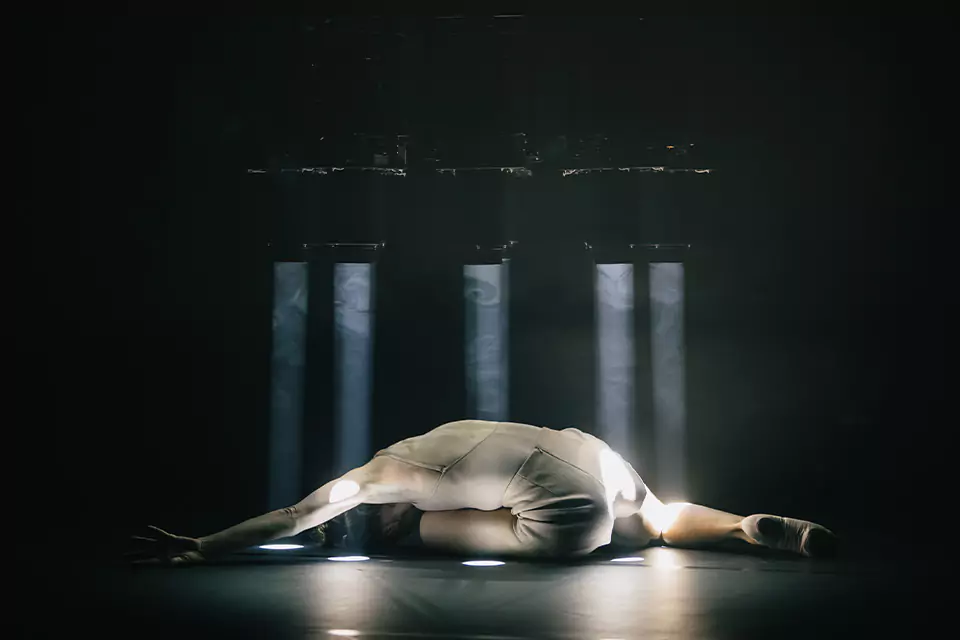
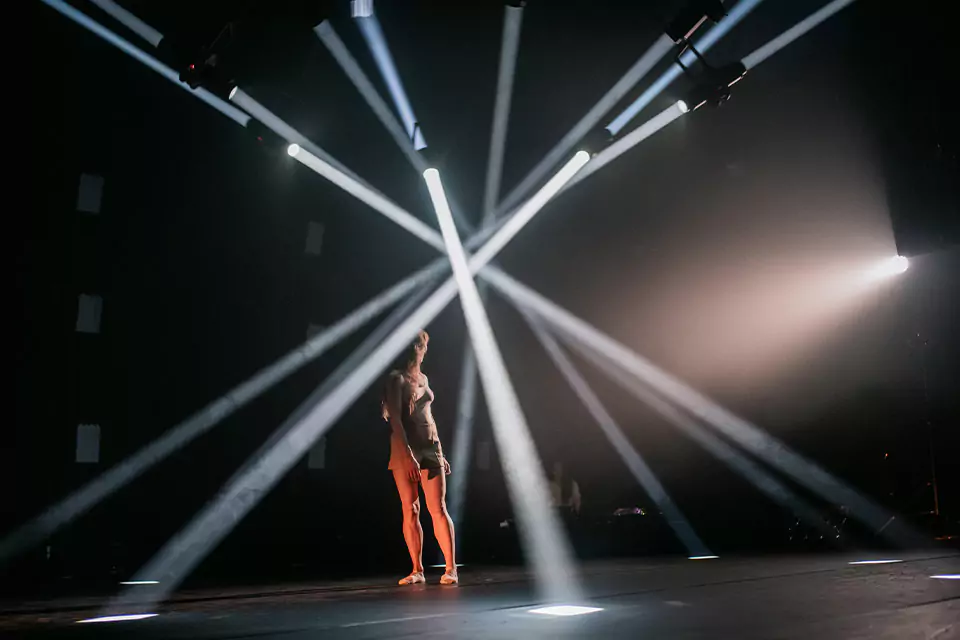
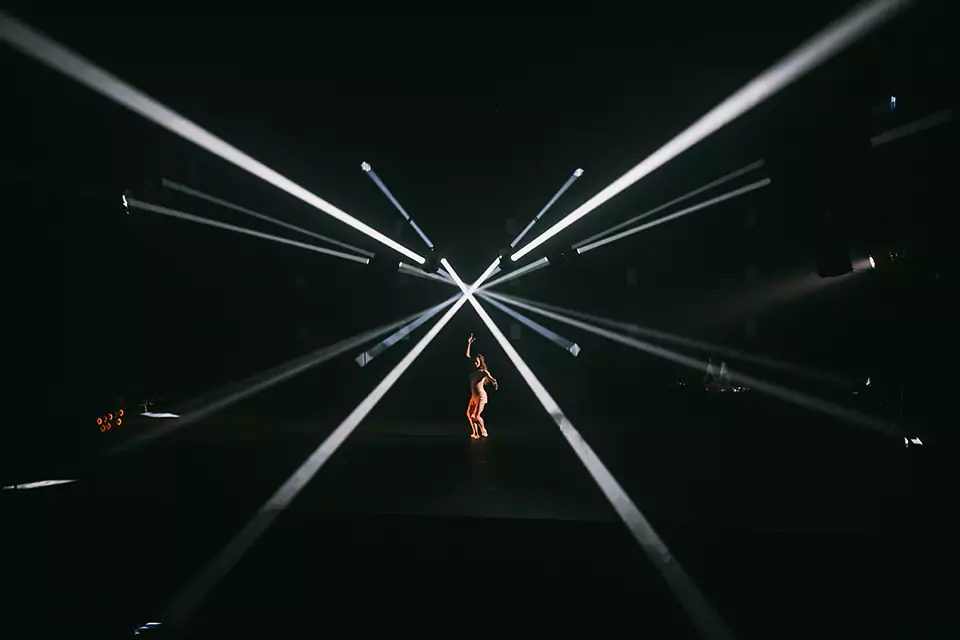
In this interview, we delve into the world of Maxime Houot and the artistic workshop known as Collectif Coin, based in Grenoble, France. As the mastermind behind Collectif Coin, Houot provides insights into the origins of this unique creative endeavor, his main sources of inspiration, and how he views the ever-evolving landscape of digital art. Furthermore, Houot shares his working method, emphasizing the fusion of art and technology in his projects and reflects on the dynamic relationship between the audience and his immersive pieces. We also explore his latest performance, Etsi, and the intriguing interplay between body and light. Finally, Houot offers a glimpse into the future of Collectif Coin, revealing upcoming projects and the company’s mission to contribute to the contemporary artistic landscape. Join us on a journey through the mind of a visionary artist and the creative force behind Collectif Coin.
How was Collectif Coin born?
Maxime Houot – At first is important to specify that Collectif Coin is a proper name and you need to consider it as a company like in a live performance. It’s a company that I run and it’s not an artists’ collective strictly speaking, but in its history it has been an artists’ collective and that’s why I still have this name today. Consider it just a reference to what happened before. It was twenty years ago when me and my friends were still students and wanted to experiment with different forms of creation, so we focused on contemporary music and mostly on post rock. Little by little when we came out on the scene we began to expand our fields of practice and our modes of expression: we added photography, visual arts and performance to our mix. Each of us specialized in a specific field and I kept the administrative structure to develop a more personal project over the years.
What was your main source of inspiration?
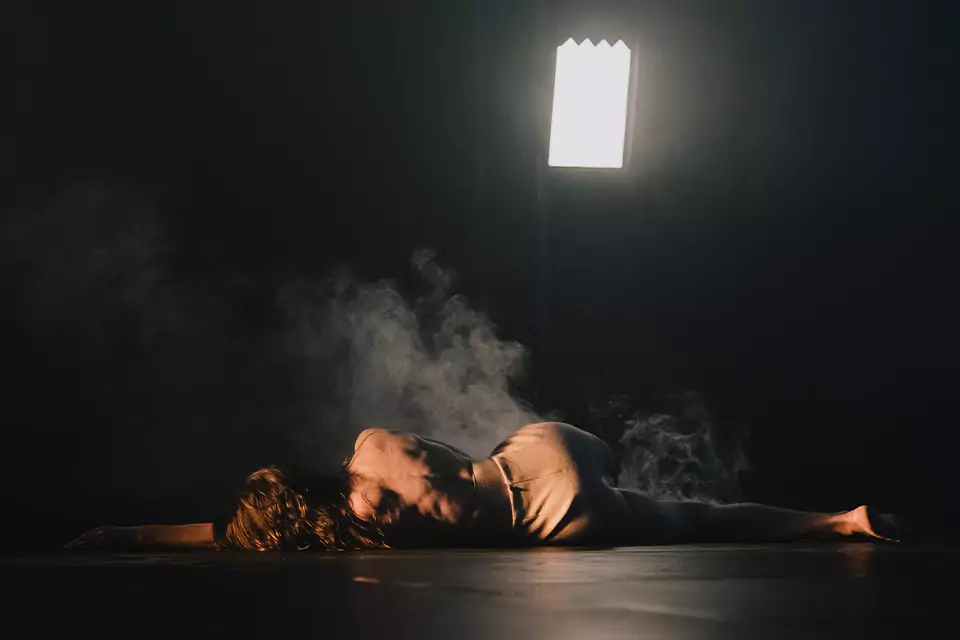
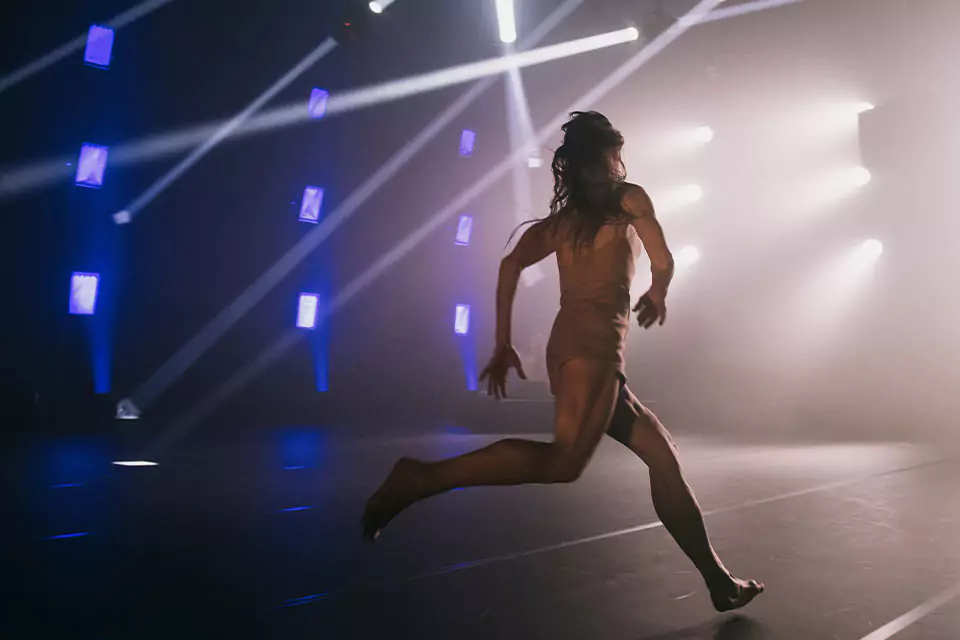
Maxime Houot – Life. But it’s a really vast question that are you asking, so this is the most easy answer for me. When I develop a new project, I think it’s anchored in its time and in my reality somewhere, with what am I going through at the moment. I think that each project deals with a question, an interrogation, a desire, an anguish, a love that I’m experiencing in my everyday life, and it’s true that for a few years now, the climate issues and the collapse of the living world are very present in my approach. They’re questions that accompany me and the whole company every day and at every stage in the life of our projects, but they’re not themes that we treat as an artistic object. We try to integrate them in the DNA of our company. We’re reducing our footprint, in fact the weight of the installations we’re sending out is smaller, a little less spectacular, but maybe in the end it will be enough. We ask ourselves whether what we can do should actually be done. What inspires me enormously is movement and the perception of movement. What interests me is organic movement, the imperfection in it, the repetition of movements and objects. I’ll be staging all this and draw a dramaturgy from it, a narrative that I will be able to share with others.
How do you define digital art today?
Maxime Houot – I find it hard to define. I don’t really have the impression that digital technology has led to the emergence of new artistic disciplines. I have the impression that, with digital tools, we’re going to “increase” the forms that have already existed for I don’t know how long. But I don’t have the impression that digital art can be put on the same level as music, dance, theater, cinema, writing and so on. So from my point of view, there are new forms that have emerged, such as net art, but I’m not sure that it was so widely followed and that it’s still very active. So I put myself in the digital artist box, but I don’t necessarily use digital tools, so I ask myself ‘am I no longer a digital artist at this point?’ I’m not sure, in fact. To me digital art is more a period in history of art that began with the emergence of the Internet and will accelerate with the emergence of social networks. With these new media there’s a mode of exchange, a mode of communication between audiences, artists, people, citizens that has been turned upside down, and has in fact profoundly changed communication. I think that artists’ imagination has been much more impacted by the Internet and social networks than by the digital tool as such. We are inspired, modified and very strongly influenced by these media, by these means of communication, much more than by a tool such as a computer or software or whatever. You can be an artist of this digital era as long as you’re connected to digital tools, but not necessarily using a tool in your digital practice. So you could very well be a traditional sculptor, but in the digital arts era, influenced by this medium.
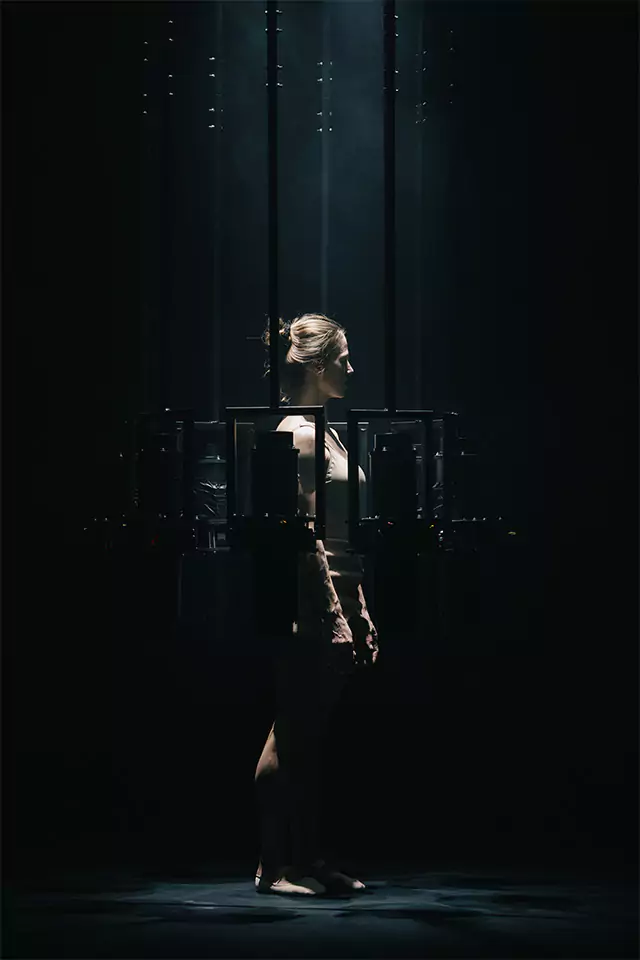
Can you describe your working method? How do you combine art and technology in your research?
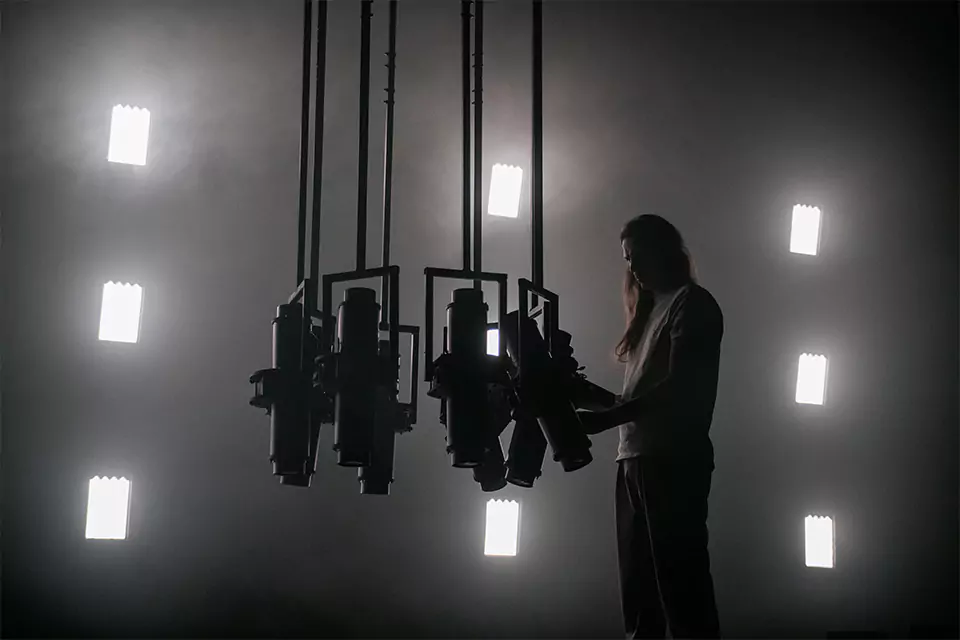
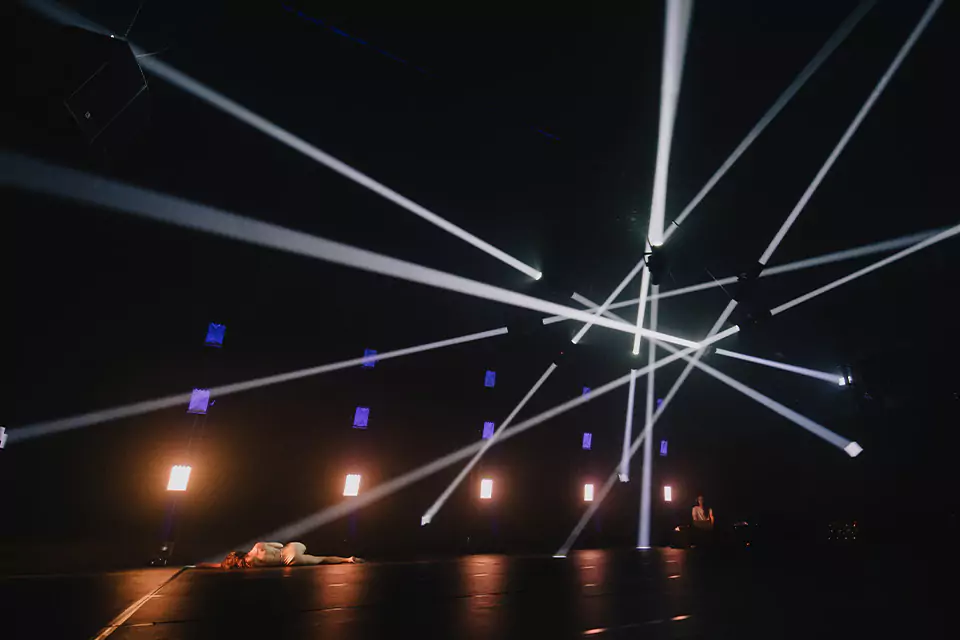
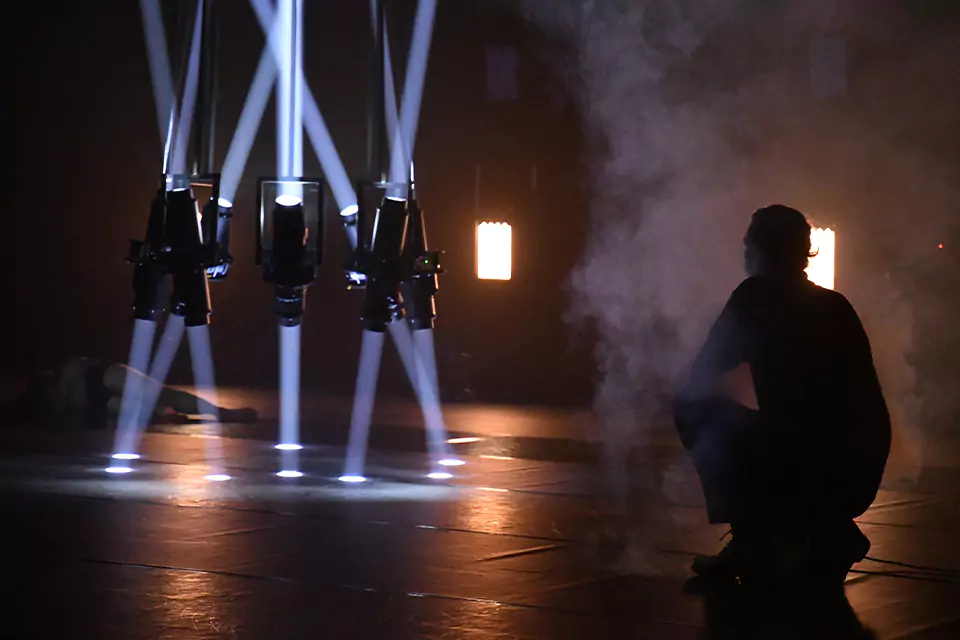
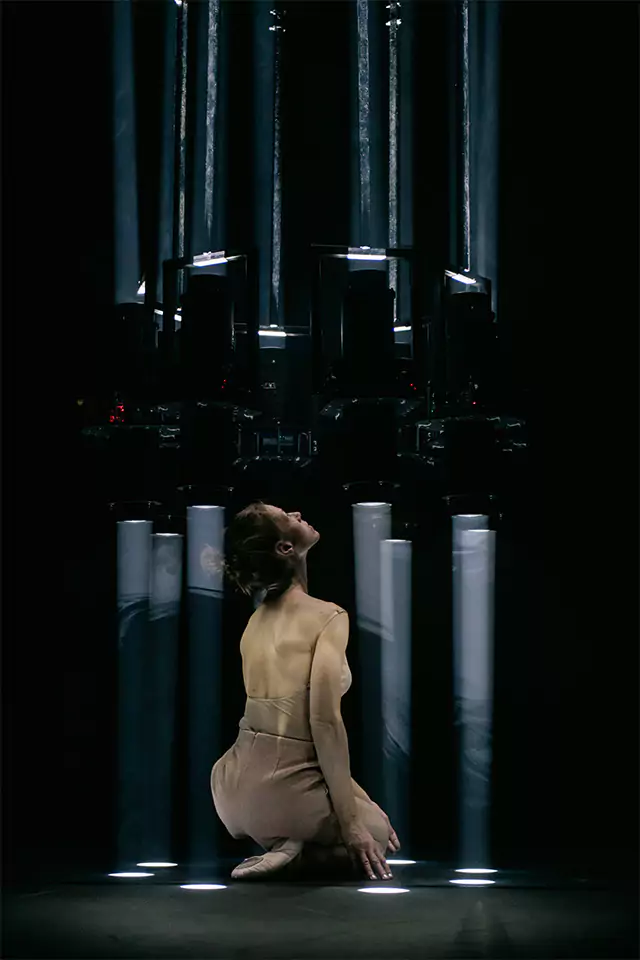
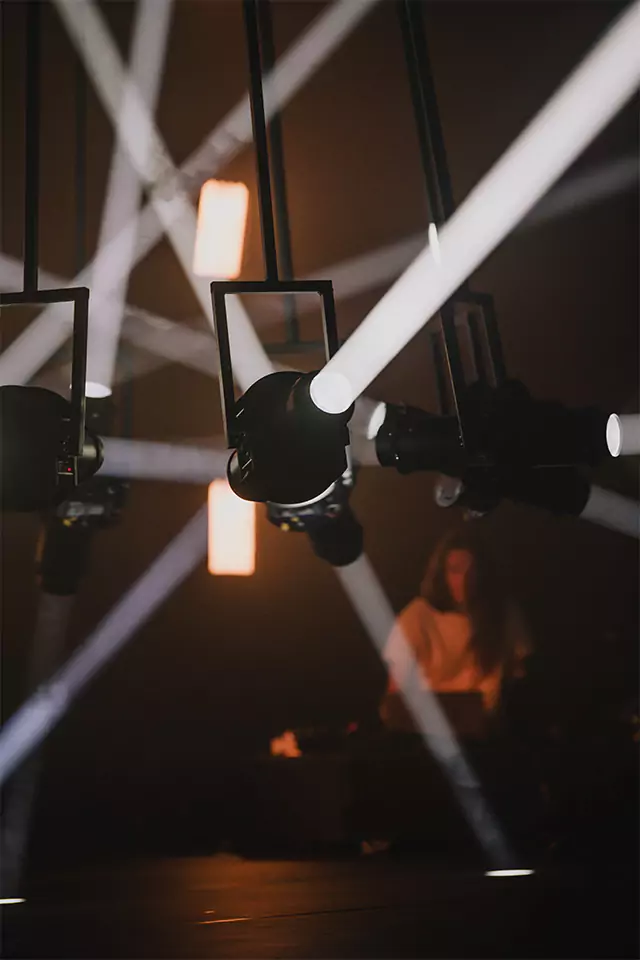
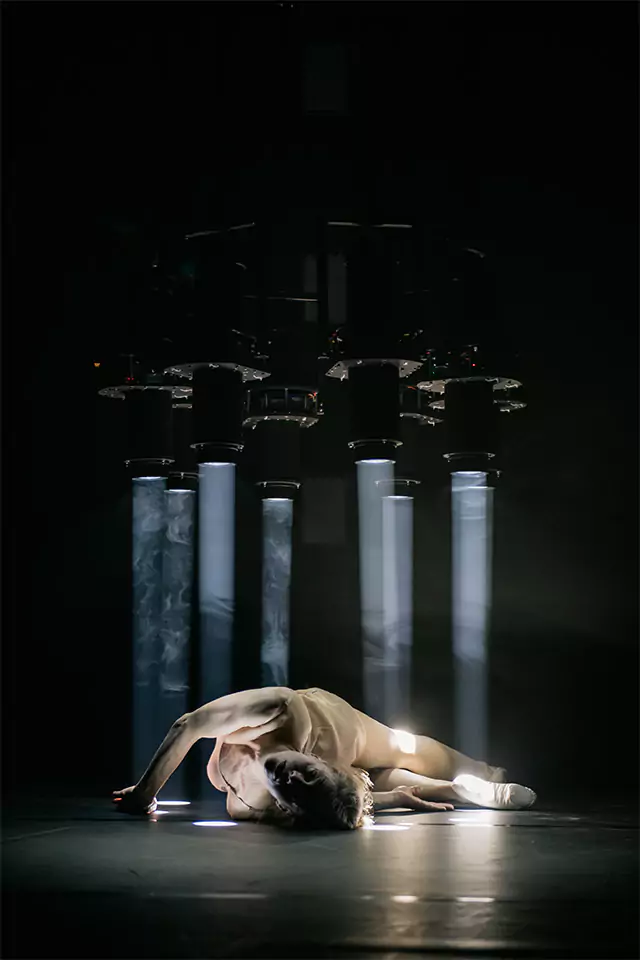
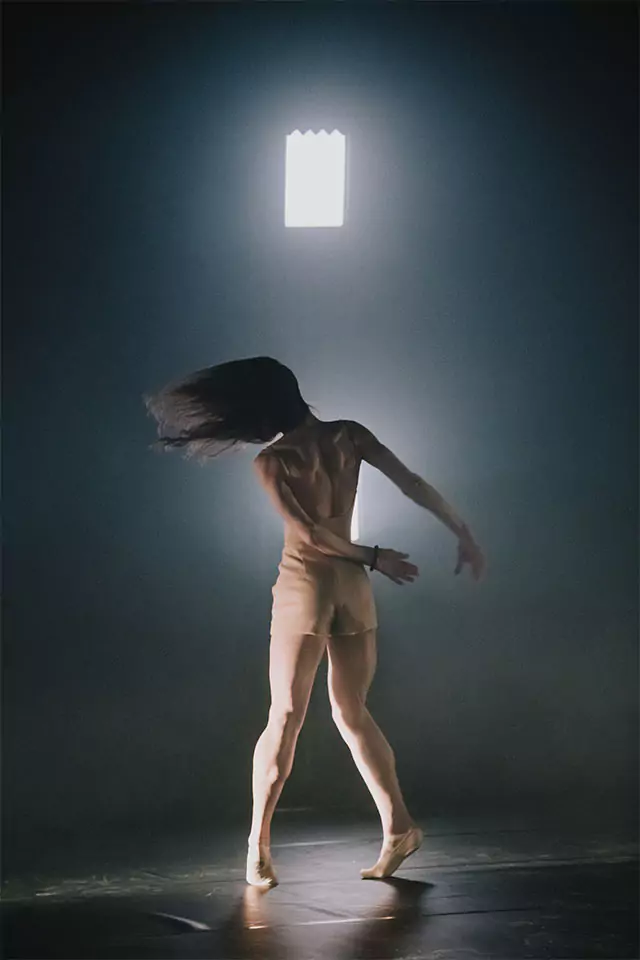
Maxime Houot – It depends on the phase, from the writing of a project to its creation. First step is in the workshop, a locksmith’s workshop in fact, so working with steel to build a physical device. I think technology is very present in my works, but at the same time is rather discreet. I think it’s a bit camouflaged by the imperfection of the machine, the imperfection of the movement of the machine, and these are imperfections that I’m going to try to highlight and capitalize. We try to make objects move in a fairly simple way. For example, the device called MA that I use either solo or in duet with Rachid Ouramdane for the choreography is simply the starting point, in any case it’s just the centrifugal central force. So, the merry-go-round of chairs that we all saw when we were together, the centrifugal force and the chair merry-go-rounds will accelerate and the chairs hanging at the end of the chain will open up with this force. What interested me in fact is that I had to integrate the physical world, to integrate the constraints of the real world, to try to make a behavior emerge. As a result you give up a little of the control.
Yours are immersive works in which the audience is totally involved. I wanted to ask you about the boundary between the viewer and the work, and how you see yourself in relation to the audience.
Maxime Houot – II think in contemporary art it’s something that’s been done at least since the sixties, whether in theater or in visual art and I don’t think we’re reinventing anything with our forms. I like to speak about works in situ and to make my devices reason with the places in which they are deployed. I like to already have something present, physical, architectural on which to embroider my work. I like my installations and my shows when there are three components: the public, the space and the artistic proposal. I put myself at the same place as the public, I’m the first public of my own installations or shows.
Can you tell us about the future of Collectif Coin? Do you have any new projects in the pipeline?
Maxime Houot – We presented Ataraxie at 104 for the Biennale des mots (Lyon) in September and we’ll be able to present EtSi at the Chaillot Théâtre national de la Danse (Paris) in December 2023, at the beginning of 2024. We will participate to Ataraxie in Aix-en-Provence and we are going to do it at the Pavillon Noir at the same time with Chroniques in a space that’s right next to the pavillion.

