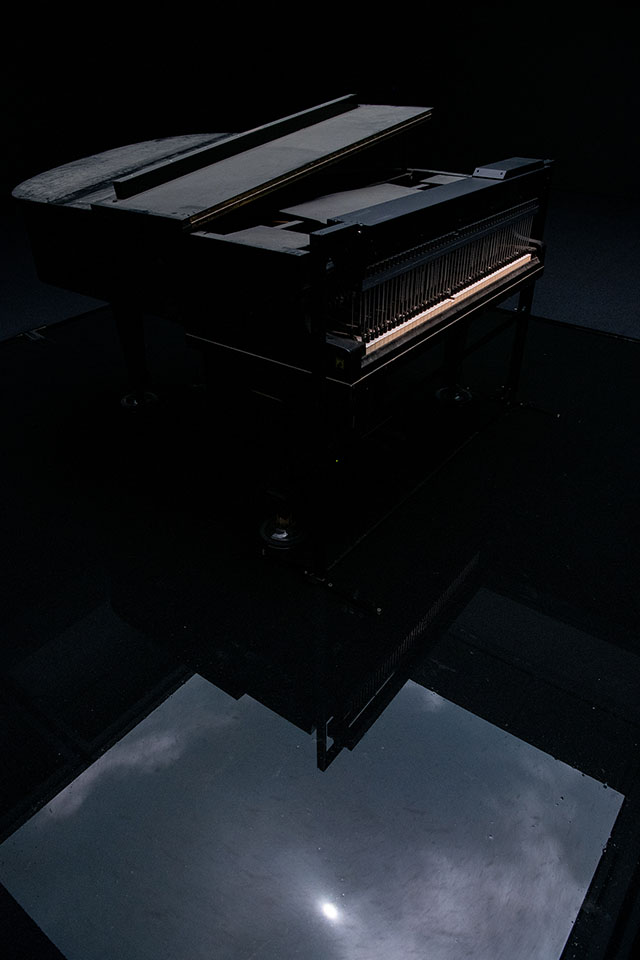
Ryuichi Sakamoto (1952-2023) was one of Japan’s most famous musicians, known for a wide range of musical styles spanning from his pioneering debut album Thousand Knives (1978) to his film scores, such as the one composed for Bernardo Bertolucci’s The Last Emperor (1987). Sakamoto had many artistic talents, and was also well known for his acting and multimedia art installations. Following an oropharyngeal cancer diagnosis in 2014, Sakamoto’s longstanding interest in time and sound intensified. He traveled with a digital audio tape machine “collecting” new sounds for his work, often borrowing from the natural world. In the documentary CODA (2018), we see Sakamoto’s fascination with these sounds as he records a glacier, or as he plays a piano damaged by the 2011Tōhoku tsunami, a piano he deemed to be “tuned by nature”.
Before his death, Sakamoto had been in the process of planning an exhibition with the Museum of Contemporary Art Tokyo. Unfortunately he passed away before the exhibition came to fruition. As an homage to Sakamoto, the museum completed the planning, creating the exhibition “Ryuichi Sakamoto: seeing sound, hearing time.” The exhibition features twelve multimedia installations created in collaboration with different artists.
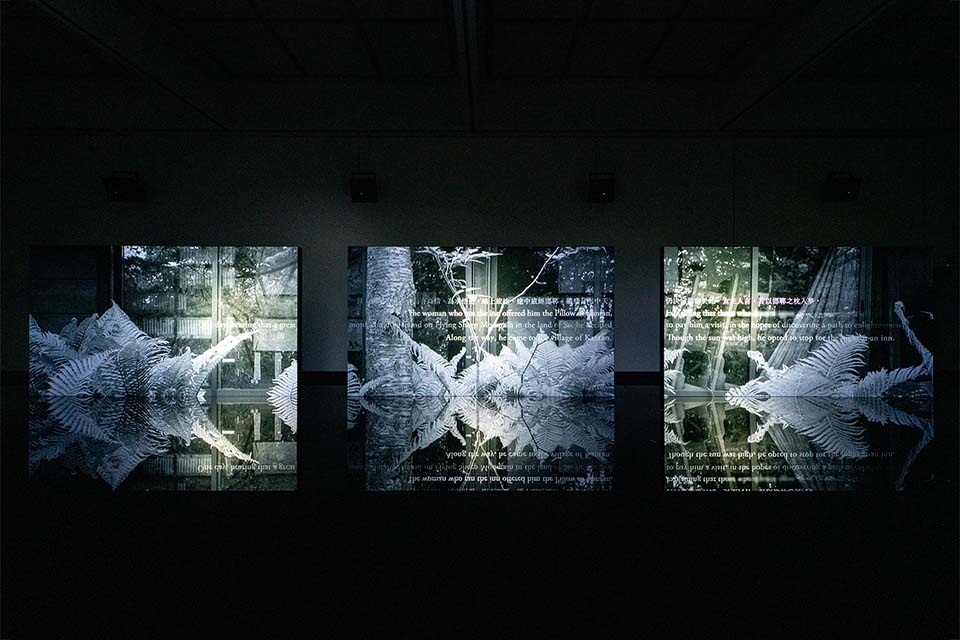
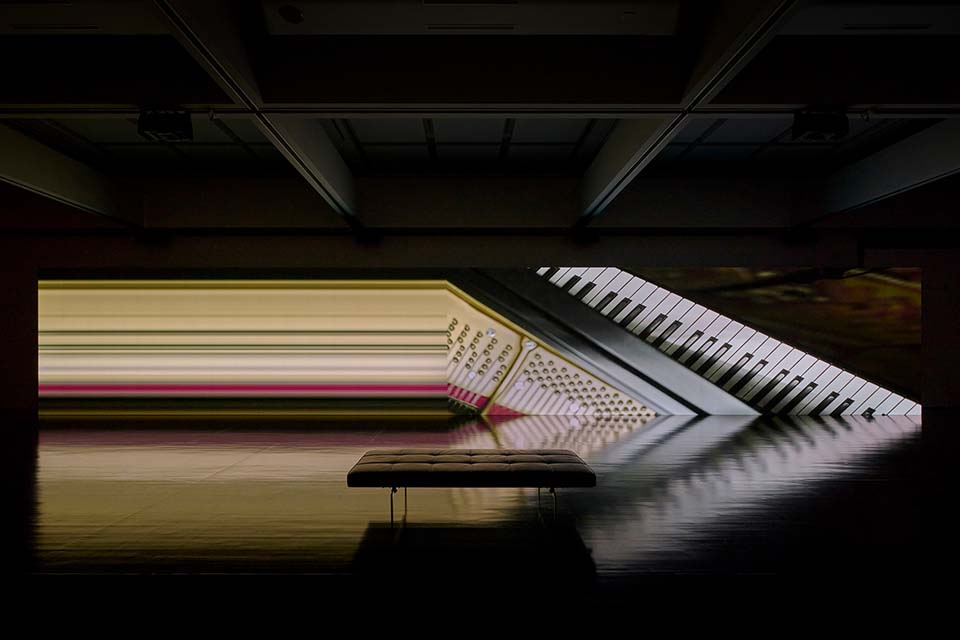
Ultimately Sakamoto’s interest in time goes beyond basic perception of time. In his work, there is an equal importance on drawing from the historical, and reaching for the future. There is a striking balance of embracing the latest technology, while incorporating traditional music elements and cultural traditions such as Noh theater, a classical form of Japanese theater dating back to the 14th century. In his first work in the exhibition, titled TIME, TIME, a collaboration with artist Shiro Takatani, Sakamoto reinterprets Zhuangzi’s “The Butterfly Dream” through modern Noh theater, projected onto screens organized in a triptych. Interspersed throughout the film are quick flashes of modern cityscapes, and silhouettes of figures walking.
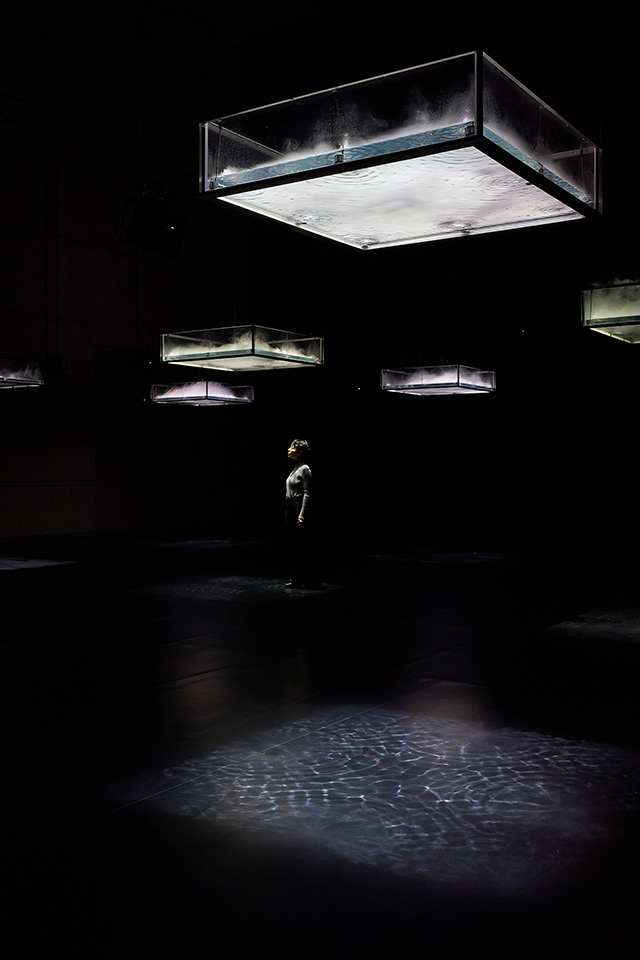
In a second piece with Shiro Takatani, water state I, raindrops fall into a square pool at the exact beat of the music. A clearer theme comes into view. How does one visually represent sound? As the music crescendos, the drops speed up precisely, creating an effect almost reminiscent of watching music notes move. Pauses and silences are equally respected, the drops ceasing entirely, causing the pool to become still. A similar concept in echoed in the outdoor installation in collaboration with Fujiko Nakaya and Shiro Takatani titled LIFE–WELL TOKYO, Fog Sculpture #47662. Within 20 minute intervals, the courtyard fills with fog before it dissipates again, creating a dreamlike environment as the music harmonizes with the coming and going of the mist.
Throughout the rest of the extensive exhibition a number of works are shown. It is hard to miss the intense respect held for Sakamoto whether by Apichatpong Weerasethakul with his collaboration async–first light (2017) or by Zakkubalan, with async–volume (2017). The focus on the album async (2017), the album Sakamoto composed following his cancer diagnosis, creates a somber yet incredibly soothing atmosphere. Overall, what breaks through all of the works, is an appreciation for moments of stillness, and an appreciation of the natural world, more greatly an appreciation for life.
Throughout the rest of the extensive exhibition a number of works are shown. It is hard to miss the intense respect held for Sakamoto whether by Apichatpong Weerasethakul with his collaboration async–first light (2017) or by Zakkubalan, with async–volume (2017). The focus on the album async (2017), the album Sakamoto composed following his cancer diagnosis, creates a somber yet incredibly soothing atmosphere. Overall, what breaks through all of the works, is an appreciation for moments of stillness, and an appreciation of the natural world, more greatly an appreciation for life.
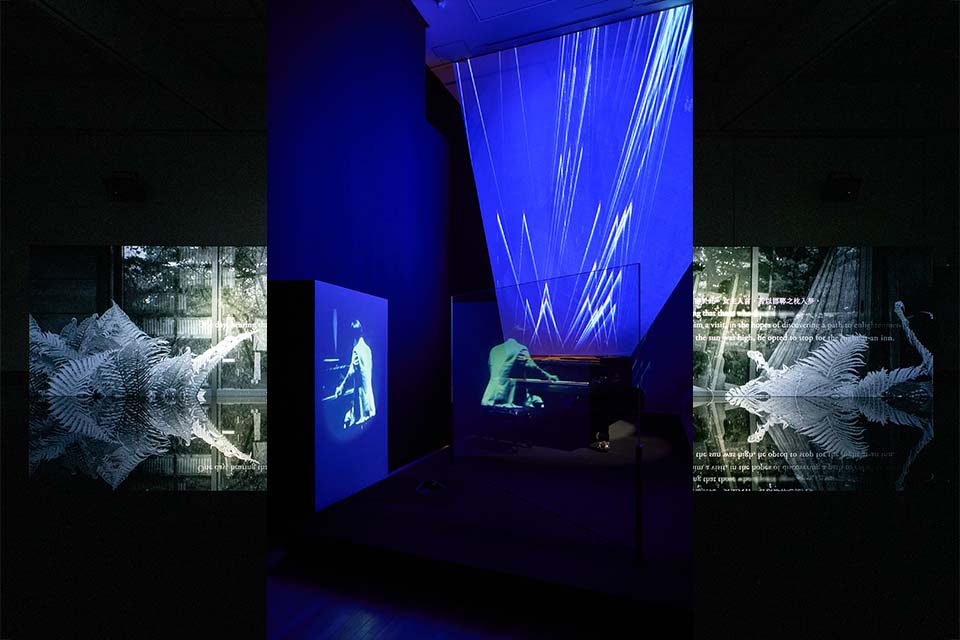
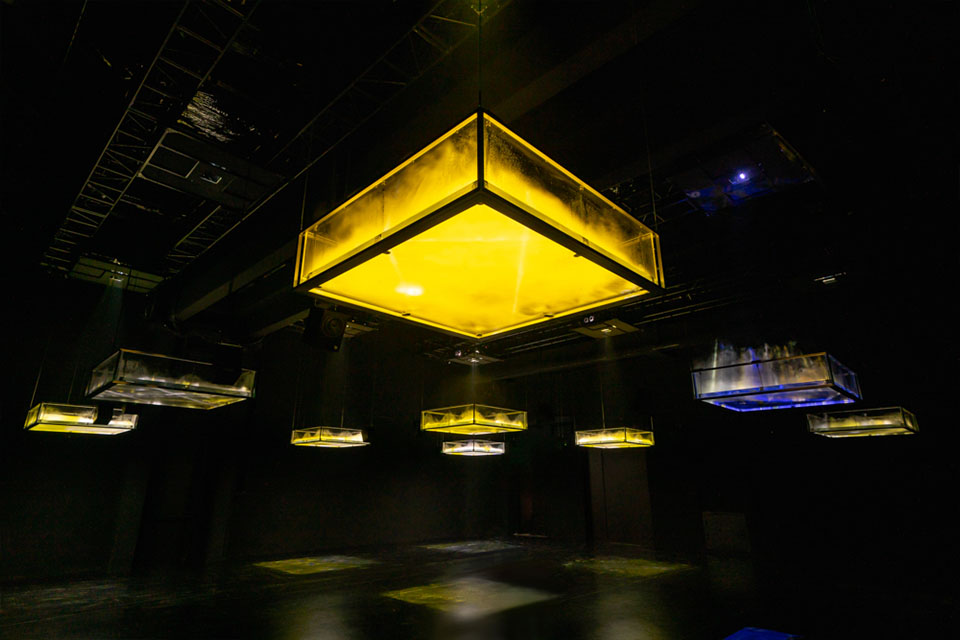
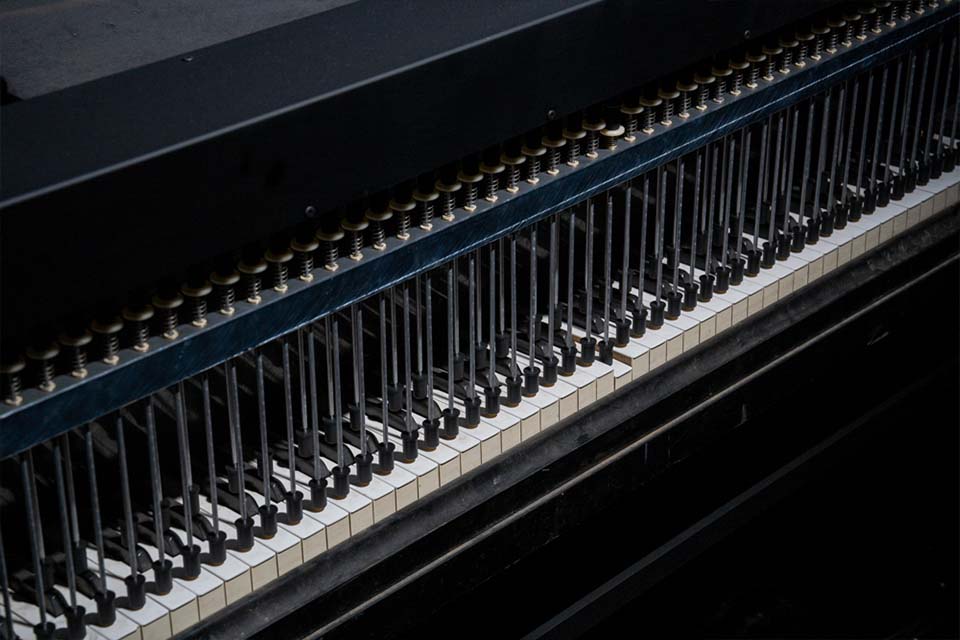
Photo Courtesy by Museum of Contemporary Art Tokyo © All rights reserved.