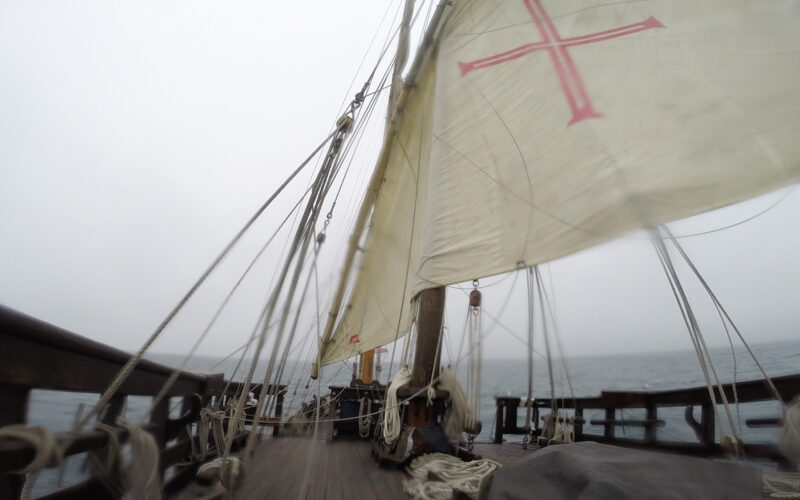
In the shadows of the cranes unloading cargo ships that come from all over the world to dock at Lisbon’s Alcântara harbor on the wide Tejo river, just east of the iconic April 25th Bridge, lies a wooden ship from the past. The Vera Cruz is a replica of a 16th-century Portuguese caravel. Now a couple of decades old, the 25-meter-long vessel serves as a classroom for lessons on history and seamanship and an artifact of design ingenuity. The ship is the latest in a series of identical replicas operated for the same purpose by Lisbon-based NGO Aporvela. Its design is a masterclass in balancing form and function – compact yet versatile, efficient yet demanding. Caravels were the workhorses of the age of exploration, carrying Portuguese sailors to every corner of the world. I had a chance to join the crew for trips along the Portuguese coast last summer, and I agreed without hesitation. I pulled some wool sweaters and sailing gloves out of the back of my closet, and looked up the Portuguese translations of port and starboard (bombordo e estibordo) so I wouldn’t be in the way.
On the first leg of the trip from Lisbon to Peniche, everyone on board was male besides me, and most were over sixty or under sixteen. One exception was the comandante, as he’s officially called in the ship’s log that we had to update every hour with information like coordinates, course, and speed. The log was all done in pencil because it doesn’t smudge when wet. If anything went awry, the authorities would require some kind of record of the trip. Soon after introducing himself, the comandante made me aware of a collection of liquor bottles and boxed wines stored in a compartment in the middle of the long dining table that runs down the center of the cabin. He mentioned he’d prefer if we drank out of the aluminum cups rather than the clear ones when the teenagers are watching, who were on board to log nautical miles toward various sailing certifications. Many lay in bed seasick for much of the trip since we were going upwind and the boat rolled from side to side constantly and, at times, somewhat violently.
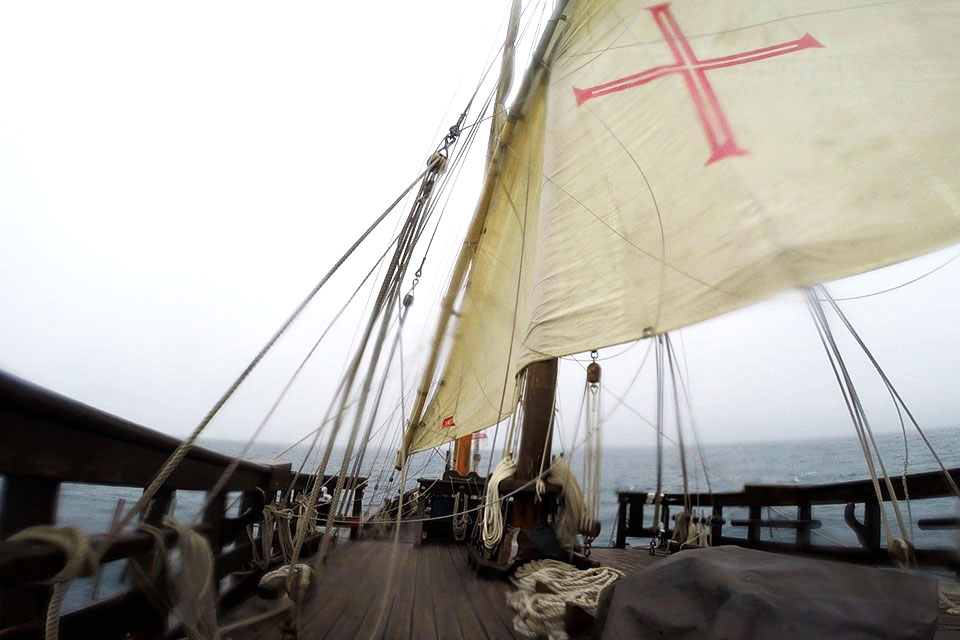
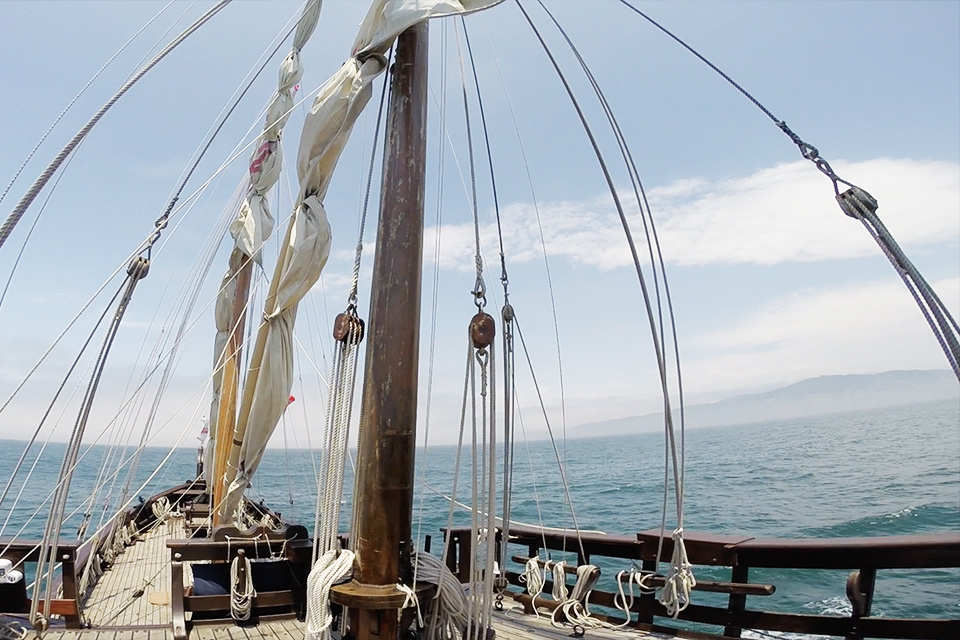
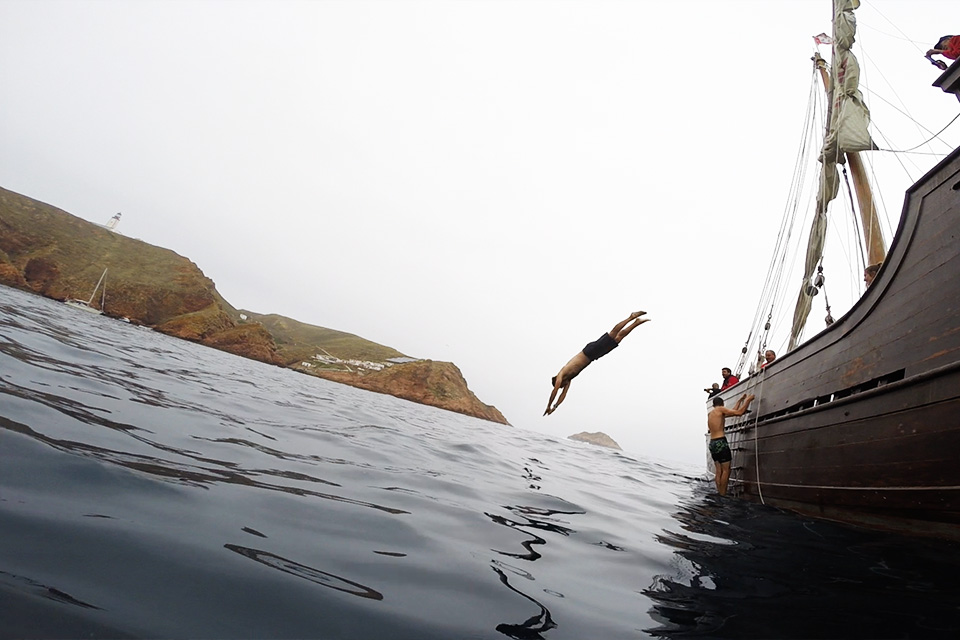
“Do you know our history?” one of the older men asked me, squinting skeptically. Not knowing whether he was referring to the ship, the NGO, or the nation, I mumbled sheepishly that I’d been to the museums. The caravel was revolutionary in its time. Its most distinctive feature, the lateen sail, a triangular shape mounted on a diagonal spar that allowed then-unparalleled maneuverability for navigating uncharted waters and shifting winds. The gloves I was instructed to bring came in handy, as these vast canvases are hoisted by an elaborate system of thick, rough lines running through wooden pulleys. The Vera Cruz is a labor of love, built using traditional techniques and materials wherever possible: the oak beams, pine decking, and hemp ropes evoke a tactile connection to the past. Even the ship’s compact size—a far cry from the sprawling vessels of later eras—reflects the resourcefulness of its original builders, who needed a ship small enough to navigate rivers yet sturdy enough to cross oceans. I was struck by the stark practicality of the ship’s layout. Unlike most modern sailboats, where every inch is optimized for comfort, the caravel prioritizes utility.
Below deck, the design becomes even more utilitarian. The bunks where we slept once held barrels of dried cod, and back then, sailors slept on deck exposed to the elements. In those times, the crew’s function was generally fishery or other grueling commercial labor so unappealing that the workforce was often sourced by commuting prison sentences. Back in the day, sailors were rationed a liter of wine a day to keep warm. They often coped with boredom by fighting, staging plays, and creating a costume for mock-bullfights using a shark carcass. Today, there’s an espresso machine, an oven, and hot showers, but one memorably authentic meal was an upsetting stew based on cod skeletons – espinhos – from which one is meant to discern which parts are the edible ones. A piece of dried cod haunts a basket in the corner of the cabin and is a feature on tours for visitors; the same piece has served for ten years. Storage spaces now double as educational displays: a weathered poster explains the evolution of the sextant, and a spice rack invites schoolchildren to imagine the caravel’s role in transporting cinnamon, pepper, and nutmeg – commodities that shaped economies and empires. This same design once carried human cargo in the form of enslaved people, a dark chapter omitted from the official tours but immutable in the caravel’s history.
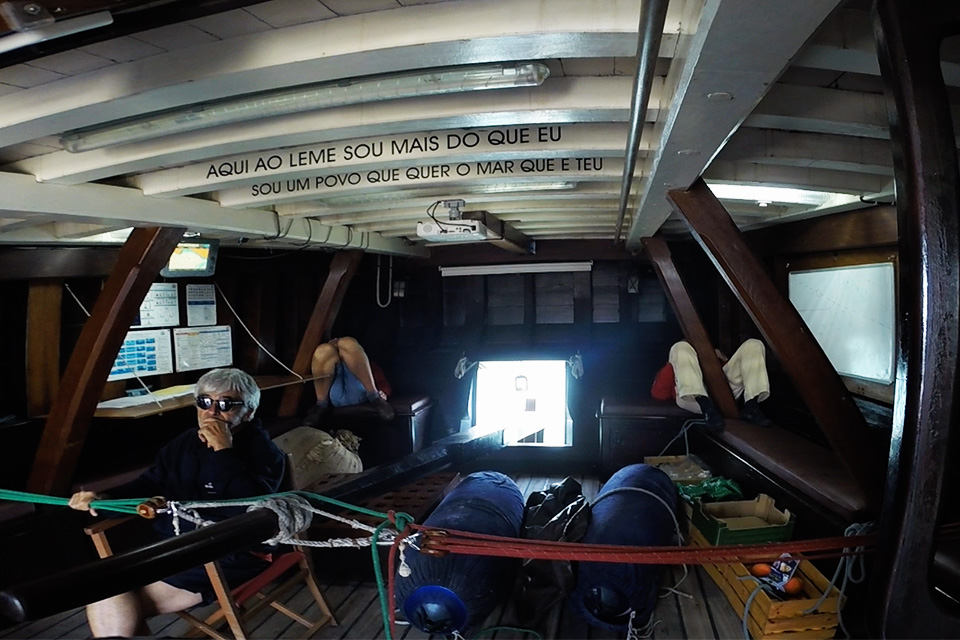
The crew was split into teams, each responsible for a section of the ship. A large portion of my duties was coiling ropes the thickness of my arm. The massive tiller, a wooden beam at the stern, requires two people to steer inside the cabin plus another outside shouting directions. Every maneuver entailed coordination and a chorus of hands to haul and secure lines, but once underway, there was little to do but stay warm and marvel that despite its utilitarian roots, the caravel has an undeniable beauty in its curved hull and sails like wings – a floating sculpture. I shared the night watch with the comandante’s quiet cousin, who suggested piling blankets on deck to sleep under the stars, where we lay wishing we knew more constellations and wondering about the existence of extraterrestrials as the moon rose huge and orange above the stern, casting a long reflection across the midnight water. Design isn’t just about aesthetics or utility; it shapes experiences, and the Vera Cruz fosters camaraderie and connection.