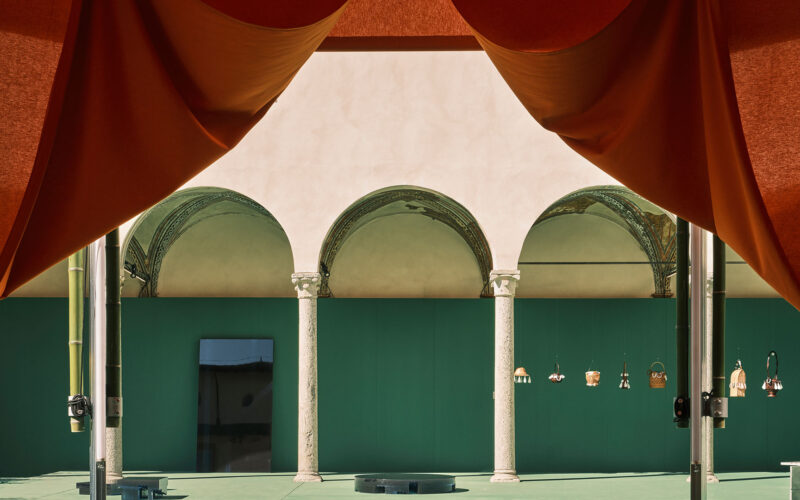
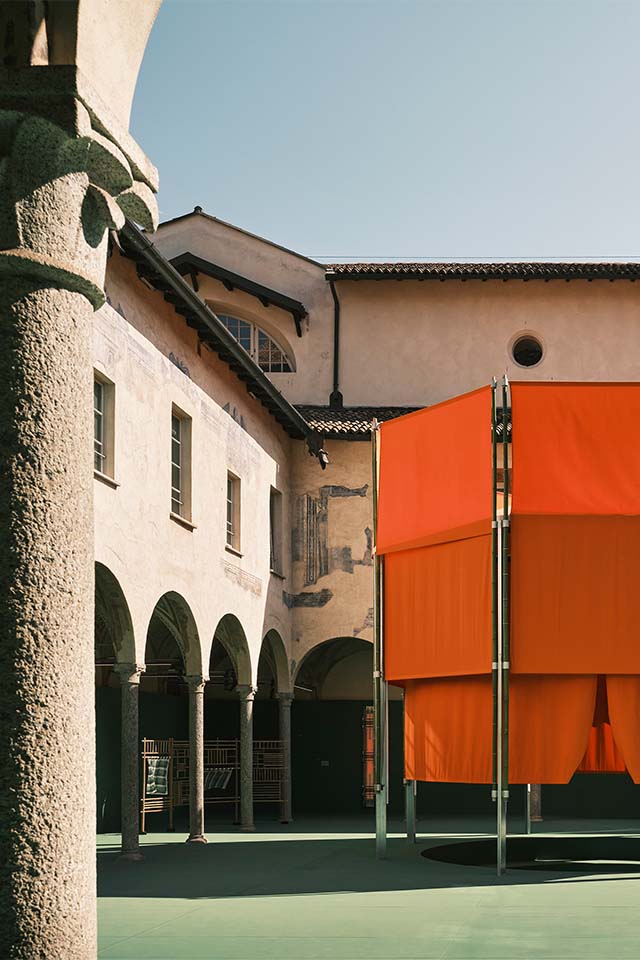
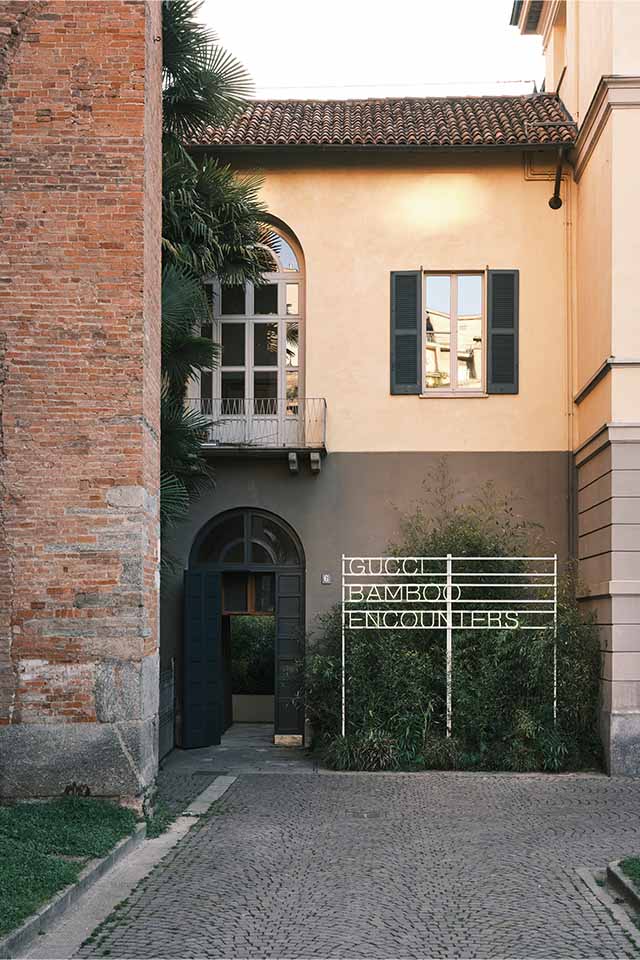
Many brands have little details in their products that make the item uniquely theirs, in the case of the luxury house Gucci bamboo is one of their signature design features. In fact, bamboo has become one with Gucci which is why the House decided to unveil an exhibition called “Gucci | Bamboo Encounters” during Fuorisalone 2025 at Milan’s beautiful 16th-century Chiostri di San Simpliciano.
“Gucci Bamboo Encounters” presents a series of unique art pieces reimagining bamboo which were created by a variety of different contemporary designers and artists. The House asked the artists who participated in this exhibition to be bold and consider presenting the material in unexpected ways. This direction was given because the need to be innovative was what brought the house of Gucci to use bamboo in its products.
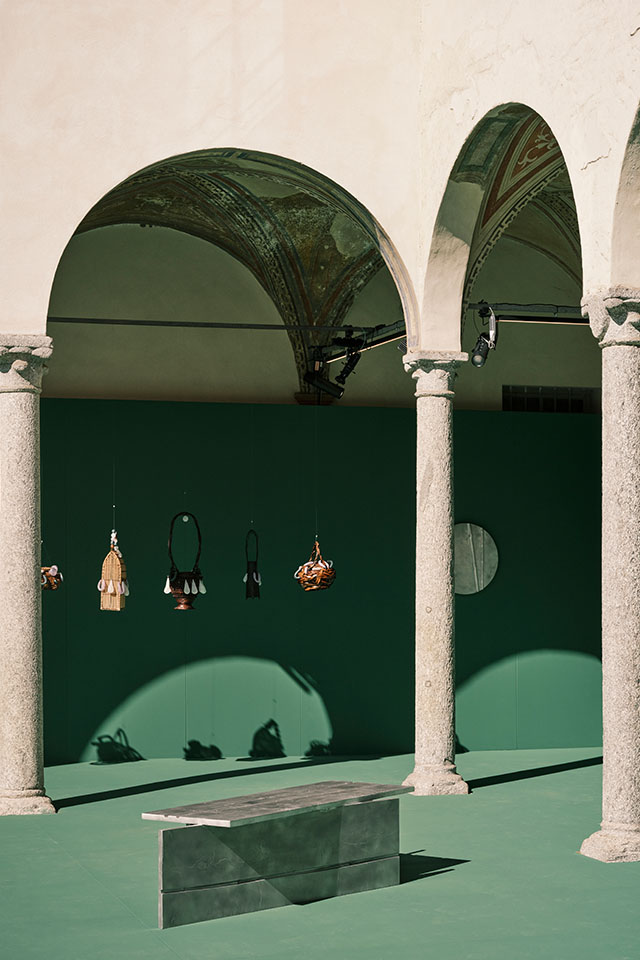
The house of Gucci was founded in 1921, but did not begin to use bamboo for its products until the 1940s. The decision to use the material was a creative response to the scarcity of leather in post-war Italy. The first product to use it was a handbag now known as the Gucci Bamboo 1947, which uses the material for its handles and has become one the house’s most iconic products. In retrospect the house sees this as the moment that led them on a path which now sets them apart from other luxury houses.
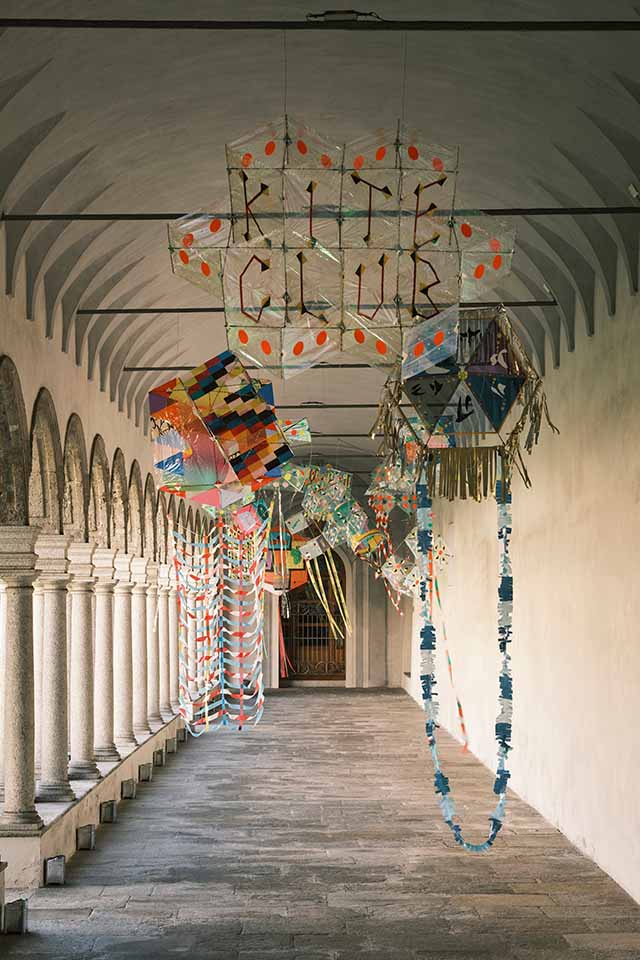
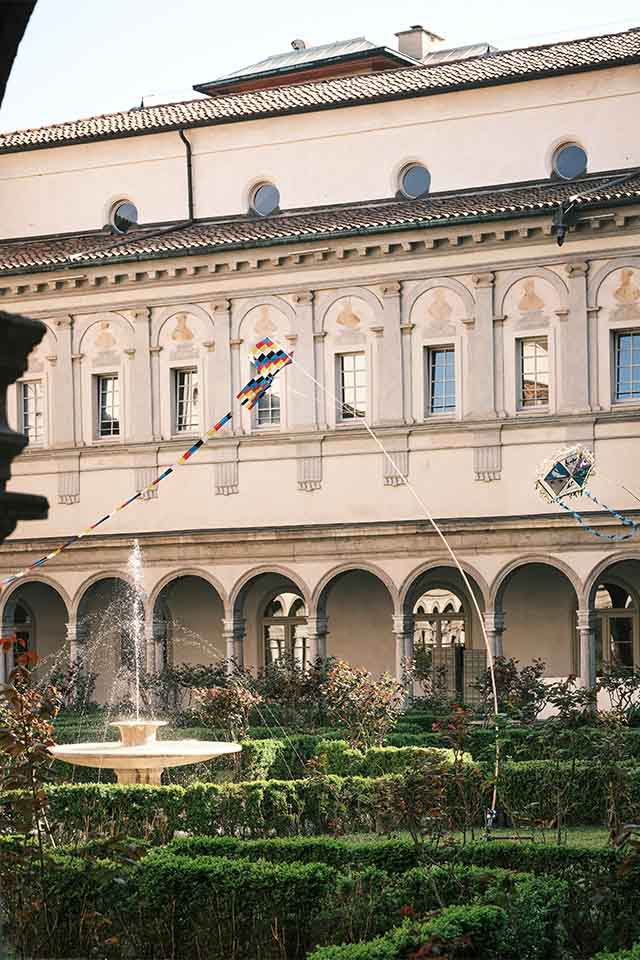
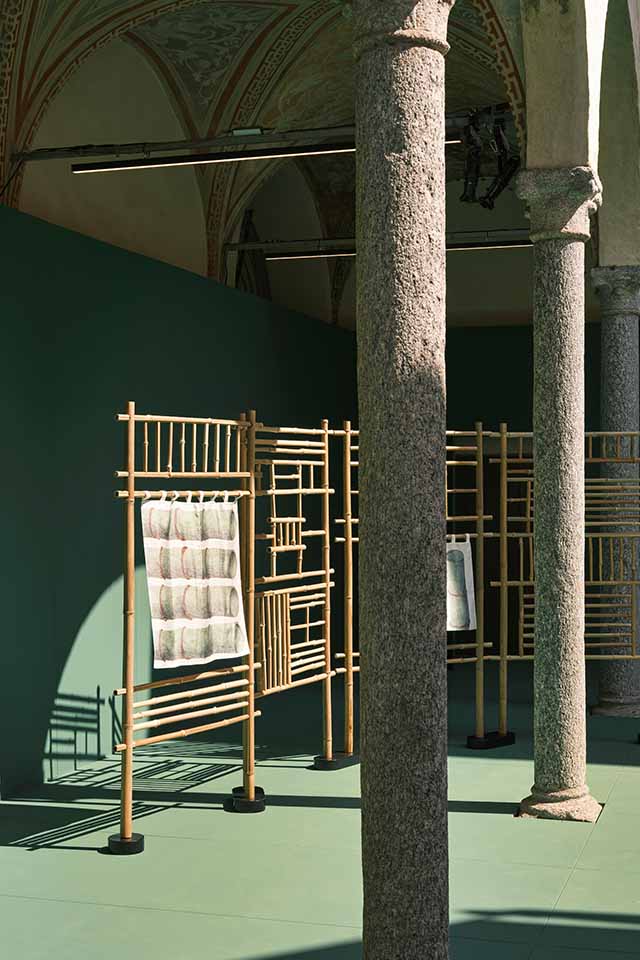
The exhibition has seven different art works each one made by different artists from around the globe. These pieces honor Gucci’s unique history with bamboo by not only focusing on the material, but are also wondrous in their own right. One art work titled “Thank you, Bamboo” made by the Dutch design collective Kite Club was composed of multiple large colorful kites depicting messages, scenes, and psychedelic images all revolving around the use of bamboo. Some of these kites were hung around the corridors of the Chiostri di San Simpliciano, while others were installed in the garden on large rods allowing them to fly.
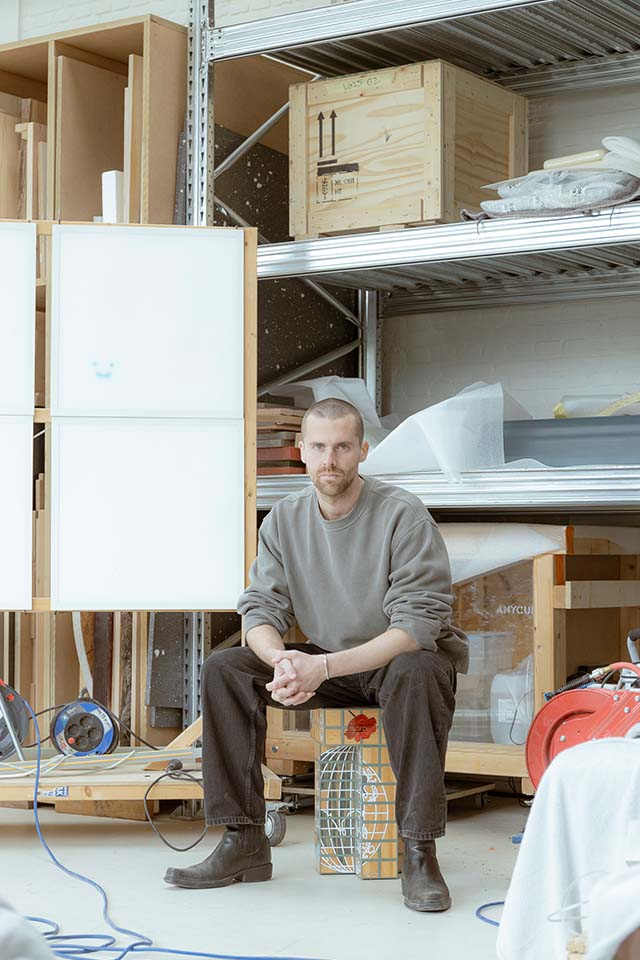
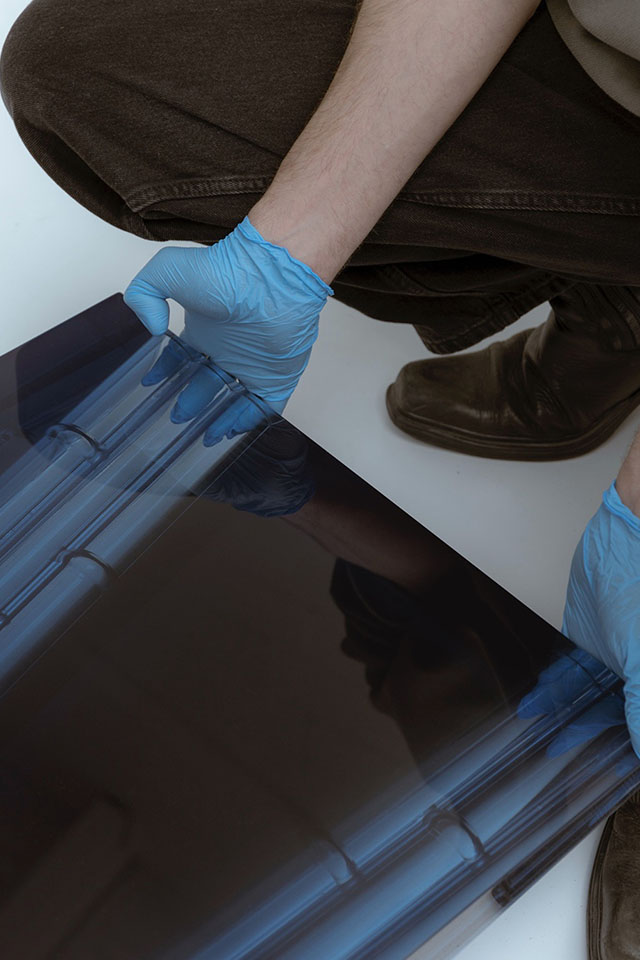
The large rods were long revolving bamboo poles which Kite Club designed to give the kites the ability to fly in the low wind environment of the monastery as they were dedicated to having viewers enjoy the awe of seeing kites in motion. Another piece titled “Scaffolding” by Austrian designer Laurids Gallée has viewers consider the shape and texture of bamboo through blue resin design pieces. He specifically chose blue resin due to the calming nature of the color. The resin pieces seem to have the imprint of bamboo and were positioned around the space for sunlight to shine through them. Gallée did this to capture the motion of bamboo in the wind and present it to spectators, inviting them to interpret the image they are seeing in the resin.

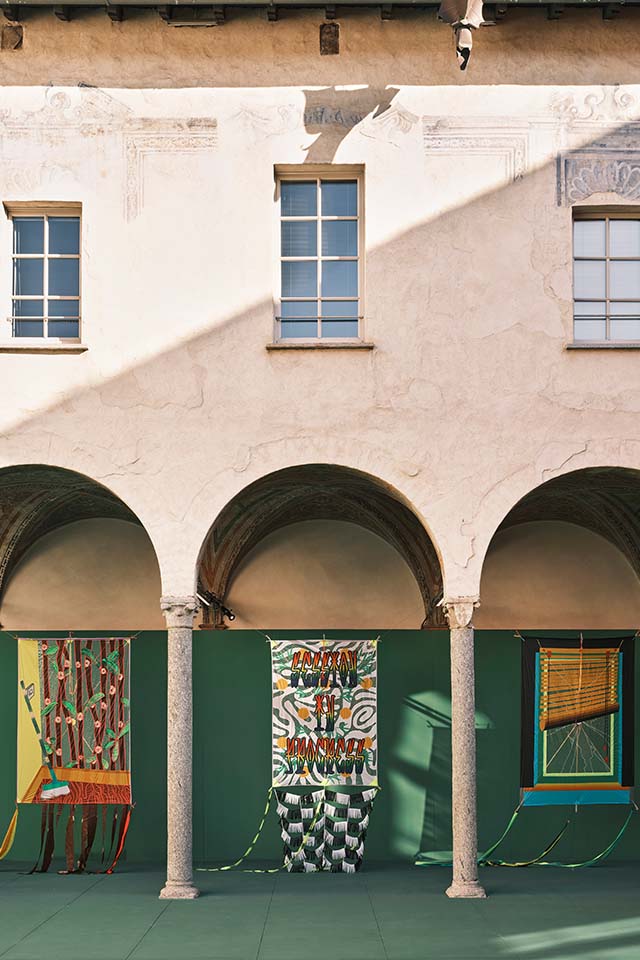
What made the exhibition of “Gucci | Bamboo Encounters” special was the arrangement of all the artworks together. The pieces were assembled around the central area of the Chiostri di San Simpliciano. It used the backdrop of the monastery to create a rhythm in the way viewers processed the artwork, and gave the artwork the space to be presented in such a beautiful manner.