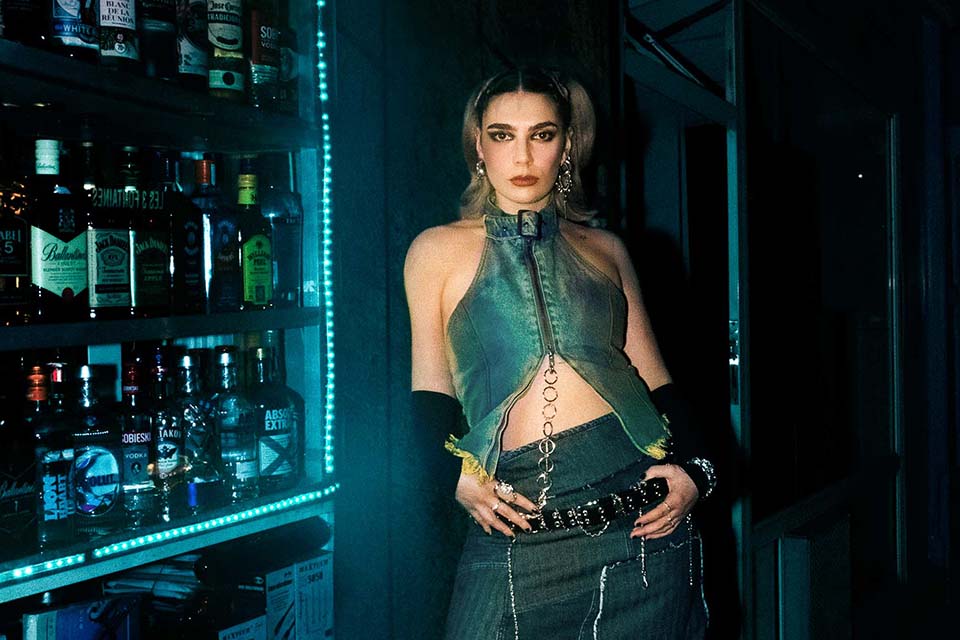
Joye is building a universe from the shadows of loss and the light of fierce self-expression. Based in Paris, rooted in a classical piano education in Toulouse, and shaped by studies in jazz musicology combined with music therapy, rising musician Joye’s path has been anything but linear. She has evolved into a multidisciplinary artist weaving electronic experimentation, poetic lyricism, and feminism into anthems of resilience, redefining what it means to make pop muic in 2025. After captivating listeners with her debut EP Thelma in 2022 — an ode to the wild woman archetype — Joye returns with ANGEL (this mixtape is for u), a collection of dream-like tracks that confront grief and reclaim power with cinematic, electric force. Grief and freedom dance together to spells cast through synths and lyrics, where vulnerability is no weakness but a catalyst for radical transformation. With mentors in sound like Sevdaliza (“a boss lady”), FKA Twigs (“a guideline goddess”), and Björk (“always”), and with her own voice forged through critique, choir, and courage, Joye creates not only to express but to empower. In her words, “happiness happens when you go somewhere you were not supposed to be.” Today, we step into that universe with her.
How did you go from classical piano in Toulouse to creating this powerful, feminist electronic pop?
Joye – Piano gave me access to another form of expression than talking. When I was 12, I started plucking chords and sing, a first form of liberation from the score. In high school, I gave upnclassical music and had my first electro-pop project, based on my own compositions and writing. After some experiences, singing and writing weren’t enough; having my own project became necessary, built with my own choices. I felt like I needed to stand up for what was important to me.
How have some of the artists you’ve cited as influences, like Sevdaliza, FKA Twigs, Björk, and Fred Again, shaped your approach to music?
Joye – Björk’s always been there, Sevdaliza changed everything and FKA Twigs is more like a guideline goddess haha When I met Léo in 2019, the producer with whom I create my music, my compositions were purely vocal from a pedal looper (lead and back voices). After listening to them, he told me that he visualized an aesthetic in Sevdaliza steps. I didn’t know who she was at that time, so I watched and listened to EVERYTHING she made and I became an absolute fan of the woman she is. Artist, entrepreneur, boss lady, avant- garde, multidisciplinary, with very innovative visuals and ideas, but also very spiritual and committed. I drew a lot of inspiration from her for my entire project.
In your creative process, do you start with a concept, a melody, or something else entirely?
Joye – I start with a feeling which needs to get out. Chords are generally the first steps, they set the mood. Sometimes chords lead to a production. But melody is the core, which enters very quickly into the process.
How does your background studying things like jazz musicology and music therapy influence the way you create and think about music?
Joye – I assume that my music is a kind of mixture of influences & skills I learnt through time but I never analyze what I write, I just sing what I need to sing… what I actually remember is when I started the jazz cursus, teachers criticized my voice and said that it was not « genuine » . Harsh comment which forced me to learn how to control and shape my voice. I also had choir lessons, which encouraged me to work on my lyric voice.
How do you navigate extremes like the themes of loss in “WHO’S GONNA FEED ME” and resilience in “POWER” in your songwriting?
Joye – Those extremes are really close. The more you eat the ground, the more you’ll wanna touch the sky. When you see one of the most important person of your life dying in front of you, you start being conscious of death and you don’t know how much time is left… You wanna feel alive every days of the rest of your life. Somedays I could feel hit by something big, and other days I’d see hope and light in literally everything. Resilience is far from being innate. It comes from an inner fight, it takes years to build it and is not always there in intimacy (when I write for example) so I jump from state to state…but they’re all parts of me.
What drew you to incorporate rap for the first time in “WITCH”, and how did it feel to step into that space?
Joye – It felt so good! Freedom cause it seemed okay to express things in a way I hadn’t allowed myself to think. And so much pride haha I had been secretly practicing for years but never showed anything like that to anyone. Empowerment took another dimension.

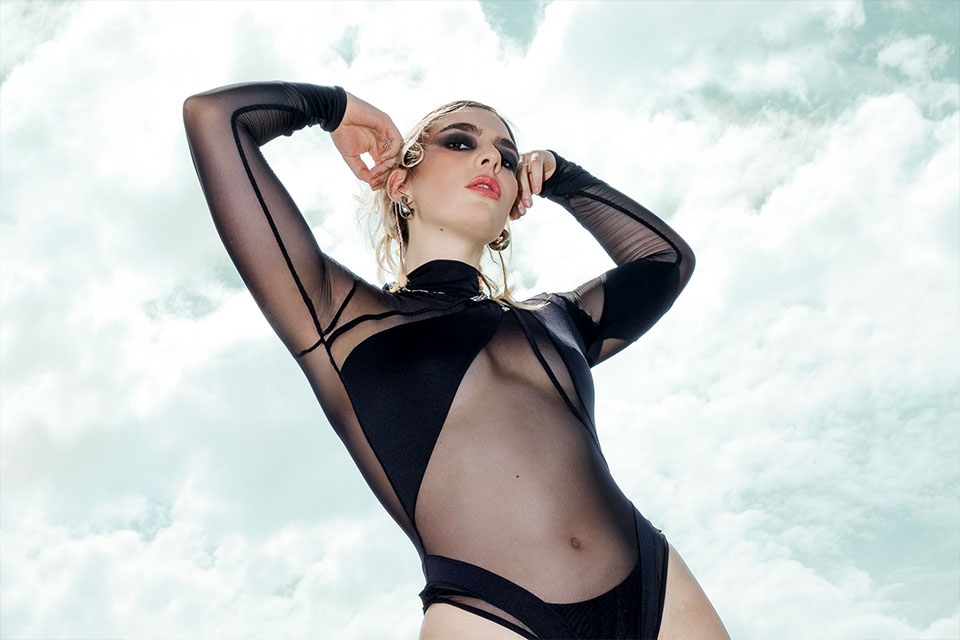
The techno high-mass climax in “REBEL” makes me wonder: What role does dance and movement play in your music?
Joye – Dancing is really important to me. Never took lessons, but I have so many memories of dancing with my parents, or with my friends when we used to sneak out to go dancing all night. It’s all about not caring about what people think about you. It’s literally your body’s freedom. Josephine Baker said : “To live is to dance – I’d like to die breathless, exhausted, at the end of a dance”. Same. I’d rather die young because I danced too much than old wise and bored. It was important for me to have moments during the show where I could freely dance, and encourage people to do the same.
Your description of ANGEL as an ode to vulnerability makes me wonder: How do you think embracing vulnerability relates to power?
Joye – I believe that we are way much « powerful » and ready to face things when we deeply and sharply know ourselves, by embracing our weaknesses and vulnerability.
What do empowerment and healing mean to you personally?
Joye – Empowerment was my only way out for a brighter evolution. It’s the visible part of healing, but healing is a very long process. Still today, I wonder if things that happened in my life will be healed one day.
What does the mantra “Wise girls go to heaven, others go wherever they want” mean to you in the context of your journey?
Joye – To me, it means that perfection is not the goal. Happiness happens when you go somewhere you were not supposed to be, when you do something you were not supposed to do. By taking risks, being passionate about things, pushing your dreams, following your desires.
What do you hope your music offers to women and others who may feel unseen or unheard?
Joye – Freedom / strength / Cinematographic scenarios in the head The ones in which you’re a superhero (laughing)
Do you have any personal creative habits or rituals that help you channel the emotions in your music?
Joye – Not really… when I feel overwhelmed I just go straight to the piano or my computer and the process is on
How do you approach the striking visual storytelling aspect of your music?
Joye – Images for videos come quite naturally to me when I’m creating a new music. In general, when I make a demo I love, I listen to it on repeat. A scenario comes to my head and then I share my vision with the director I think will be perfect for what I have in mind. For the photos, it took longer to think about them, because it was the first step into the artistic direction: choosing what elements will be important for this mixtape, what materials, what colors, why, what’s the message. Everything is thought through and had to make sense to me.
If you could collaborate with any artist—living or not—who would it be and why?
Joye – Queen Sevdaliza
What do you envision for the future of your music? Where do you see yourself artistically in the next few years?
Joye – I want to make a living from my music. I work hard for it, and I’m going to keep on doing it. I’m currently training in a number of areas, including sound synthesis, mixing and djing. In the next few years, I think I’ll be working alone on my productions, I want to work on film scores, and I feel the need to reconnect with the piano voice, tour bars, travel… There are lots of possible scenarios, but I’m already looking forward to it. And in terms of musical style, I’ll go where the wind takes me.