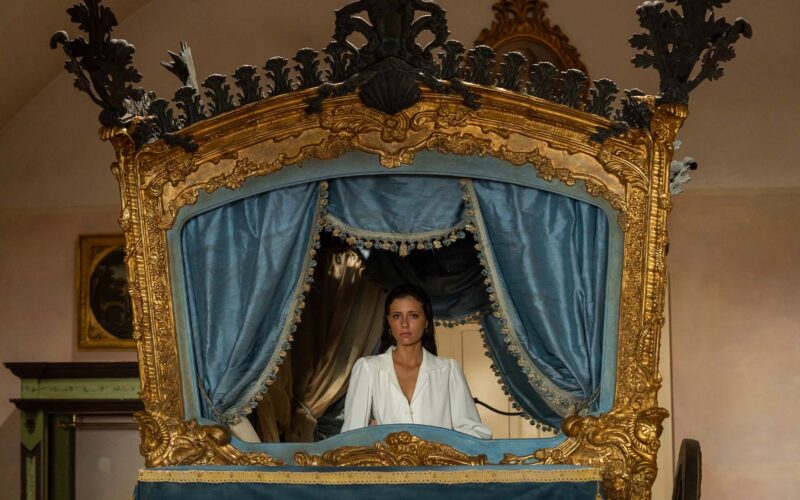
“It was all already predicted” is the phrase that echoes throughout the film Parthenope by director Paolo Sorrentino, an Oscar-winning filmmaker. Taken from the title of the Italian song by Riccardo Cocciante, which Sorrentino chose for as the soundtrack, this phrase accompanies the viewer throughout the entire film as a leitmotif and seems to predict the life of the protagonist, Parthenope. Like in a Greek myth where the destiny of the heroes is already predicted, the song title reflects both the fatalism inherent in Greek mythology and the sense of inescapable destiny that pervades the film’s narrative. The movie narrates the story of a mysterious young woman who becomes the symbol of the city of Naples and its turbulent social, political, and cultural shades.
The city, portrayed in an allegorical way, is not just the backdrop but the very heart of a story that blends tragedy and hope. Parthenope embodies both the beauty and the ruin, the past and the future of the city. Like the mythological siren from whom she takes her name, the protagonist enchants, but is rarely enchanted herself. This trait connects her to the myth of the siren who, in love with the cleverest Greek soldier, Ulysses, is said to have founded the city of Naples known also as “Partenopea.” Sorrentino has often spoken about Naples as a city that fascinates and repels at the same time, a place that reflects the deep and contradictory nature of humanity. For him Naples is not just a location, but a real character, with its beauty as well as its decay and conflict. The protagonist is drawn to a field like anthropology, the study of human beings. She explores the topic both individually and collectively.
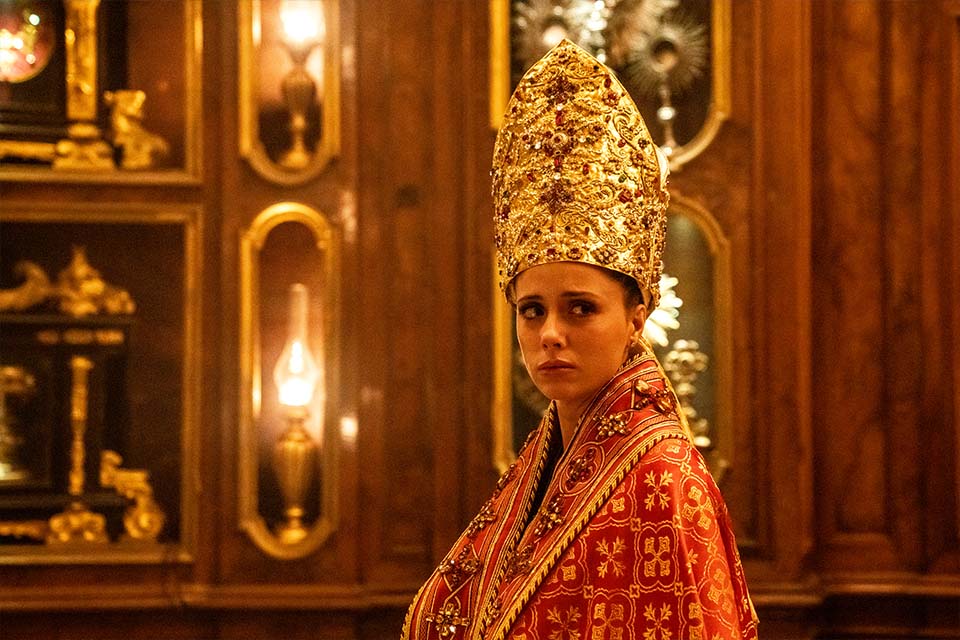
Silence in the beautiful is a mystery, in the ugly a failure
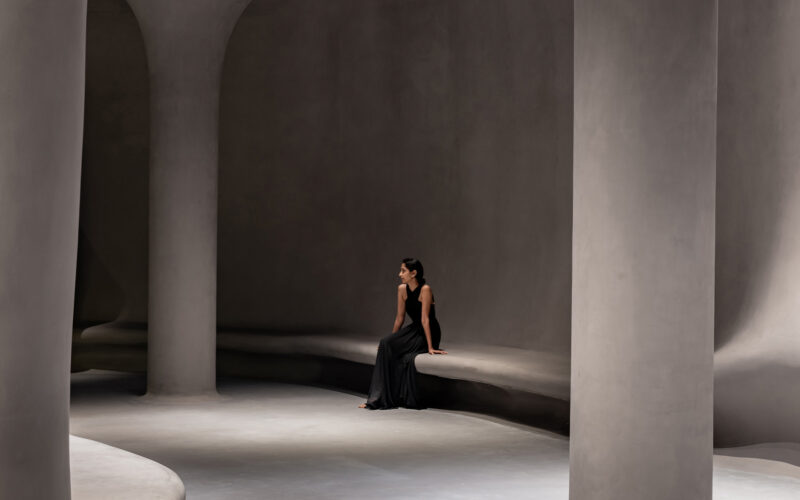
The film is not just a narrative, but a sensory experience where photography and sound are treated with the same importance as the plot. The alternation between reality and imagination along with visual symbolism makes the film a layered work that requires interpretation on multiple levels. The philosophical reflections of Wittgenstein play a central role in interpreting the film. The philosopher, in his Tractatus Logico-Philosophicus, writes, “The limits of my language mean the limits of my world.” In other words, language structures limit our experience of the world. In a similar way Parthenope, by overcoming difficulties, reaches new understandings of reality, which becomes a linguistic and subjective construction. The city itself becomes a visual language that each character tries to decode based on their own experience. Language in the film intertwines with Wittgenstein’s concept of language games, where the meaning of words depends on the context and shared practices. Naples, with its vitality and nuances, is itself a language game where each encounter and conversation creates meanings that are fluid and constantly evolving.
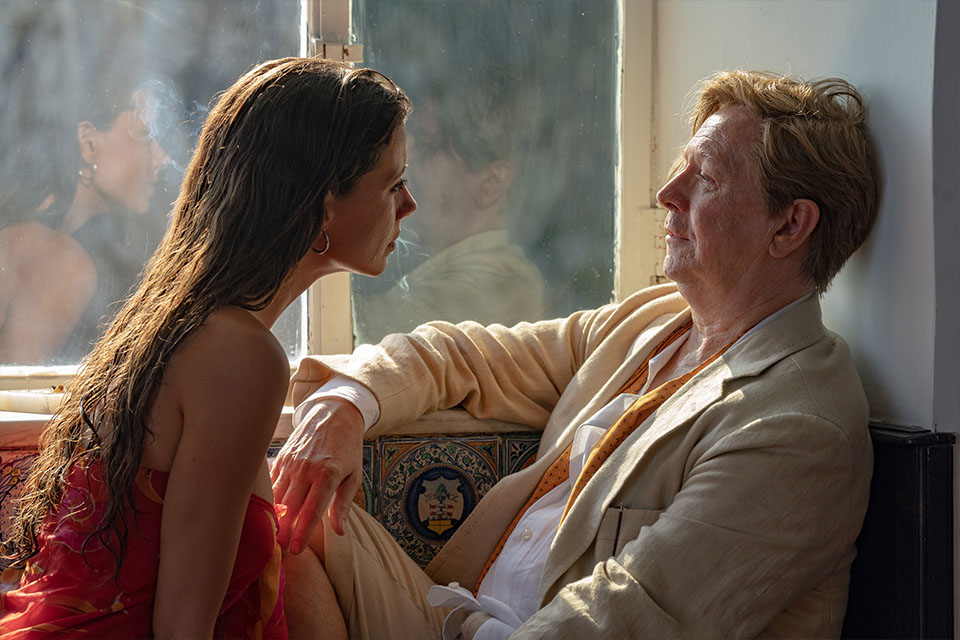
Sorrentino’s “Parthenope”, like Wittgenstein’s philosophy, explores the complexity of human communication and the limits of language. The film invites us to reflect on what is visible and unspeakable: how language is always an incomplete form of expression, and how we try to find meaning in a world that is not easily decipherable. “Silence in the beautiful is a mystery, in the ugly, a failure,” is a quote from the movie that encapsulates Parthenope’s communicative style. As a young woman who seeks to transcend external beauty, she engages her interlocutors with her dialectic while also revealing her profound sense of loneliness. Her silence is never empty but filled with meaning. The film seems to suggest that beauty, although a powerful weapon, cannot conceal the inner abyss a person may face. This search for truth goes beyond her appearance, but at the same time through a key narrative twist, Parthenope finds herself confronting growing melancholy. Her transformation is visible even in her gaze, as pointed out by a once-famous actress who tells her, “You’re beautiful and unforgettable, but your eyes are dull. You’re without joy, dear, and the camera doesn’t accept that.”
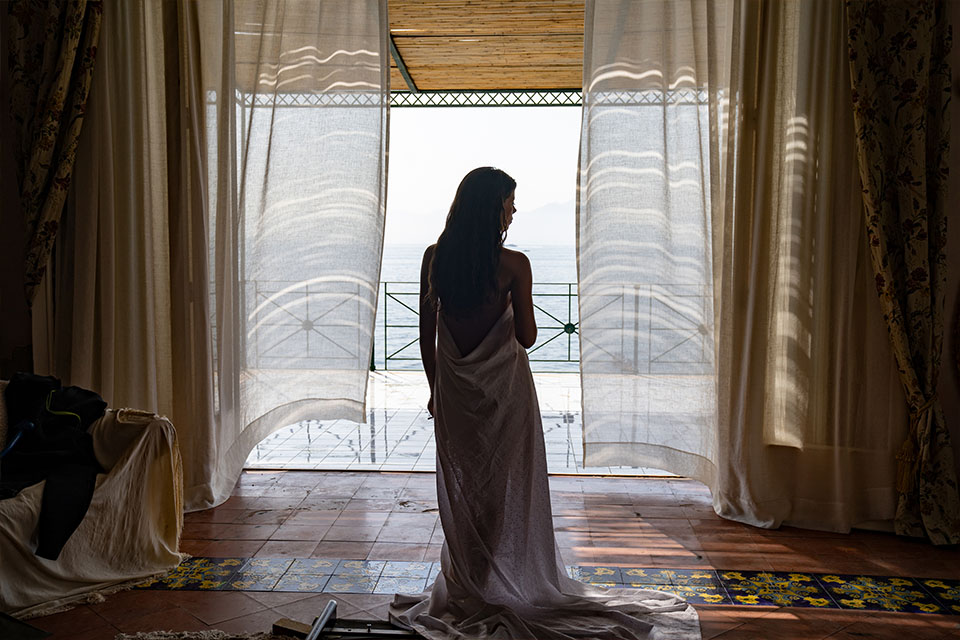
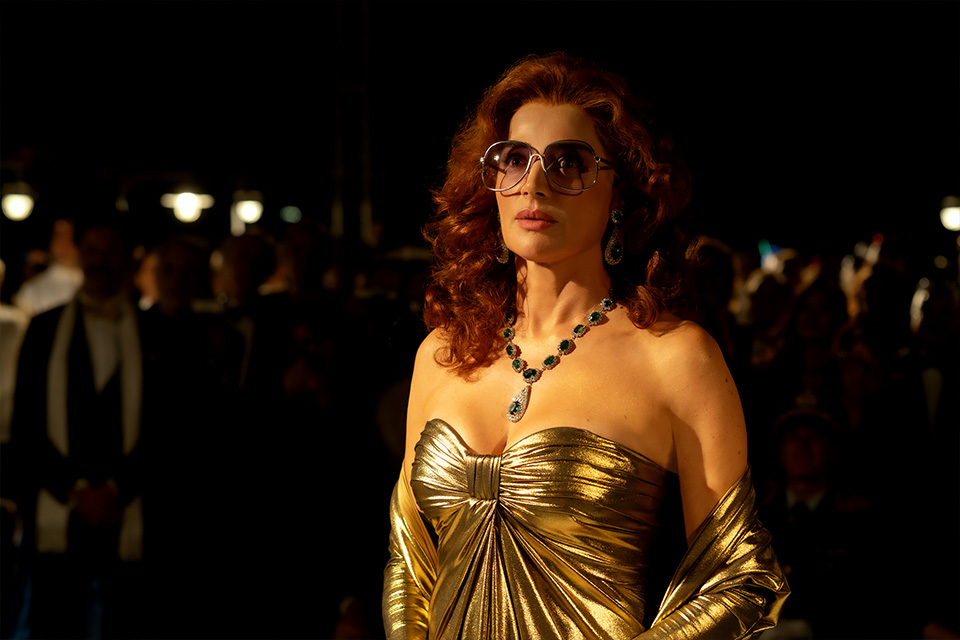
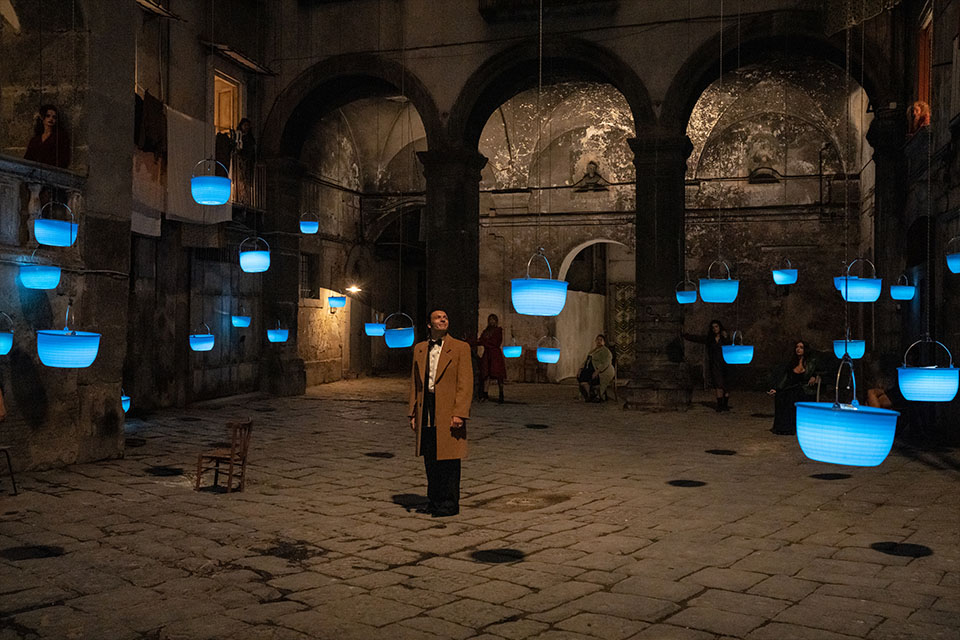
The limits of my language mean the limits of my world
Here, viewers might wrestle with whether these words express the director’s own thoughts as he subtly plants these reflections. The most emblematic of this relates to the miracle of Saint Januarius, a cornerstone of Neapolitan imagery, “Is it a mystery or a scam?” These words serve as a key not only to Parthenope but to the city of Naples and Sorrentino’s very own poetic vision, which always plays with a mix of self-irony and melancholy. The director, like Parthenope, moves between beauty and decay, asking questions without claiming to provide answers. Wittgenstein’s echo returns, “The limits of my language mean the limits of my world.” Parthenope is an ambiguous, complex, and elusive character, just like the city she represents and the director who created her. Parthenope by Paolo Sorrentino can be seen as a profound and layered reflection on the human condition and the city of Naples, a city that like the protagonist, is an enigma difficult to decipher.
The use of language and images, the tension between the sayable and the unsayable, and the continuous oscillation between myth and reality are all elements that highlight the uncertainty and complexity of life and the search for meaning that characterizes every individual. As Wittgenstein suggests, language is always a partial and limited attempt to understand the world, and in the same way the film itself with its fragmented and symbolic plot invites us to explore the boundary between what we can express and what remains unsaid. Parthenope, both as a character and as a metaphor for Naples, thus becomes a representation of our struggle as human beings to find answers in a world that is not always easy to understand; a struggle that, like language, is forever incomplete.